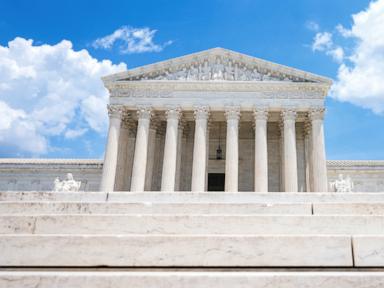
The media is reading the Supreme Court’s refusal to revive Carter Page’s lawsuit entirely backward.
The standard narrative is already set in stone: the high court’s rejection of the former Trump campaign aide’s suit is either a victory for the rule of law or a partisan cover-up, depending on which cable news channel you watch to numb your brain. Both sides are completely missing the point. This was not a validation of federal law enforcement, nor was it a simple procedural shrug.
The Supreme Court just handed down a brutal, quiet lesson in how bureaucratic immunity actually functions in the modern era. By refusing to dig into the rotten foundations of the Foreign Intelligence Surveillance Act (FISA) warrants used against Page, the justices did not protect a political party. They protected the machinery of the state from a precedent that would have accidentally forced actual accountability onto the intelligence apparatus.
We are told that the legal system is designed to rectify government overreach. It isn't. It is designed to preserve systemic stability. Carter Page’s legal team attempted to use a sledgehammer where a scalpel was required, and in doing so, they allowed the judiciary to take the easy way out.
The Myth of Judicial Correction in National Security
The lazy consensus dominating the headlines argues that because the Department of Justice already admitted to "significant errors" in the FISA applications targeting Page, the civil court system was the natural next step for justice.
This view is incredibly naive.
I have watched organizations, both public and private, manipulate compliance frameworks for decades to shield themselves from liability. The moment you assume a regulatory body or a court will willingly dismantle its own oversight mechanisms to right a past wrong, you have lost the plot.
The Foreign Intelligence Surveillance Court (FISC) operates in the shadows for a reason. It is an ex parte environment—meaning only the government gets to speak. When the FBI filed those four applications to spy on Page during the 2016 Russia investigation, they relied on the infamous, unverified Steele dossier and explicitly withheld exculpatory evidence. We know this because the DOJ Inspector General Michael Horowitz laid it bare in a scathing 400-page report.
The public thought that report was the beginning of the cleanup. It wasn't. It was the containment zone.
When Page sued under the USA FREEDOM Act and various constitutional provisions, seeking $75 million in damages from the baffled bureaucrats who signed off on his surveillance, he assumed the civil court system possessed the teeth to penalize federal agents. The lower courts threw the case out, and the Supreme Court let that decision stand without comment.
Why? Because allowing a private citizen to successfully sue individual federal agents for botched national security warrants would create a catastrophic precedent for the intelligence community. Imagine a scenario where every target of a wiretap—justified or not—could drag undercover agents and analysts into a civil deposition. The entire apparatus would grind to a halt within a week. The court did not rule on whether Page was wronged; they ruled that preserving the immunity of the administrative state matters more than one man's reputation.
Dismantling the Illusion of FISA Reform
People frequently ask: "How can we fix the FISA process so this never happens again?"
The premise of the question is fundamentally flawed. You cannot fix a system whose foundational feature is a lack of adversarial oversight.
Let us break down the mechanics of how a FISA warrant actually gets approved, stripping away the legal jargon:
- The Origin: An agency (like the FBI) compiles intelligence.
- The Filter: The DOJ’s Office of Intelligence reviews the request to ensure it meets the legal standard of "probable cause" that the target is an agent of a foreign power.
- The Presentation: The government presents this case to a single federal judge sitting in a secure room. No defense attorney is present to say, "Hey, this piece of evidence was paid for by a political opponent," or "The source explicitly denied being a spy."
- The Rubber Stamp: Historically, the FISC approves over 99% of government requests.
To call this a "court" is a misnomer. It is an administrative clearinghouse.
When the media focuses on Carter Page, they treat his case as an anomaly—a perfect storm of political bias and rogue actors. That is a comforting lie. The only thing anomalous about the Page surveillance was that the target had the political capital and the subsequent administration's backing to get the underlying documents declassified.
The real horror is not that the system broke down in 2016. The real horror is that the system worked exactly as it was designed to, and we only found out because the political stakes were high enough to force a leak. For every high-profile political staffer caught in this net, there are hundreds of anonymous citizens caught in the wake of sweeping electronic surveillance who will never see the light of day, let alone have their day in court.
The High Cost of the Sovereign Immunity Trap
To understand why Page lost, you have to understand the legal doctrine of sovereign immunity. In simple terms: you cannot sue the government unless the government explicitly gives you permission to sue it.
Congress has carved out minor exceptions to this rule, such as the Federal Tort Claims Act, but these exceptions are narrow pathways lined with razor wire. Page’s legal team tried to argue that the federal officials involved should be held personally liable under a doctrine known as a Bivens action—an implied cause of action that allows individuals to sue federal officials for constitutional violations.
The problem? The modern Supreme Court hates Bivens actions. Over the last two decades, the court has consistently signaled that it will not expand this doctrine into new contexts, especially not into the murky waters of national security.
By taking this case to the absolute limit, Page’s team ran headfirst into a judicial wall that was built long before 2016. The downside to this contrarian legal strategy is obvious: it leaves victims of state-sponsored surveillance with absolutely no financial or legal recourse when the government abuses its power. It cements the reality that in the eyes of the law, national security errors are treated as cost-of-doing-business mistakes, not constitutional crises.
Stop Asking the Judiciary to Save You
The absolute worst takeaway from this Supreme Court denial is the belief that the solution lies in electing different politicians to appoint different judges. The judiciary is an branch of the state; its primary instinct is self-preservation and institutional continuity. It will never willingly amputate its own national security arm.
If you want to disrupt this cycle, stop looking to the courts to award damages after the damage is already done. The focus must shift entirely to the legislative bottleneck where these powers are authorized and funded.
Every time FISA Section 702 or the broader surveillance authorities come up for congressional reauthorization, the same theater plays out. Security hawks warn of imminent doom if the intelligence agencies lose a single tool, civil libertarians offer weak amendments that add toothless compliance officers, and the bill passes with bipartisan support.
True disruption means demanding an absolute end to ex parte national security warrants against domestic citizens. Full stop. No tweaks. No additional internal ombudsmen. If the government cannot prove its case in an environment where a defense attorney—even one with a top-secret security clearance—can look at the evidence and push back, then the government does not get to execute the warrant.
The Supreme Court didn’t fail Carter Page because of a flawed legal argument. They didn't fail him because of political bias. They declined his case because the system cannot allow a citizen to prove that the state is a liability to itself. The door to civil accountability for national security overreach is officially locked, bolted, and barred from the inside.
Act accordingly.