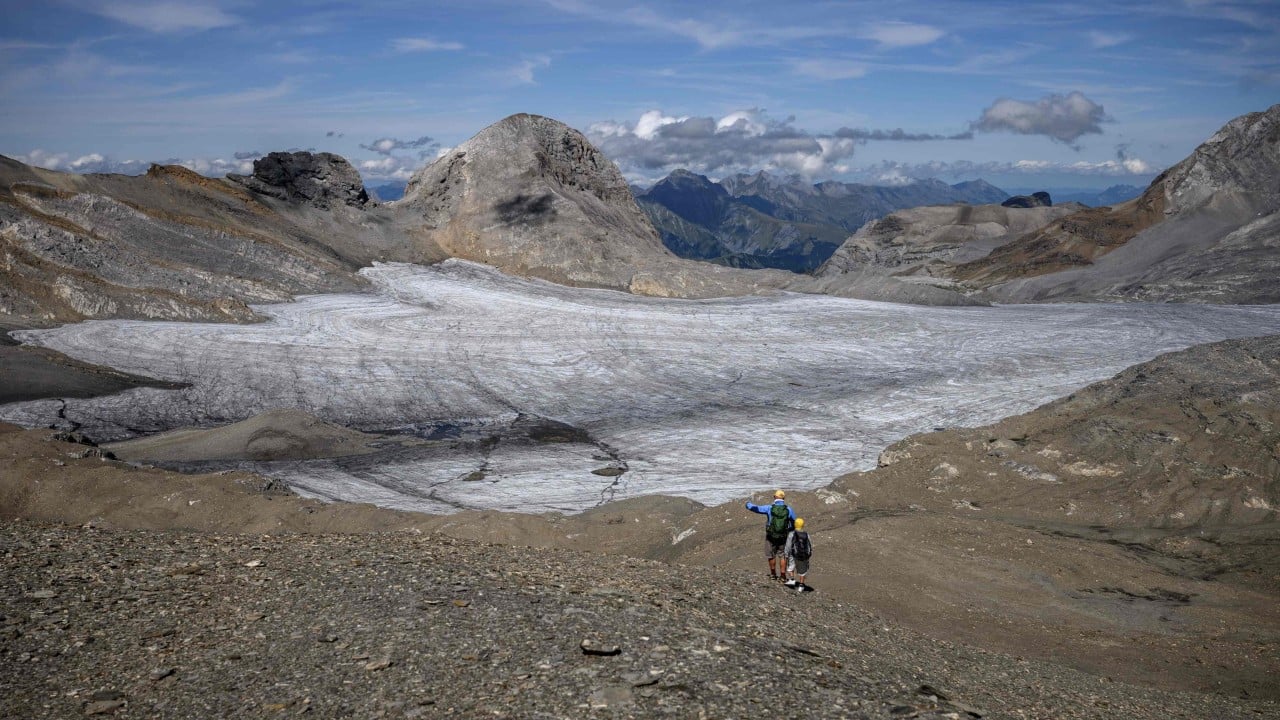
Swiss glaciers lost twenty percent of their ice in just five years. Let that sink in. A massive chunk of permanent frozen water vanished before we could even blink. Glaciologists aren't just worried anymore. They are sounding alarms that rattle right down to sea level.
When you picture Switzerland, you probably think of jagged peaks capped in thick white snow. Postcards sell this eternal winter. But reality has shifted. Scientists tracking alpine ice masses are watching centuries of history melt into roaring muddy torrents. This isn't some distant problem happening on an isolated polar ice cap. It is happening in the heart of Europe. And the consequences touch your daily life whether you realize it or not. For another look, check out: this related article.
The Speed of the Melt Catches Everyone Off Guard
Glaciers are like giant savings accounts for water. They store snow during cold winters and release it slowly through hot summers. This system kept rivers flowing across the continent for thousands of years.
Lately, the withdrawals far exceed the deposits. Recent monitoring data from the Swiss Academy of Sciences shows that the ice is disappearing at an accelerating pace. Two decades ago, scientists worried about melting trends over fifty-year spans. Now, five-year blocks show catastrophic losses. Entire ski resorts struggle to find natural snow. Ice caves collapse. Ancient mountaineering routes vanish because the frozen glue holding the rock together has turned to slush. Further analysis on the subject has been shared by Reuters.
Summer heatwaves hit the Alps harder than ever. High freezing levels mean winter snowpacks melt completely by mid-July. Without that protective white blanket, the dark bare ice absorbs solar radiation directly. It accelerates the entire destructive cycle.
Why Alpine Ice Matters to Everyone Else
You might live thousands of miles away from Zurich or Zermatt. You might never set foot on a glacier. So why should you care?
Water flows downhill. The Rhine, the Rhone, and the Po all start their journeys in these alpine regions. Millions of people depend on these waterways for drinking water, agricultural irrigation, and industrial cooling. When glacier volume drops drastically, summer river levels plunge. Cargo ships get stuck in shallow channels. Farmers watch crops wither during dry spells. Hydroelectric power plants face severe generation limits because reservoirs lack adequate inflow.
Energy grids across Central Europe rely heavily on alpine water storage. Dry summers combined with shrunken glaciers create a massive energy squeeze. Electricity prices spike. Local economies take a direct hit.
The Myth of Natural Cycles
Some people shrug this off. Climate changes naturally, right? The earth warms and cools. True. Historical records show glaciers expanding and contracting over centuries.
What we see today has nothing to do with slow natural shifts. The current speed of loss defies historical precedent. Carbon emissions trap heat in the atmosphere. The Alps warm at roughly twice the global average rate. Nature doesn't drop twenty percent of a massive ice reserve in sixty months without a severe push from human activity.
Ignoring the data won't freeze the water back into place. Scientists point out that even if we hit aggressive climate targets tomorrow, a large percentage of Swiss glaciers are already doomed. The momentum built into the climate system guarantees further shrinkage.
Adapting to a Brown Mountain Future
Communities in the Swiss Alps are forced to adapt on the fly. Engineers install giant white fleece blankets over shrinking ice fields during peak summer months. It slows the melt slightly, acting like a tiny band-aid on a massive wound. It costs millions of dollars and saves only a fraction of the ice.
Ski resorts invest heavily in artificial snowmaking infrastructure or pivot toward summer hiking tourism. Yet, shifting an entire regional economy away from snow sports is messy and expensive. Towns built around winter tourism face existential threats.
We need to look past the picturesque tourist photos. The melting Alps serve as an early warning system for the rest of the planet. When the water towers of Europe run dry, the shockwaves travel globally. Pay attention to what is happening on these peaks. It is the clearest preview of our environmental future.