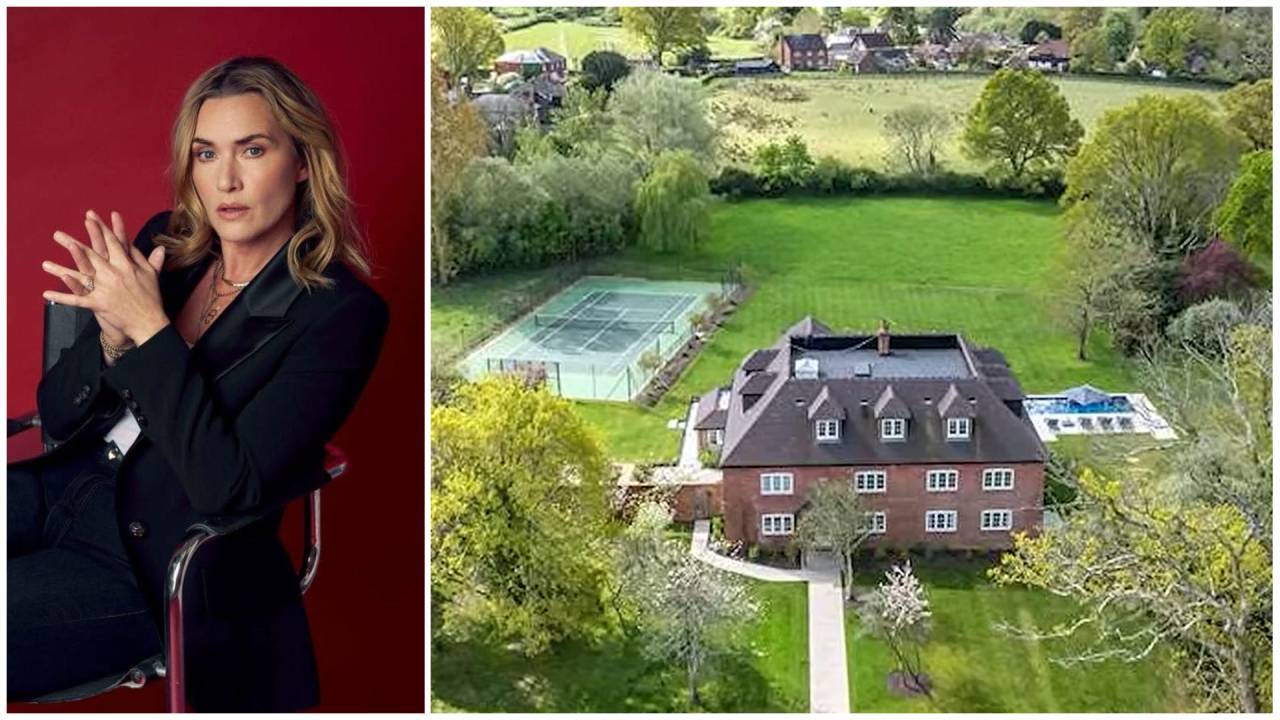
Tabloid real estate writers are hopelessly romantic. They see an A-list actor touring a limestone farmhouse in the English countryside and immediately start scripting a Jane Austen novel. Sydney Sweeney gets spotted viewing property in the Cotswolds, and the digital ink spills instantly: Will she borrow sugar from the Beckhams? Will she bump into Prince Harry and Meghan Markle at the local pub?
Stop falling for the pastoral fairy tale.
The lazy consensus assumes that when Hollywood’s biggest stars start shopping in Oxfordshire or Gloucestershire, they are desperate to escape the paparazzi, trade red carpets for Wellington boots, and live a quiet, rustic life. That narrative makes for great Sunday supplement copy, and it is completely divorced from how ultra-high-net-worth celebrity wealth actually operates.
First, a basic geographic reality check that most entertainment outlets conveniently ignore: Prince Harry and Meghan Markle do not live in the Cotswolds. They haven't lived there since their lease on a Great Tew estate ended years ago; they live in Montecito, California. Lumping them into a headline about Sydney Sweeney’s house-hunting is pure algorithmic clickbait designed to mash three high-volume search terms into a single URL.
Second, and far more importantly, nobody buys a multi-million-pound Cotswolds estate for "privacy" anymore. If you want to disappear, you buy a ranch in Montana, an island in the Pacific Northwest, or a gated compound in Ojai. You do not move to the most heavily photographed, PR-saturated rural playground in the Western Hemisphere.
Sydney Sweeney is not looking for peace and quiet. She is executing a calculated business pivot, a strategic brand elevation, and a sophisticated real estate play.
The Death of the "Quiet" Cotswolds
To understand why Sweeney is looking at UK countryside property, you have to understand what the Cotswolds actually is in the modern era. It is no longer a sleepy agricultural region. It is Beverly Hills with better knitwear and worse weather.
Since the opening of Soho Farmhouse in Great Tew in 2015, the region has transformed into a seasonal annex of West Hollywood and Mayfair. It is an open-air VIP lounge. Between the Beckhams’ converted barn, Ellen DeGeneres and Portia de Rossi’s recent high-profile relocation to the area, and a rotating cast of tech billionaires and legacy media moguls, the density of fame per square mile in the Cotswolds rivals Malibu on a holiday weekend.
Paparazzi do not need to hide in the bushes in Chipping Norton anymore; they just wait outside Daylesford Organic or Bamford Wellness Spa.
I have watched dozens of high-profile entertainment clients acquire properties in "off-the-grid" luxury enclaves over the past decade. Every single time, they tell their publicists they want to "get away from the noise." And every single time, they buy within ten miles of the exact same private members' club where the studio heads, luxury brand creative directors, and international financiers spend their summers.
Privacy is not the product being sold here. Proximity is.
When you own property in the Cotswolds, you are buying permanent entry into a specific socioeconomic ecosystem. You aren't rubbing shoulders with salt-of-the-earth sheep farmers; you are sitting across from Nick Jones, European fashion executives, and old-money British aristocracy. For an American actor whose career was launched on gritty teen drama (Euphoria) and viral internet discourse, buying into the British countryside is the fastest way to launder your public persona from "Hollywood starlet" to "transatlantic heritage icon."
The Brand Elevation Playbook
Look at Sydney Sweeney’s career trajectory. She is arguably the sharpest businesswoman of her generation in Hollywood. While her peers wait around for scripts, she founded Fifty-Fifty Films, produced her own box-office hits (Anyone But You, Immaculate), and stacked lucrative brand ambassadorships with Miu Miu, Armani Beauty, and Laneige.
She understands that in the entertainment industry, your real estate portfolio is an extension of your personal brand architecture.
- The Los Angeles Real Estate: Sweeney already owns property in Southern California, including a fixer-upper in Westwood and a massive oceanfront mansion in the Florida Keys. Those properties scream American Dream, young Hollywood hustle, and sun-drenched commercial appeal.
- The Cotswolds Real Estate: A historic English country house signals longevity, prestige, and European luxury.
Luxury European fashion houses—the exact conglomerates (LVMH, Kering, Prada Group) that pay seven- and eight-figure ambassadorship fees—do not view Beverly Hills mansions as aspirational. To a Parisian or Milanese creative director, a sprawling McMansion in Los Angeles is gauche. An 18th-century Grade II listed stone manor surrounded by rolling English hills? That is heritage. That is taste.
By planting a flag in the Cotswolds, Sweeney is visually and culturally aligning herself with European luxury values. It is a subtle, high-level signal to luxury brands and prestige filmmakers: I am not a flash-in-the-pan American pop-culture phenomenon. I am a classic.
The Financial Mechanics Nobody Talks About
Let’s pull back the curtain on the balance sheet, because entertainment reporters rarely understand tax law or cross-border capital allocation.
When an American actor begins working heavily in the UK and Europe—shooting prestige films at Pinewood or Shepperton Studios, attending Paris Fashion Week, and fulfilling European brand contracts—hotel bills and short-term rentals become a massive, unrecoverable expense. Worse, relying on hotels creates constant security vulnerabilities.
Buying a UK property solves multiple logistical and financial headaches simultaneously, provided it is structured correctly.
- Production Base and Security: Major Hollywood productions increasingly film in the UK due to the British government's lucrative Audio-Visual Expenditure Credit (AVEC), which offers substantial tax relief for films and high-end TV made in Britain. Having a permanent, secure home base less than 90 minutes from London’s major studio hubs eliminates months of logistical friction.
- Currency Hedging: Holding high-value UK real estate allows an international earner to park British pounds and Euros earned from European campaigns directly into a tangible asset, avoiding brutal currency conversion fees and insulating a portion of their net worth from US dollar fluctuations.
- Capital Appreciation in Prime Country Markets: While London’s ultra-prime residential market has faced headwinds from stamp duty hikes and changes to the UK's non-domiciled tax regime, prime country estates in the "Golden Triangle" of the Cotswolds have shown remarkable resilience. High-net-worth flight from London—driven by remote work, school choices, and lifestyle shifts—has created a structural floor under prices for turn-key, renovated estates with acreage.
However, let’s be brutally honest about the downsides of this contrarian play. Buying historic British real estate is not a guaranteed money-printer, and for an American citizen, it comes with punishing traps.
First, Stamp Duty Land Tax (SDLT) in England is brutal for overseas buyers. Because Sweeney already owns residential property globally, she is immediately hit with the higher rates for additional dwellings, plus the 2% non-UK resident surcharge. On a £5 million property, she is writing a check to HM Revenue & Customs for roughly £600,000+ just to get the keys. That is dead capital on day one.
Second, Grade II listed buildings are financial black holes. If she buys a historic Cotswolds farmhouse, she cannot simply knock down a wall, install modern double-glazed windows, or slap a contemporary pool house in the garden without navigating a Kafkaesque nightmare of local conservation officers and planning permissions. Maintenance costs on centuries-old limestone, thatched roofs, and archaic plumbing regularly bleed owners for hundreds of thousands of pounds a year.
Third, as an American citizen, Sweeney is taxed on her worldwide income by the IRS regardless of where she lives. If she ever sells that UK estate at a profit, she faces complex cross-border capital gains calculations, potential phantom gains caused by GBP-to-USD exchange rate shifts, and UK Non-Resident Capital Gains Tax (NRCGT).
Anyone claiming she is doing this for a "simple life" has never seen a cross-border tax attorney's bill.
Dismantling the Celebrity Neighbor Myth
Let’s address the questions readers are actually searching for, because the tabloid framing completely distorts reality.
Are Sydney Sweeney and the Beckhams actually going to be neighbors?
In the literal sense, maybe within a 15-to-20-minute drive. In the practical sense, no. Ultra-wealthy estates in the Cotswolds are separated by hundreds of acres of private farmland, high stone walls, and private security gates. You do not walk across the lawn to borrow a cup of oat milk. If Sweeney and Victoria Beckham cross paths, it will be because their respective teams coordinated a photo-op or a shared table at a private club, not because they bumped into each other at the village post office.
Why are so many American celebrities moving to the UK right now?
Ignore the surface-level political excuses celebrities give in interviews. Yes, some cite American political exhaustion or gun violence, and those sentiments may be genuine. Underneath that, however, is a massive shift in global entertainment economics. Hollywood is contracting. Domestic US production has plummeted due to skyrocketing labor costs and expired state tax incentives. Meanwhile, the UK has positioned itself as the primary soundstage of the Western world. Actors follow the work, and the work has migrated to Hertfordshire, Buckinghamshire, and Surrey.
Is the Cotswolds real estate market peaking?
For standard village cottages, yes—interest rates and cost-of-living pressures in Britain have cooled the middle market. For ultra-prime, completely private estates with 10+ acres, helipad access, and renovated interiors? Supply is permanently capped by strict green-belt and Area of Outstanding Natural Beauty (AONB) conservation laws. You literally cannot build more of them. When global billionaires and A-list talent compete for a fixed supply of trophy assets, prices detach from local economic reality.
How to Read Celebrity Real Estate News Like an Insider
Next time you see a headline claiming a movie star is "looking for a quiet life" in an ultra-expensive enclave, apply a three-step filter to see what is actually happening:
- Follow the Studio Tax Credits: Check where major studios are currently shooting their biggest franchises. Celebrity real estate purchases almost always lag behind film production tax incentives by 18 to 24 months.
- Look at the Brand Roster: Cross-reference the actor’s recent luxury endorsements with the geography of their real estate. European fashion houses love European lifestyle optics.
- Watch the "Leak" Source: Truly private celebrity real estate transactions happen off-market through discreet buying agents (like Middleton Advisors or Garrington) using blind trusts and LLCs. When the press knows an A-lister was "spotted viewing a property" in a specific village, someone on that celebrity's PR team wanted the story planted to signal a new chapter in their public image.
Sydney Sweeney isn't retreating from the spotlight into the sleepy English countryside. She is upgrading her stage set, insulating her capital, and buying a ticket into Europe’s most exclusive power network—while letting the tabloids sell the public a bedtime story about country walks and famous neighbors.