The operating room smells of cold steel, static electricity, and institutional coffee. At three in the morning, time loses its sharp edges. It smears into a low hum of monitors and the steady, rhythmic hissing of ventilation ducts.
Dr. Arthur Vance stands over an open chest cavity, his hands gloved in latex, holding a needle driver with the fragile delicacy of a watchmaker. The heartbeat monitor ticks softly in the background. Every motion must be precise. A millimeter too far left, and a suture tears an artery. A millimeter too far right, and the repair fails. You might also find this similar coverage insightful: England Heat Health Alerts: The Structural Failure Behind Our Summer Crises.
His fingers are steady. They are thirty years into a career of cutting through human tissue to save breathing, pulsing lives. But when Arthur closes his eyes for a brief, five-second reset, he is not thinking about anatomy textbooks or surgical residency drills. He is hearing a Bach Cello Suite.
Music. As discussed in detailed reports by Everyday Health, the results are widespread.
It sounds absurd to the uninitiated. What does the scratch of horsehair across sheep gut have to do with closing a mitral valve? How does pressing black and white keys on an eighty-eight-key wooden board translate to navigating the treacherous labyrinth of human nerves and blood vessels?
Yet, medical science is beginning to catch up to a quiet truth that many practitioners have known in their bones for generations. Playing a musical instrument transforms how the human brain handles high-stakes physical coordination. It changes how a surgeon holds a knife.
The Anatomy of a Metronome
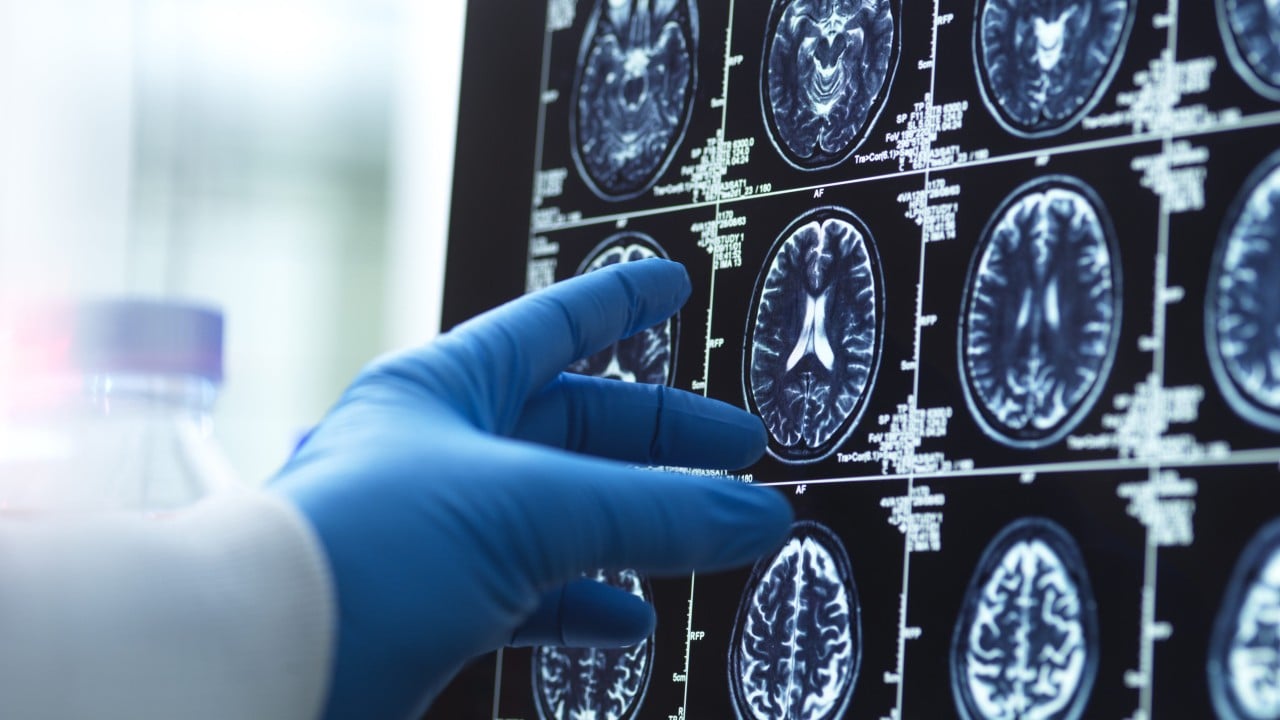
To understand why a pianist makes a terrifyingly good trauma surgeon, you have to look at the brain under a functional MRI.
Playing an instrument is arguably one of the most complex tasks a human brain can perform. It is not merely a cognitive exercise. It is a full-body orchestration. You are reading abstract symbols off a page, translating them instantly into motor commands, executing those commands across both hands with independent rhythms, and listening continuously to the acoustic feedback to adjust your pressure, speed, and timbre in real time.
If you make a mistake, you hear it immediately. The consequence is acoustic dissonance.
Now, swap the piano for a surgical tray.
Instead of a keyboard, the instruments are forceps, needle drivers, and electrocautery pens. Instead of reading sheet music, the surgeon reads the topography of a living body—identifying fascia planes, pulsing vessels, and delicate tumors. Instead of acoustic feedback, the feedback is visual and tactile. The tension of the tissue against the metal. The blanching of a vessel. The resistance of cartilage.
The cognitive architecture required for both disciplines is virtually identical.
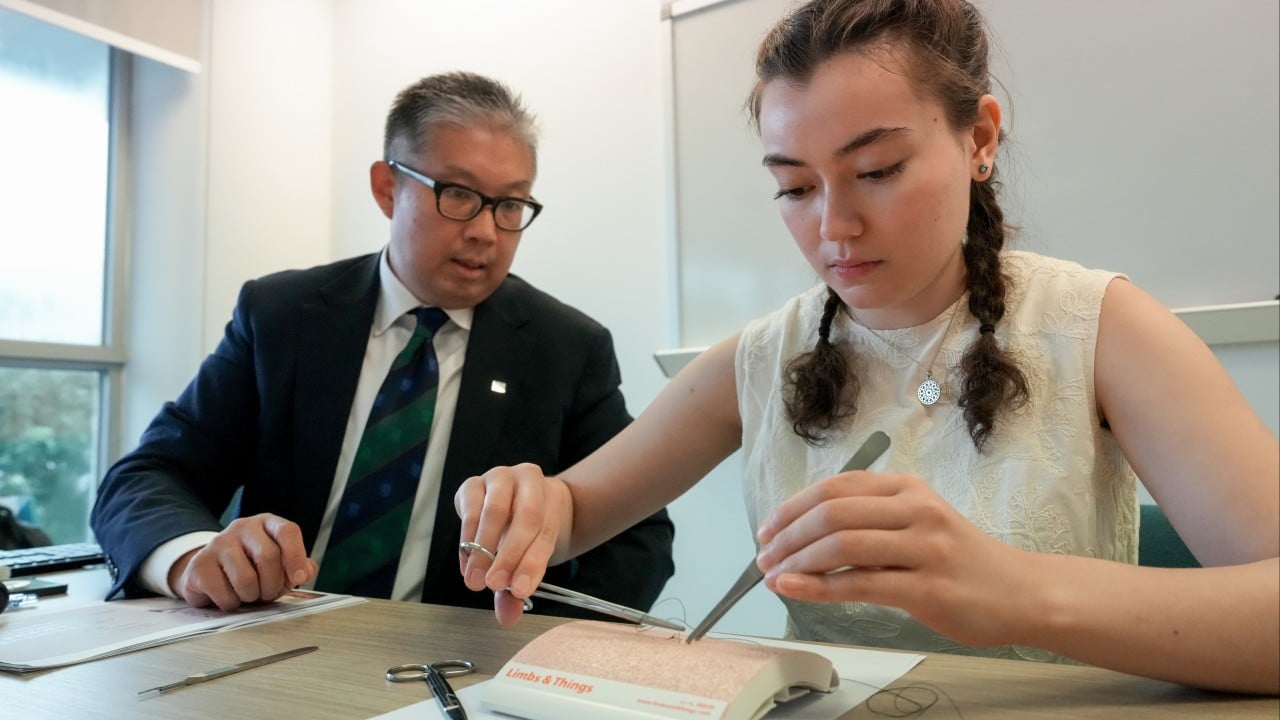
Researchers studying medical students have noticed a stark dividing line in the lab. Students with a background in instrumental music—whether violin, flute, piano, or percussion—often display an uncanny baseline dexterity during laparoscopic simulations and fine-motor drills. Their fingers possess an independent mobility. They understand micro-tension. They do not white-knuckle their tools.
They know how to apply force without crushing.
The Cost of Clumsiness
I remember my first year in the anatomy lab like a fresh bruise.
The air was thick with the biting, chemical sting of formaldehyde. Around me stood twenty-year-olds who had spent their entire lives studying multiple-choice questions, acing organic chemistry exams, and memorizing the Latin names of every bone in the human body. They possessed brilliant minds.
They also possessed hands that moved like clumsy bricks.
Scalpels slipped. Tissue tore when it should have been gently parted. Scissors cut blind because the hand holding them was tense, rigid with the paralyzing fear of making a mistake. The brain knew what it wanted to do, but the fingers refused to listen. The nervous system had never been trained to execute micro-movements under high-stress conditions with grace.
Studying medicine teaches you how to think. It rarely teaches you how to move.
And that is a terrifying gap in our medical education system. We select students based on standardized test scores—numbers on a page, multiple-choice agility, intellectual stamina. Then we hand them a sharp piece of steel and ask them to perform millimeter-precise art inside a living human being.
We assume dexterity is innate. You either have steady hands, or you do not.
That assumption is fundamentally, dangerously wrong.
The Hidden Practice Room
Consider the medical student named Maya.
Maya spent twelve years of her youth playing the classical flute. Her fingers learned long ago how to dance across open tone holes with absolute, effortless independence. When she entered surgical rotation, her preceptors constantly marveled at her poise. While other students trembled during their first knot-tying exercises, Maya treated the suture thread like a ribbon.
Was she a medical prodigy? Not particularly. Her test scores were safely in the middle of her class.
Her advantage was physical literacy.
When Maya holds a surgical instrument, her brain accesses the same neural pathways she built practicing scales at age fourteen. She possesses bimanual dexterity—the rare ability to make both hands do entirely different things simultaneously, with equal competence. Her left hand can hold a retractor steady while her right hand performs a delicate dissection, just as her left hand once held the body of the flute while her right hand flew across the keys.
Studies tracking surgical trainees have shown measurable performance gaps between musicians and non-musicians. In simulated robotic surgery tasks, medical students with musical backgrounds consistently complete procedures faster, with fewer erratic movements and significantly lower error rates.
Music is not a hobby. It is a neurological simulator.
Rewiring the Mind-Body Bridge
Why does this transfer of skill occur?
Neuroscientists point to the corpus callosum—the thick band of nerve fibers connecting the left and right hemispheres of the brain. In musicians, this bridge is noticeably larger and more densely packed. The brain adapts to the intense demands of bimanual coordination by building more highways between its logical analytical center and its spatial-motor center.
A surgeon needs both hemispheres firing in unison. The left brain calculates angles, dosages, and anatomical anomalies. The right brain feels the spatial depth of the wound, improvises when anatomy deviates from the textbook, and maintains calm under pressure.
When a musician plays a complex passage, they are constantly switching between execution and error-correction at lightning speed.
A surgeon does the exact same thing when a routine appendectomy suddenly reveals severe inflammation and obscured anatomy. The panic rises in the throat. The heart rate spikes. In that exact second, the trained musician-surgeon relies on an old, deeply ingrained reflex: breathe, listen to the instrument, adjust the pressure, continue.
It is emotional regulation disguised as motor control.
The Future of the Scalpel
Medical schools are notoriously slow to change. They are built on tradition, long hours, and the brutal trial-by-fire of residency.
Yet, as robotic surgery and minimally invasive techniques redefine what it means to operate, the physical demands on doctors are escalating. We are asking human hands to manipulate robotic arms from a console, translating finger movements into microscopic shifts miles away inside a patient's abdomen.
Perhaps it is time to rethink how we prepare our healers.
Instead of treating arts education as a pleasant extracurricular diversion for undergraduates, we should view it as foundational training. Before a future surgeon ever steps foot near an anatomy lab, maybe they should spend a few years struggling with a violin concerto. Maybe they should learn what it means to fail a note, correct it in real time, and keep playing.
Because at the end of the day, surgery is a performance.
It has an audience of one: the patient lying asleep on the table, trusting their life to the rhythm of the hands hovering above them.
The monitors keep ticking. The light from the overhead surgical dome beats down in a harsh, unblinking circle. Arthur Vance adjusts his grip on the needle driver, feels the familiar, grounded balance of the steel in his palm, and guides the thread home.