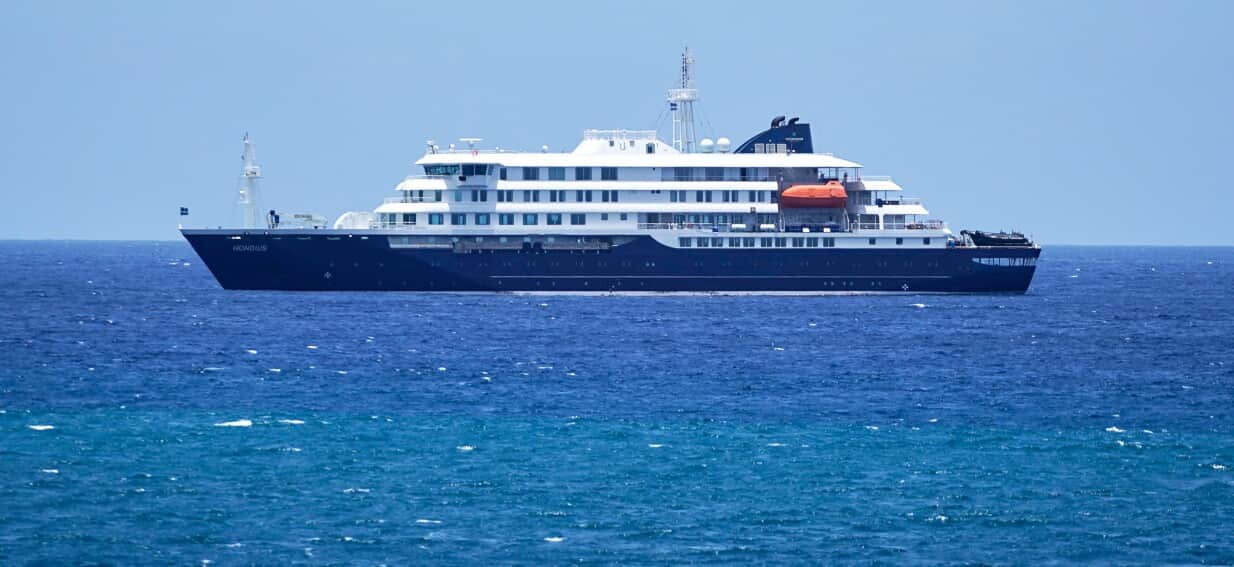
The modern cruise ship represents a high-density, closed-loop environmental system that serves as an ideal vector for viral propagation. While news reporting often focuses on the emotional dimensions of passengers stranded during an outbreak, an objective analysis reveals that these incidents are the logical byproduct of three intersecting failures: structural design limitations, the collapse of international maritime jurisdiction, and the logistical impossibility of ship-board isolation. When a virus enters this ecosystem, the primary objective of the operator transitions from hospitality to containment, often at the direct expense of individual passenger liberty.
The Biotic Architecture of a High-Density Vessel
Cruise ships operate as floating microcosms where population density frequently exceeds that of major urban centers like Manhattan or Hong Kong. This density is compounded by shared ventilation systems and centralized dining facilities, which facilitate rapid transmission through both droplet and aerosol pathways.
The transmission rate within a vessel is governed by a specific set of variables:
- Shared Airflow: Many older vessels utilize HVAC systems that recirculate a percentage of internal air. Without HEPA-grade filtration or UV-C sterilization, viral particles circulate through staterooms via the common ductwork.
- Surface-to-Human Interface: High-touch surfaces—elevator buttons, buffet utensils, and handrails—create a constant risk of fomite transmission.
- Social Proximity: The business model of cruising relies on shared experiences. The spatial design forces thousands of individuals into common areas for entertainment and sustenance, maximizing the $R_0$ (basic reproduction number) of any introduced pathogen.
Because the virus outpaces the incubation period detection, the ship often becomes a "hot zone" before the medical team identifies the first symptomatic case. This creates a lag in response that renders standard cleaning protocols insufficient.
The Triad of Quarantine Failure
When an outbreak occurs, the response typically follows a three-stage failure pattern that strands passengers and complicates diplomatic intervention.
1. The Jurisdiction Void
Cruise ships often fly "flags of convenience," meaning they are registered in countries like the Bahamas, Panama, or Liberia. When a crisis hits, the ship exists in a legal gray area. The country of registration lacks the resources to assist, the port of call denies entry to protect its own population, and the passengers' home countries (such as Australia) face significant logistical and sovereignty hurdles to extract their citizens. This results in the "ship to nowhere" phenomenon, where the vessel is effectively a sovereign territory with no physical land to occupy.
2. The Logistics of In-Situ Isolation
Commanding passengers to remain in their cabins—stateroom-level quarantine—is a containment strategy with diminishing returns. Most cruise cabins are small, and a significant portion lacks balconies or opening portholes. Prolonged confinement in these spaces creates psychological stress and physical health risks. From an operational standpoint, the crew (who must deliver food and manage waste) become the primary vectors moving between quarantined zones and "clean" zones, inevitably leading to cross-contamination.
3. The Resource Exhaustion Curve
Shipboard medical facilities are designed for stabilized trauma and minor illness, not the management of a mass-casualty viral outbreak. The ratio of medical staff to passengers is typically low (often 1:500 or worse). Once a double-digit percentage of the population is infected, the medical center reaches its ceiling for oxygen supply, antiviral medication, and monitoring capabilities.
Quantifying the Risk of Maritime Extraction
Evacuating citizens from a virus-hit ship in international waters is an exercise in complex risk management. Governments must weigh the moral obligation to their citizens against the biosecurity risk of importing an uncontrolled viral strain.
The extraction process involves the following cost-benefit tiers:
- Tier 1: On-Board Management. The government provides medical supplies and tele-health support while the ship remains at sea. This is the lowest cost but highest risk for the passengers.
- Tier 2: Controlled Disembarkation. The ship docks at a secure, non-commercial terminal. Passengers are moved directly to a terrestrial quarantine facility. This requires deep coordination with the host nation and high-security transport.
- Tier 3: Military Repatriation. In extreme cases, airlifts or naval transfers are utilized. The complexity of moving symptomatic individuals via aircraft is extreme, requiring negative-pressure pods and specialized flight crews.
The Breakdown of the Emotional Plea
The "emotional plea" often cited in media is actually a data point reflecting the failure of the cruise contract. Passengers purchase a service under the assumption of safety and liberty of movement. When these are revoked, the power dynamic shifts entirely to the captain and the corporate office. The emotional distress is a symptom of information asymmetry; the crew and the corporation often have more data regarding the extent of the outbreak than the passengers, who are left to rely on intermittent PA announcements.
This lack of transparency serves a corporate purpose: preventing panic. However, it also prevents passengers from making informed decisions about their own health. If a passenger knew the infection rate on their specific deck was 15%, their behavioral response would be vastly different than if they believed it was a localized incident in the galley.
Institutional Fragility and the Future of Maritime Travel
The recurring nature of shipboard outbreaks suggests that the industry is built on a foundation of systemic fragility. To move beyond this cycle, the maritime industry requires a fundamental shift in its operational logic.
Technical Retrofitting
Future vessels must move toward decentralized HVAC systems where each cabin operates on a separate air loop. Furthermore, the integration of contactless technology—from door locks to food service—must become the industry standard rather than a premium feature.
Legal Re-alignment
There is a pressing need for a "Maritime Health Accord" that compels port nations to provide safe harbor for infected vessels in exchange for standardized insurance payouts. The current "not in my backyard" approach by port authorities only serves to turn a manageable health event into a humanitarian crisis.
Real-Time Bio-Surveillance
Implementing wastewater testing and daily thermal monitoring can identify an outbreak 48 to 72 hours before the first symptomatic patient walks into the infirmary. This window is the difference between a controlled isolation of a single deck and the total lockdown of a 3,000-person vessel.
The strategic priority for any passenger or government agency is the recognition that a cruise ship is not a hotel, but a high-risk biological environment. Until the industry addresses the underlying physics of transmission and the legal voids of maritime registration, the pattern of stranded citizens and emotional pleas will remain a predictable, recurring outcome of global travel.
Operators must move from a model of "hospitality with incidental health care" to "biosecure transit with incidental hospitality." Failure to make this pivot ensures that the next viral mutation will once again find its most efficient laboratory on the open sea.