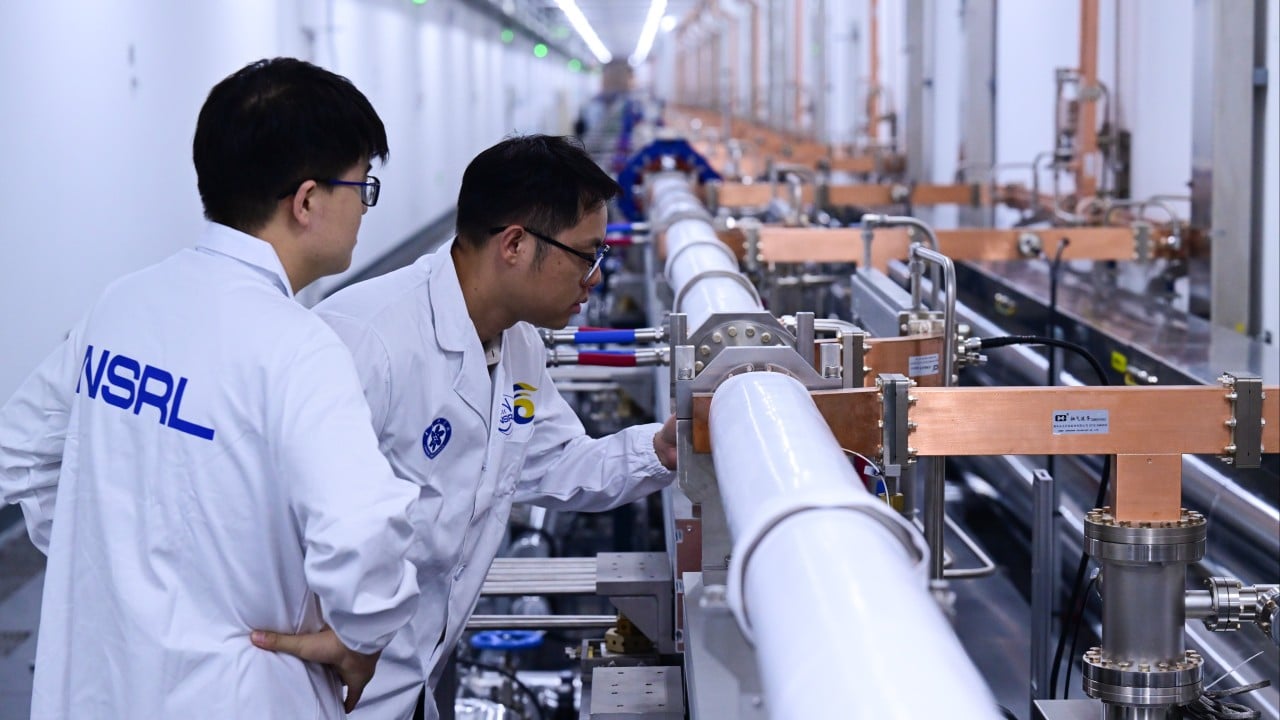
The headlines sound triumphant. Taipei opens a shiny new industrial hub. Government officials beam for cameras, promising a sovereign defense ecosystem completely untethered from mainland manufacturing. Analysts nod along, parroting press releases about geopolitical resilience and supply chain purification.
It is a comforting fantasy. It is also entirely detached from physical reality. For another look, read: this related article.
I have spent the last decade watching hardware startups try to scrub their bills of materials clean of Chinese influence. I have seen founders blow millions redesigning custom PCBs, sourcing alternative plastic resins in Southeast Asia, and rewriting firmware just to stamp a different country of origin on a customs declaration. The math never works the way the politicians pretend it does.
Taiwan is building a dedicated drone industry park to break free from Chinese suppliers, but the strategy rests on a fundamental misunderstanding of how modern hardware actually gets built. You cannot legislate away thirty years of compounding manufacturing supremacy with a zoning permit and some tax incentives. Further insight on this matter has been published by Ars Technica.
Let us dismantle the comforting lies driving this multi-million-dollar initiative.
The Myth of the Clean Bill of Materials
Walk into any cleanroom assembly line in East Asia. Pick up a commercial quadcopter or a tactical reconnaissance drone. Look past the molded plastic shell and the patriotic paint job. Examine the components that actually make the machine fly, communicate, and navigate.
You will find rare earth magnets mined, refined, and sintered in factories across Zhejiang and Inner Mongolia. You will find power management integrated circuits packaged in Shenzhen. You will find passive electronic components—resistors, capacitors, inductors—produced by factories that supply ninety percent of the global baseline volume.
When a government ministry announces a sovereign supply chain initiative, they are usually talking about final assembly. Final assembly is theater. It is where you screw the frame together and slap a domestic serial number on the housing. It is not manufacturing. It is packaging.
To build a truly non-Chinese drone in Taiwan today, you would have to reinvent the entire electronic component supply chain from silicon wafer processing to passive component production. You would need domestic foundries willing to produce low-margin commoditized chips at competitive pricing, chemical refineries producing specialized polymers without mainland precursor inputs, and a workforce scaled to handle dirty, high-volume tier-three manufacturing.
None of those prerequisites exist. Taiwan has mastered high-end semiconductor fabrication for advanced computing, but high-end logic chips are only a fraction of a drone. A drone needs cheap, reliable motor drivers, analog sensors, radio frequency transceivers, and lithium chemistry batteries. None of these are built in Hsinchu. They come from the Pearl River Delta.
The Cost of Ideological Purity
Economics always wins in the end. Always.
When you force a hardware company to source components exclusively from allied jurisdictions, you do not create innovation. You create a tax on competence.
Imagine a scenario where a Taipei-based drone manufacturer needs ten thousand brushless DC motors per month. A supplier in Shenzhen delivers them at two dollars per unit with a failure rate under zero point one percent. A supplier in a friendly democratic nation quotes the identical specification at nine dollars per unit with a twelve-week lead time and a ten percent defect rate.
Now multiply that disparity across every single sub-assembly. The airframe, the gimbal motors, the optical sensors, the wiring harness, the power distribution board.
The resulting aircraft costs four times as much to produce, arrives six months late, and breaks down in the field twice as often. How long do you think a defense contractor or a commercial enterprise will swallow those losses in the name of geopolitical optics? Exactly as long as government subsidies keep paying the difference. The moment the grant money dries up, the economic gravity pulls everyone back to reality.
This is the dirty secret of decoupling. It is an expensive insurance policy that bankrupts the insured before any disaster ever strikes.
The Sub-Tier Dependency Trap
The architects of these industrial parks imagine a clean, linear supply chain. Tier one supplies tier two, tier two supplies tier three, and every single tier waves a local flag.
Real industrial manufacturing is a chaotic web of spiderwebs.
Consider the lithium-ion battery cell. A drone company in the new industrial park might buy its battery packs from a certified Taiwanese assembler. That assembler buys the cylindrical cells from a factory in South Korea or Japan. Sounds safe, right? Completely free of mainland taint.
Now look one layer deeper. Where did the cathode active materials come from? Where was the electrolyte solvent synthesized? Where were the copper current collector foils rolled?
More often than not, the foundational chemical inputs trace directly back to Chinese refineries. China controls over seventy percent of global lithium chemical processing and an even higher percentage of graphite anode production. You can wrap a Korean-assembled battery in a Taiwanese plastic case, but the chemical heart of that power source still relies on processing capacity concentrated across the Taiwan Strait.
If Beijing decides to squeeze the pipeline, you do not need to cut off finished drones. You simply restrict the export of specialized graphite flakes or cobalt sulfate precursors. The entire sovereign assembly line grinds to a halt within thirty days, regardless of how many concrete buildings the Ministry of Economic Affairs erected in Chiayi or Taichung.
The Software and Firmware Illusion
Hardware gets the press, but software gets the kill.
Many procurement officers believe that if they control the flight controller firmware and the ground control station software, they are secure against hardware backdoors. This betrays a profound ignorance of embedded systems engineering.
Modern microcontrollers and system-on-chip architectures contain proprietary boot ROMs, hardware abstraction layers, and closed-source intellectual property blocks embedded directly into the silicon die. When you buy a generic microcontroller or a radio transceiver chip from an international distributor, you are trusting the foundry and the design house that baked the circuitry.
If a manufacturer substitutes a mainland-manufactured microcontroller because non-Chinese equivalents are unavailable or economically unviable, rewriting the top-level flight code in Python or C++ does not eliminate the physical reality of the silicon underneath. Hardware-level telemetry leakage, undocumented debugging interfaces, and state-managed sleep-state behaviors can be hardcoded into silicon gates long before the source code ever touches the device.
To achieve absolute security, a drone manufacturer must own the entire silicon design stack from register-transfer level to final packaging. Taiwan's semiconductor giants are busy making advanced processors for global artificial intelligence titans. They are not allocating multi-billion-dollar lithography lines to churn out low-margin drone flight controller chips. The economics make zero sense.
What Real Diversification Looks Like
If the industrial park model is flawed, what is the alternative? How should an exposed economy actually approach hardware resilience in an era of great power competition?
First, stop lying about complete independence. Total autarky is a nineteenth-century delusion. No single nation-state, not even the largest superpowers, manufactures every single component required to build advanced autonomous machinery within its own borders.
Second, focus on redundancy and modularity rather than purity. Instead of trying to scrub every Chinese-origin bolt and capacitor from the bill of materials, design architectures that can tolerate component substitution on the fly.
If a specific radio chip becomes unavailable due to export controls or supply shocks, the drone's flight computer should be capable of negotiating with an alternative transceiver protocol through an open hardware interface standard. Resilience is not about having a pure supply chain. Resilience is about having a flexible architecture that can adapt when any single link snaps.
Third, invest heavily in the unsexy middle tiers of manufacturing. Everyone wants to fund the shiny final assembly park where politicians can cut ribbons. Nobody wants to fund the boring chemical engineering labs, the precision metal stamping shops, or the specialized wire-drawing facilities that make up the foundation of industrial capability.
If you want a viable drone sector, you need to subsidize the foundational building blocks of manufacturing, not the final box assembly. Otherwise, you are just running an expensive repacking operation that slaps new labels on imported parts.
The Geopolitical Clock is Ticking
Time is not on the side of slow, bureaucratic industrial policy. While government committees debate zoning laws, environmental impact assessments, and subsidy allocations, autonomous systems technology is evolving at breakneck speed.
The wars being fought today in Eastern Europe and the Middle East have transformed drones from specialized military hardware into disposable, software-driven commodities. A tactical drone has a battlefield lifespan measured in minutes or hours, not years.
When your attrition rate requires churning out tens of thousands of airframes a month, cost per unit and production velocity matter infinitely more than ideological purity. If a military force relies on drones that cost ten times more than the adversary's equivalent system because every single screw had to be sourced from an approved democratic ally, that force will run out of money and inventory long before the conflict reaches a stalemate.
Economics and attrition do not care about your customs declaration forms.
The new industrial park in Taiwan will undoubtedly fill up with companies eager to collect government grants and display their domestic credentials. Prototype lines will run. Press releases will flow. Politicians will declare victory over supply chain vulnerability.
None of it changes the underlying vulnerability. Until the foundational material science, chemical refining, and component fabrication are replicated domestically—at scale and at competitive market prices—every sovereign drone built in those pristine new halls will remain tethered to the very manufacturing powerhouse it is trying to escape.
Stop building monuments to independence. Start building systems that can survive reality.