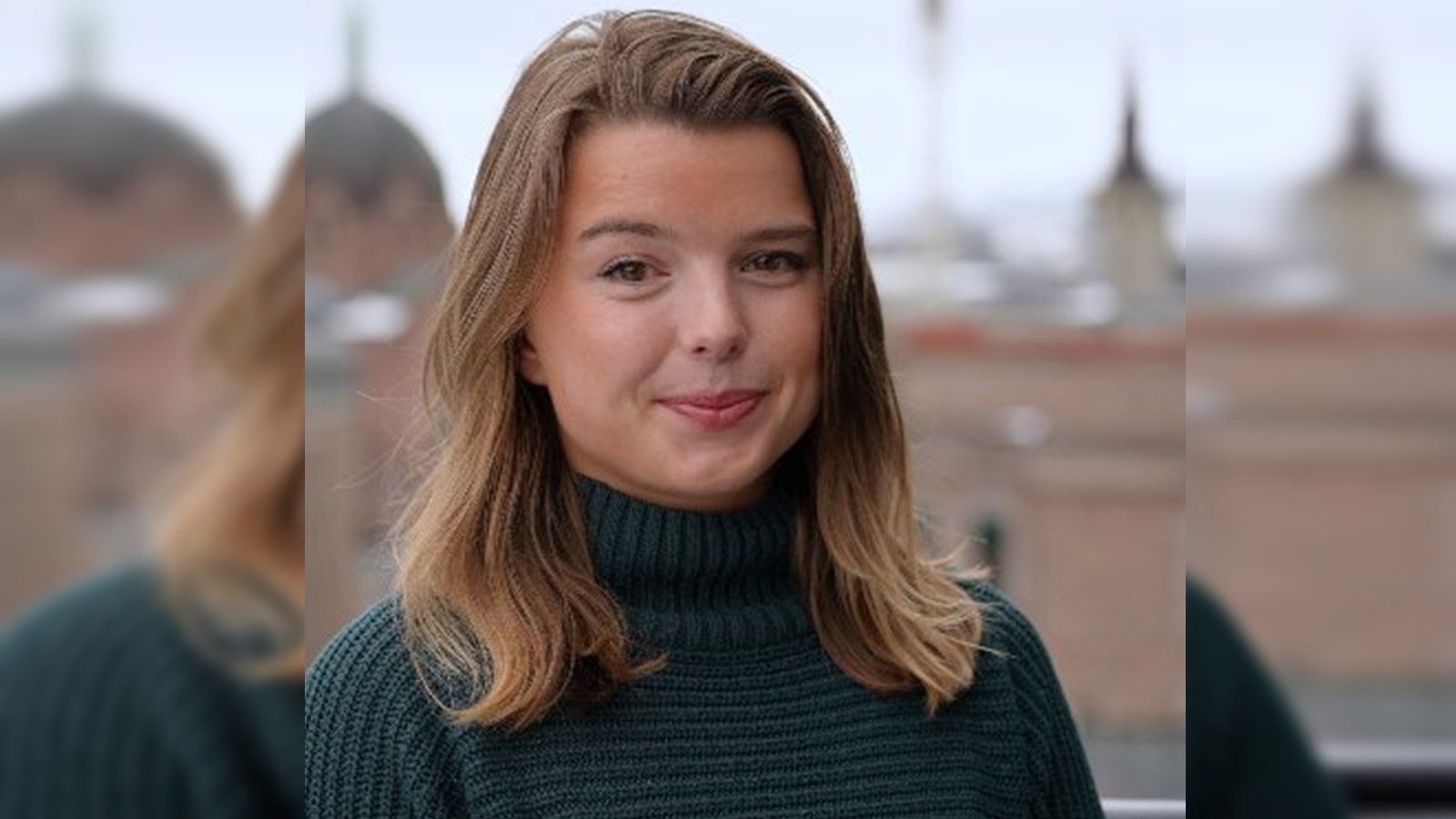
The suitcase is zipped. Your coat is draped over one arm, your passport—stamped with a fresh, crisp visa—sits safely in your breast pocket, and the taxi meter is ticking outside in the crisp November morning air of Oslo.
You have ten minutes before you need to leave for the airport. You are about to board a flight to Hyderabad for your very first trip to India, invited to speak on a panel about the future of journalism and press freedom. If you enjoyed this post, you should look at: this related article.
Then, the phone rings.
On the other end of the line is a voice from the Indian Embassy in Norway. There is no bureaucratic preamble, no lengthy explanation of missing paperwork, and no formal appeal process offered. The message is stripped down to five blunt words: You can't go to India today. For another look on this event, see the latest update from The Washington Post.
Stop.
Imagine the sudden, sickening drop in your stomach as the physical reality of a stamped passport collides with an invisible wall erected thousands of miles away. That is not a hypothetical exercise in anxiety; it is the exact sequence of events described by Norwegian journalist Helle Lyng Svendsen on the morning of November 11, 2026. Working for the Oslo-based newspaper Dagsavisen, Lyng had done everything by the book. She had applied for her documents, secured political clearance from India's Ministry of External Affairs, and received the physical visa in her passport to attend the Bharat Summit—a major international gathering hosted by the Indian National Congress in Hyderabad on November 13 and 14. Yet, ten minutes before she stepped out her door, "orders from above" inside New Delhi's Ministry of Home Affairs severed her journey before it could even begin.
To understand why a single phone call in Scandinavia sent ripples across global newsrooms, you have to rewind the tape by six months, to a brightly lit press room in Oslo in May 2026.
The Memory of a Microphone
During a joint press briefing featuring Indian Prime Minister Narendra Modi and Norwegian Prime Minister Jonas Gahr Støre, Helle Lyng did what reporters in Oslo are trained to do from their very first day on the beat. She raised her hand, took the microphone, and asked a direct question. Specifically, she asked Prime Minister Modi why he does not take unscripted questions from what she characterized as "the world's freest press".
In Norway, a country that routinely sits at the very top of global press freedom rankings, questioning a head of state is as unremarkable as checking the morning weather forecast. It is not an act of rebellion; it is the basic plumbing of civic life. When a Norwegian reporter asks a prime minister why they avoid unscripted press conferences, the question is treated as routine accountability, forgotten by the time the evening news broadcast wraps up.
Politics, however, has a much longer memory than journalism.
When Lyng posted her video message on X addressed directly to Indian Union Home Minister Amit Shah, standing beside her packed bags with an issued visa rendered suddenly useless, she voiced the question hanging over the entire episode. Was this eleventh-hour revocation a bureaucratic coincidence, or was it the delayed receipt for a question asked six months earlier in Oslo?
The official silence from New Delhi spoke volumes. Neither the Ministry of External Affairs nor the Ministry of Home Affairs offered a public, itemized justification for cancelling her travel clearance. Instead, when pressed on the broader wave of denials surrounding the summit, officials fell back on the classic diplomatic shield: visa decisions are "sovereign functions".
Technically, that is true. Every nation on earth reserves the absolute legal right to decide who crosses its borders and who stays out. A visa is never an entitlement; it is a revocable invitation.
Yet, looking at the sheer scale of what unfolded around the Hyderabad summit reveals that Lyng's cancelled flight was not an isolated administrative hiccup. According to Congress MP Shashi Tharoor, out of the 315 international speakers whom the External Affairs Ministry had initially cleared to attend the Bharat Summit—a gathering designed to bring together over 1,000 elected representatives, policymakers, and intellectuals from more than 70 countries—a staggering 115 were either denied entry or had their visas cancelled at short notice on instructions from the Home Ministry.
More than a third of the cleared guest list vanished before the opening gavel could fall.
The Anatomy of the Invisible Wall
If you have ever stood in an immigration line after a fourteen-hour flight, clutching a folder of invitation letters while an officer types slowly into a terminal you cannot see, you know the distinct, powerless chill of border bureaucracy. Your palms sweat slightly. You suddenly wonder if a stray tweet from three years ago, an old article, or a poorly phrased answer on a customs form is about to turn you around at the gate.
For most travelers, that anxiety is just a passing shadow. For foreign correspondents, researchers, and commentators covering modern geopolitics, it has become an occupational hazard that reshapes how they work long before they ever pack a bag.
Think of modern border control not as a brick wall, which is obvious and honest about where it stands, but as a pane of smart glass. From the outside, everything looks transparent. The application portals are open; the political clearances are granted; the ink is stamped onto the passport page. The system signals openness, welcoming dialogue about democracy and the future of media. Then, at the exact moment a traveler steps forward, a switch flips in a back room, and the glass turns instantly, impenetrably opaque.
This mechanism is infinitely more effective at chilling speech than outright censorship ever could be.
Consider a hypothetical freelance reporter based in London or Stockholm—let us call him Marcus—who specializes in South Asian trade and governance. Marcus has spent three years building sources in Bengaluru and New Delhi, saving up for a reporting trip that will anchor his next book. One afternoon, he attends a local press briefing with a visiting minister. A sharp, uncomfortable question forms in his mind—the exact kind of question his editors pay him to ask.
Then, he remembers what happened to Helle Lyng. He remembers that a visa stamp in a passport is no guarantee of entry, and that an airline ticket can be voided ten minutes before the cab arrives. Does Marcus still ask the question? Perhaps he does, if he is brave. Or perhaps he softens the phrasing, rounds off the sharp edges, and decides to save the harder inquiry for another day—a day that never quite arrives.
Nobody had to arrest Marcus. Nobody had to confiscate his notebook or shut down his publication. The mere possibility of the invisible wall did all the heavy lifting.
Why Two Ministries Tell Two Different Stories
One of the most revealing details in Helle Lyng's account—and in the broader controversy surrounding the 115 barred speakers—is the friction visible between two arms of the same government.
On one side sits the Ministry of External Affairs, the diplomatic face a country presents to the world. Diplomacy thrives on engagement, soft power, and the projection of confidence. Granting political clearance to international panelists for a conference in Hyderabad aligns with the image of a vast, self-assured democracy comfortable with hosting global debates, even when those debates are organized by the political opposition.
On the other side sits the Ministry of Home Affairs, the apparatus tasked with internal security, policing, and gatekeeping. Security bureaucracies are wired to view friction not as healthy democratic debate, but as risk. When a security apparatus overrides diplomatic clearance hours before a flight departs, it signals a profound shift in how a state views criticism: no longer as an unavoidable part of public life, but as an intrusion to be neutralized at the border.
History shows this pattern is hardly unique to one capital or one administration. Across the globe, from Washington to Beijing, from London to Moscow, the quiet weaponization of the visa queue has steadily replaced the noisy drama of expelling journalists after they arrive. Expelling a reporter already on the ground creates television footage—cameras outside an airport, defiant farewell press conferences, front-page headlines about censorship. Cancelling a visa ten minutes before departure in Oslo produces no dramatic tarmac confrontation. There is just a journalist standing in a quiet hallway next to a packed suitcase, holding a phone.
It is administrative, clean, and almost entirely deniable.
The Irony of the Empty Chair
There is a bitter, almost theatrical irony in the specific panel Helle Lyng was supposed to join in Hyderabad. She had not been invited to advise on sensitive defense procurement, inspect restricted border zones, or mediate an active security crisis. She was scheduled to speak on a panel about the future of media, press freedom, and how they intertwine with democracy.
By preventing her from boarding her flight, the authorities inadvertently delivered a more potent keynote address on the state of global press freedom than anything she could have said from a stage in Telangana.
In her video appeal to Amit Shah, Lyng framed the moment as a test of democratic confidence, noting that there was still time to reverse the decision so she could make her panel, before asking what the world's largest democracy would choose to do. The response was the continuation of silence, and the flight departed without her.
Bharat Summit organizer Pushparaj Deshpande called it a glimpse of what the "mother of democracy" looks like in practice, while Shashi Tharoor lamented that a proud democracy would appear so insecure as to bar voices it feared might be critical. Strip away the partisan scoring of Indian domestic politics—where the ruling party and the opposition trade blows daily over democratic norms—and a much simpler, universal truth remains.
Confidence does not flinch at a microphone.
Think about the strongest institutions, leaders, or even families you have ever known. True authority never feels threatened by an awkward question from a guest. It absorbs the question, answers it on its merits, and moves forward untouched. Only when certainty begins to hollow out from the inside does every outside inquiry start to look like an existential threat that must be stopped at the airport gate.
What Happens When the Doors Close Quietly
It is tempting, when reading a dispatch about a Norwegian journalist losing her travel clearance to an Indian political summit, to file it away as a niche diplomatic spat—a story for media insiders and foreign policy wonks.
That would be a mistake.
The free flow of reporters across borders is the oxygen supply of global understanding. Without independent observers moving freely between Oslo and Hyderabad, between Nairobi and New York, between Tokyo and Berlin, our picture of the world shrinks to whatever official press releases a government chooses to publish. We stop seeing countries as complex, living societies full of debate, contradiction, and vitality, and start seeing only curated brochures.
When a visa stamp becomes conditional on whether a journalist asked a polite enough question six months ago, the border does not just close to one reporter. It closes to the readers in Norway who wanted to understand India through the eyes of someone they trust, and it closes to the audience in Hyderabad who wanted to hear how democracy is practiced in Scandinavia.
Helle Lyng never made it to India that November. Her suitcase stayed in Oslo. Her boarding pass expired unused. And in a conference hall in Hyderabad, a chair on a panel about press freedom sat conspicuously empty—saying far more to the room than a microphone ever could.



