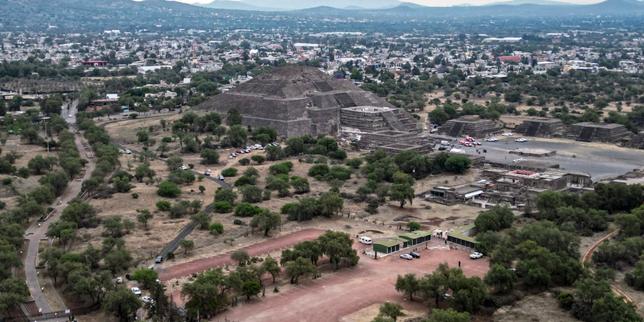
Stop looking at the crime scene tape. Start looking at the map. When news broke of a Canadian national killed at the Teotihuacán pyramids, the international media reflexively leaned into the "Mexico is a war zone" narrative. It is the easy play. It generates clicks. It also ignores the fundamental mechanics of global risk management. If you think staying home or sticking to the hotel pool makes you a master of safety, you are falling for the availability heuristic—a cognitive bias where we overstate the probability of events that are easy to remember.
The shooting at Teotihuacán was a tragedy, but treating it as a baseline for travel safety in the Valley of Mexico is an intellectual failure. Industry insiders know that the real risk in travel isn't the headline-grabbing anomaly; it is the mundane negligence of the traveler who treats a foreign country like a theme park.
The Geography of Risk vs. The Narrative of Fear
Most travelers operate on a binary: safe or dangerous. This is a child's view of the world. Safety is not a static state; it is a fluid condition dependent on hyper-local variables. Teotihuacán sits roughly 40 kilometers northeast of Mexico City. It is a massive, sprawling complex that borders several municipalities where local economic pressures and organized crime do not magically vanish because a UNESCO plaque is nearby.
The media paints these incidents as "attacks on tourists." The data suggests something far more nuanced. Violence in these regions is rarely predatory toward random foreigners for the sake of it. It is almost always transactional, targeted, or collateral to local disputes. When a traveler gets caught in the crossfire, it isn't evidence of a deteriorating security state; it is a statistical outlier occurring within a complex social ecosystem.
Compare the homicide rate of major Mexican tourist hubs to U.S. cities like St. Louis, Baltimore, or New Orleans. If you are comfortable walking down Bourbon Street but terrified of the Sun Pyramid, your risk assessment isn't based on math. It is based on marketing.
Stop Asking if Mexico Is Safe
That is the wrong question. It is a lazy question. "Is Mexico safe?" is like asking "Is the ocean wet?" It ignores depth, current, and your ability to swim.
The better question: "What is my personal security profile?"
Security isn't something the Mexican government provides for you; it is something you maintain through situational awareness and logistical planning. The "lazy consensus" suggests that the government should have more soldiers at the ruins. History shows us that militarization often escalates tension rather than diffusing it. Real security comes from understanding the "plazas"—the local territories—and how they operate.
I have watched travelers blow thousands on luxury tours while completely ignoring basic operational security (OPSEC). They wear high-end watches, carry flashy gear, and treat local staff like NPCs in a video game. Then they are shocked when they become a "soft target."
The Myth of the "Safe" Ancient Site
There is a romanticized notion that ancient ruins are sacred ground, somehow insulated from the realities of modern Mexico. This is a dangerous delusion. Teotihuacán is an open-air museum surrounded by living, breathing, and sometimes struggling communities.
When you visit these sites, you are entering a high-traffic economic zone. The "industry" of the ruins—from the vendors to the guides to the transport—is a massive prize. Where there is a massive prize, there is competition. Sometimes that competition turns violent.
Common Misconceptions Dismantled:
- Federal presence equals safety: Just because you see National Guard troops doesn't mean the perimeter is secure. It means the area is contested enough to require a presence.
- Daylight is a shield: The Teotihuacán incident, like many others, didn't happen in a dark alley. It happened when the sun was up. Criminals do not follow a schedule.
- Tour groups are invulnerable: Large groups provide a false sense of security. They actually limit your mobility and make you a more visible target.
The Economics of the Headline
Why does a shooting at a pyramid become global news while five murders in a Chicago suburb barely make the local evening broadcast? Because the contrast sells. The juxtaposition of "Ancient Wonder" and "Modern Violence" is a perfect editorial hook.
This creates a distorted feedback loop. Potential travelers see the headline, cancel their trips, and the local economy takes a hit. When the local economy takes a hit, crime often increases as people lose their legitimate livelihoods. By reacting to the fear, you are inadvertently contributing to the instability of the region you claim to care about.
How to Actually Navigate High-Risk Zones
If you want to move through the world with actual authority, stop relying on State Department travel advisories. They are written by bureaucrats who prioritize legal liability over ground-truth reality. Use them as a baseline, but not a bible.
1. Master the "Low-Profile" Methodology
The goal is to be the least interesting person in the room. This doesn't mean dressing like a local—you’re a foreigner, you’ll never blend in perfectly. It means minimizing the visual cues of wealth and vulnerability. If your "travel outfit" costs more than the average annual salary of the town you’re visiting, you are doing it wrong.
2. Digital OPSEC
Stop posting your location in real-time. This should be 101-level knowledge, yet people still "check in" at Teotihuacán while they are standing at the gate. You are broadcasting your exact coordinates to anyone with an internet connection and bad intentions. Post your photos when you are back in the city or, better yet, back in your home country.
3. Transportation is the Weak Link
Most violent encounters don't happen at the destination; they happen in transit. Using "clandestine" or unauthorized taxis is the fastest way to lose control of your environment. Use reputable, tracked transportation apps or private drivers vetted by high-end security firms if you have the budget.
The Truth About Canadian and American Casualties
When a Westerner is killed in Mexico, it is often framed as an unprovoked attack on an innocent. While often true in the literal sense, the "innocence" of the traveler frequently involves a total lack of respect for the environment. I’ve seen travelers get into heated arguments with locals over five dollars, or wander into areas clearly marked as restricted.
In a country where the legal system operates on a "guilty until proven wealthy" basis, your primary defense is avoidance. If you find yourself in a situation where you need the police, you have already lost.
The Cost of the "Safe" Choice
Choosing to avoid Mexico or its historic sites because of a single shooting is a high-cost decision. You lose the cultural exchange, the historical perspective, and the personal growth that comes from navigating complex environments. You trade a rich life for a sterile one, based on a risk that is statistically negligible compared to your daily commute.
The Teotihuacán shooting is a data point, not a trend. If you can’t tell the difference, you aren't a traveler; you're a tourist waiting for a permission slip from the news.
The world is not getting more dangerous. It is getting more documented. Every incident is now captured, uploaded, and amplified until it fills your entire field of vision. The secret to actual travel mastery is the ability to zoom out.
Look at the thousands of people who visited the pyramids that same day and went home to have dinner. Look at the millions who navigate Mexico City every week without incident. That is the reality. The shooting is the exception.
If you live your life by the exceptions, you will never see the rule.
Pack your bags. Hire a private driver. Keep your mouth shut and your eyes open. The pyramids are still there, and they don't care about your fear.
Stop being a victim of the narrative.