The Structural Vulnerability of Emergency Medical Infrastructure
Urban healthcare facilities face a compounding operational crisis during extreme thermal events. When ambient temperatures exceed historical design thresholds, hospitals experience a simultaneous spike in patient inflow and a degradation of internal climate control systems. The standard media narrative framing this as a localized discomfort issue misdiagnoses a systemic infrastructure failure. In reality, a hospital's inability to maintain thermal homeostasis across its entire footprint creates an immediate triage bottleneck, altering clinical outcomes and compromising occupational safety.
To understand the mechanics of this failure, the problem must be deconstructed into three interdependent variables:
- The Ambient Thermal Load: The external peak temperatures and prolonged nocturnal heat retention that prevent structural cooling.
- The Building Envelope and HVAC Limitation: The mechanical incapacity of legacy cooling systems to achieve the required air exchange and refrigeration rates.
- The Patient Velocity Influx: The surge in admissions driven by heat-induced exacerbations of chronic respiratory, cardiovascular, and metabolic conditions.
When these three variables peak concurrently, the emergency department transitions from a fluid processing environment into a thermal containment zone.
The Micro-Climate Triage Framework
In a destabilized thermal environment, hospital leadership cannot rely on uniform facility cooling. They must deploy a localized micro-climate strategy, isolating specific zones to function as thermal sanctuaries. The operational logic dictates that if the total structural volume cannot be maintained at safe clinical temperatures, refrigeration resources must be concentrated where patient vulnerability is highest.
[Total Facility Footprint]
        │
        ▼ (HVAC Capacity Deficit)
[Zonal Segmentation]
        │
        ├─► Thermal Sanctuaries (Waiting Rooms/ICUs) ──► Reconfigured for High-Density Staging
        │
        └─► Ambient Zones (Corridors/Wards) ───────────► Transitioned to Low-Metabolic Thresholds
This structural adaptation relies on two primary mechanical and spatial reconfigurations.
Active Refrigeration Density
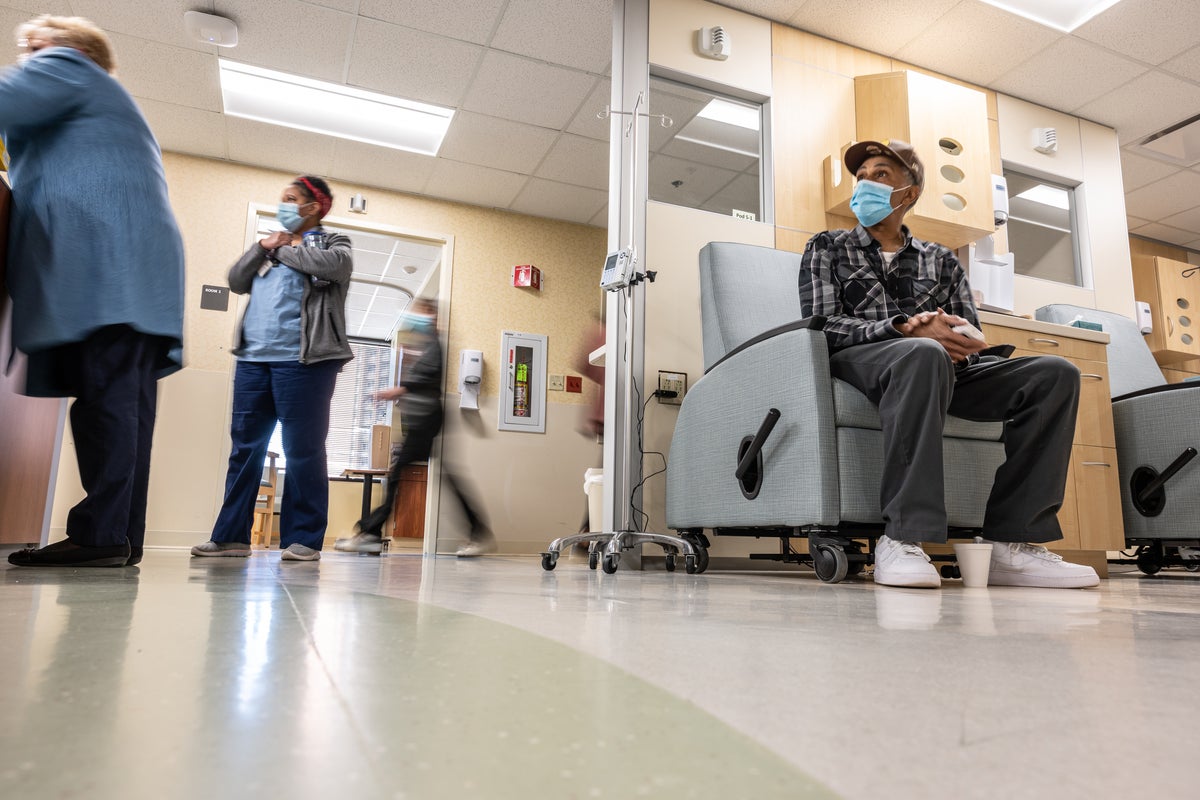
The creation of high-efficiency cooling zones—frequently utilizing localized split-system air conditioning units or dedicated air handling loops—requires sealing specific architectural footprints. Waiting rooms and main intake lobbies are prioritized for this intervention. These areas possess the highest physical volume of transient individuals, making them the primary point of thermal deceleration for patients entering from the external environment.
Metabolic Load Displacement
By clustering patients inside a climate-controlled perimeter, the facility reduces the metabolic heat generated across non-refrigerated wards. However, this creates a secondary operational challenge: spatial density. Maximizing the occupant-to-square-meter ratio in an air-conditioned waiting room rapidly increases carbon dioxide accumulation and bio-effluent load, requiring precise management of fan speeds and fresh air intake ratios to prevent compromised air quality.
Thermodynamic Bottlenecks in Clinical Workflows
The introduction of localized cooling zones solves the immediate problem of acute hyperthermia prevention but introduces severe operational frictions across the wider clinical workflow. The primary friction point is the thermal differential created between cooled sanctuaries and uncooled clinical spaces.
The Velocity of Care Disruption
Medical personnel operating in a hospital with fragmented climate control must continuously cycle between decoupled thermal zones. Moving from a 22°C waiting room or intensive care unit into a 32°C ward or corridor accelerates physical exhaustion and cognitive fatigue.
The physiological cost on staff can be mapped through a simple feedback loop:
- Elevated Core Temperature: Extended exposure to uncooled clinical environments raises the practitioner’s core body temperature.
- Cognitive Drift: Elevated core temperatures impair working memory, prolong decision-making cycles, and increase the probability of diagnostic error.
- Compensatory Deceleration: To mitigate heat stress, staff deliberately slow their physical movement, directly reducing the velocity of patient processing and increasing wait times within the primary cooling zone.
Cross-Contamination Risk and Air Physics
Air-conditioned waiting areas adjacent to non-air-conditioned corridors generate micro-pressure differentials. When doors are cycled open to move patients into treatment rooms, cooler, denser air escapes along the floor, while warm, potentially contaminated air from uncooled zones drafts in at head height. This thermal siphoning effect complicates infection control protocols, particularly regarding airborne pathogens, requiring continuous adjustments to positive and negative pressure balances that legacy HVAC systems are rarely equipped to handle dynamically.
Quantifying the Heatwave Patient Influx Architecture
The demand shock experienced by hospitals during a heatwave is non-linear. It does not merely scale with the thermostat; it accelerates as environmental thresholds are crossed and sustained over time.
The Three-Day Cumulative Threshold
Data from historical European heat anomalies indicate that hospital admission velocities remain manageable during the initial 24 to 48 hours of a thermal event. The critical breaking point occurs on day three. This delay represents the physiological buffering capacity of the vulnerable population.
During the initial phase, individuals utilize domestic cooling, behavioral adaptations, and physiological compensation (such as increased sweating and vasodilation). By day three, prolonged nocturnal heat deprives the body of thermal recovery, causing systemic homeostasis to collapse.
Diagnostic Distribution Metrics
The influx profile during a prolonged thermal event shifts away from traditional traumatic injuries toward complex internal medicine profiles. The operational burden is characterized by specific diagnostic categories:
- Renal Failure and Electrolyte Depletion: Acute kidney injury driven by severe dehydration, requiring rapid intravenous fluid resuscitation and continuous metabolic monitoring.
- Cardiovascular Decompensation: Increased cardiac output demands driven by the body's attempt to dissipate heat via cutaneous vasodilation, precipitating myocardial infarctions and acute heart failure in pre-existing patient cohorts.
- Respiratory Distress: High ambient temperatures frequently correlate with atmospheric stagnation and elevated ground-level ozone concentrations, triggering acute asthma and chronic obstructive pulmonary disease (COPD) exacerbations.
This specific diagnostic mix alters the resource consumption profile of the emergency department. Patients cannot simply be discharged after cooling; they require prolonged stabilization, laboratory validation, and inpatient bed allocation, creating a downstream bottleneck that clogs the initial waiting room sanctuary.
The Strategic Decentralization Mandate
To mitigate the systemic failure of hospital infrastructure during extreme thermal events, healthcare networks must transition away from reactive, localized cooling adaptations toward a model of predictive structural resilience. Relying on an air-conditioned waiting room as the primary defense mechanism against a regional climate event is an unsustainable operational posture.
The final strategic play requires an immediate shifting of capital allocation and operational protocols toward three distinct interventions:
First, hospitals must execute a complete decoupling of critical clinical zone HVAC systems from administrative and transient spaces. This ensures that total refrigeration capacity can be dynamically diverted to intensive care, emergency triage, and surgical suites without overloading the central chilling architecture.
Second, facilities must install redundant, localized power generation capable of supporting secondary cooling loops exclusively. When regional electrical grids experience high demand stress due to widespread air conditioning usage, the hospital’s internal grid must possess the capacity to maintain localized thermal sanctuaries independently of external power reliability.
Third, patient intake workflows must be decentralized via pre-hospital thermal screening. By establishing mobile, cooled triage points outside the physical footprint of the emergency department, the facility can filter and decelerate the thermal load of incoming patients before they breach the main building envelope. This preserves the internal waiting room's air quality, controls spatial density, and protects the core clinical staff from premature cognitive and physical exhaustion.