The recycled air of a Boeing 737 has a specific, sterile scent. It is the smell of pressurized dreams, of coffee in plastic cups, and the quiet hum of three hundred strangers trying to pretend they aren't hurtling through the stratosphere at five hundred miles per hour. On Delta Flight 1512, somewhere between the red clay of Atlanta and the evergreen mist of Portland, that metallic peace didn't just break. It evaporated.
Most midair emergencies are quiet affairs. A flickering light in the galley. A hushed conversation between a flight attendant and a passenger with a sudden, clutching pain in their chest. But birth is different. Birth is a biological riot. It is loud, it is messy, and it is entirely indifferent to the fact that there is no hospital for two hundred miles in any direction—and certainly none reachable by a vertical descent.
The Geography of Panic
We take the miracle of modern aviation for granted. We track our little blue icons on seatback screens, annoyed if the Wi-Fi lags or the pretzels are late. We forget that we are suspended in a vacuum where the temperature is fifty degrees below zero and the oxygen is thin enough to kill. In this high-altitude theater, every resource is finite. There is a medical kit, yes. There are bandages and perhaps an AED. But there is rarely a sterile environment for a human being to enter the world.
When the call went out over the intercom—that frantic, measured request for any medical professionals on board—the atmosphere in the cabin shifted. It wasn't the slow realization of a delay. It was the electric jolt of a shared crisis. Imagine sitting in 14B, your laptop open to a spreadsheet, only to realize the woman three rows up isn't just uncomfortable. She is in the throes of a transition that should be happening in a room with linoleum floors and neon lights, surrounded by a dozen specialized machines.
Instead, she had a narrow aisle, a few thin blankets, and the collective willpower of a cabin full of strangers.
The Unlikely Crew
The beauty of a crisis is that it strips away the artifice of the passenger manifest. On this particular Tuesday, the manifest held a hidden fortune. A nurse practitioner, a flight attendant with ice in her veins, and a handful of passengers who didn't look away.
In a hospital, a delivery is a choreographed dance. Here, it was an improvisation. The "labor room" was the galley—a cramped space usually reserved for soda cans and snack carts. The "surgical lights" were the overhead reading lamps and the flashlights of smartphones held by trembling hands.
There is a specific kind of courage required to step into a situation where you have everything to lose and almost no tools to work with. The nurse didn't have a fetal monitor. She had her ears and the palm of her hand. She didn't have a neonatal intensive care unit waiting behind a set of double doors. She had the floor of an airplane.
The stakes weren't just high; they were absolute. At thirty thousand feet, the pressure inside the cabin is equivalent to being on a mountain top. For a newborn, whose lungs are taking their very first gulps of air, that environment is a gauntlet. The thin air that we barely notice as adults is a monumental challenge for a brand-new respiratory system.
The Sound of the Sky Falling Silent
As the news rippled back through the rows, something strange happened. The usual chatter stopped. The clinking of ice cubes ceased. People stopped looking at their screens and started looking at each other. There is a profound, primal empathy that takes over when a life is being fought for in a public space.
It wasn't just about the baby. It was about the mother—a woman whose name most didn't know, but whose struggle became their own. Every passenger on that flight became a silent stakeholder in that delivery. They were the witnesses to a miracle that felt like a collision.
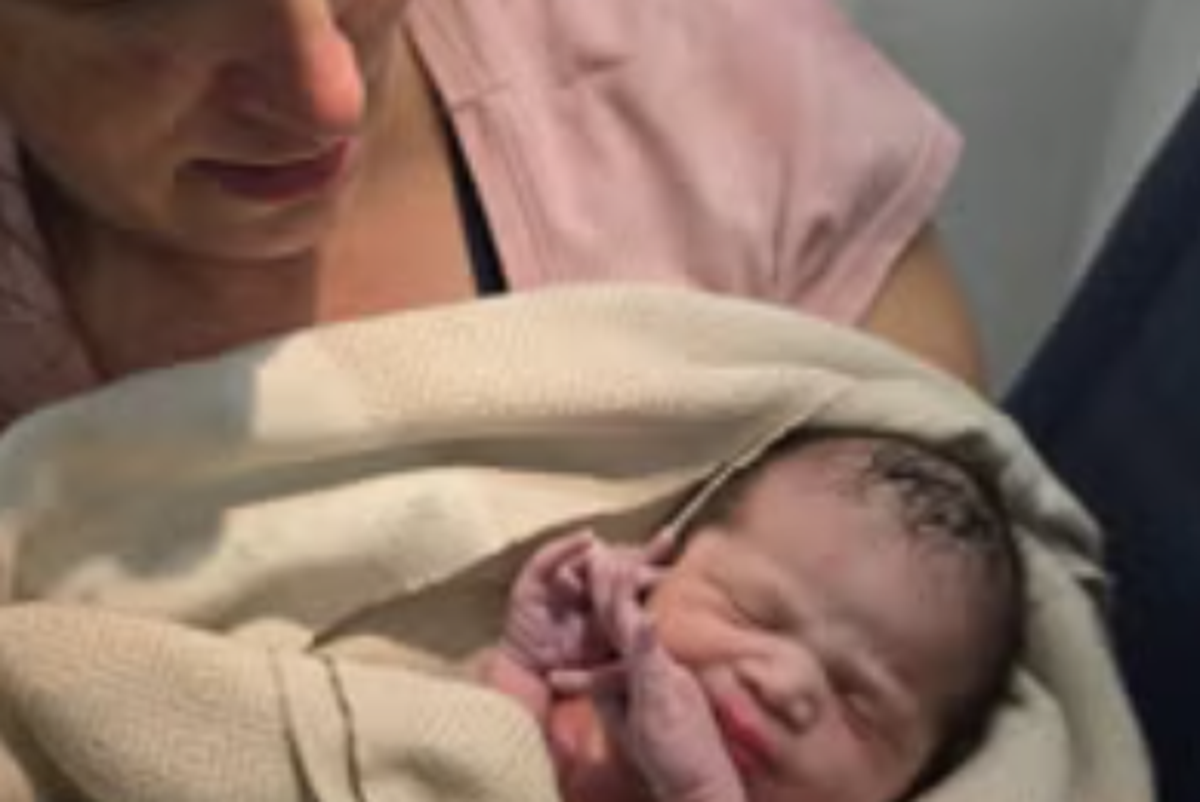
The birth happened with a speed that defied the typical hours of labor. Perhaps it was the altitude, or perhaps it was the sheer adrenaline of the moment, but soon, a new sound cut through the drone of the jet engines.
It wasn't a loud sound. It was a thin, wavering wail.
That cry is the most beautiful noise in the world when you are suspended over the Midwest in a pressurized tube. It is the sound of success. It is the sound of a heart beating against the odds. In that moment, the cabin erupted. Not in the polite applause of a smooth landing, but in the visceral, tearful roar of people who had just seen the impossible.
The Logistics of Grace
Once the baby arrived, the reality of the situation didn't get easier; it just changed shape. The pilots, who had been in constant contact with medical controllers on the ground, began the delicate process of an emergency diversion. They weren't just flying a plane anymore; they were piloting an ambulance with wings.
Every bank of the wings, every adjustment of the throttle, was calculated to keep that tiny, new pulse steady. The flight attendants, who are trained for everything from heart attacks to hijackings, became caregivers. They managed the heat, using what they had to keep the infant warm, aware that a newborn loses body heat at an alarming rate, especially in the dry, moving air of a cabin.
The passengers stayed in their seats. They didn't crowd the aisles for a better look. They didn't complain about the missed connections in Portland or the fact that they were now headed toward a different city entirely. They sat in a reverent, stunned silence.
They had just seen a person begin.
The Fragility of the Bubble
We often think of our lives as a series of controlled events. We book our tickets, we choose our seats, and we expect the world to adhere to the schedule we’ve printed out. We believe in the robustness of our systems—the "cutting-edge" technology of the aircraft and the "seamless" nature of modern travel.
But this event reminds us that we are always just one breath away from the edge of our control.
The baby delivered on Flight 1512 wasn't born into a world of "holistic" care or "synergistic" medical teams. He was born into a world of raw humanity. He was brought into the light by people who weren't supposed to be there, using tools that weren't designed for the task, driven by an instinct that predates aviation by a hundred thousand years.
The mother was eventually met by paramedics on the tarmac of an unscheduled stop. She disappeared into the back of an ambulance, her bundle wrapped in airline blankets that would likely become family heirlooms. The plane eventually took off again, the cabin cleaned, the galley restocked with tomato juice and pretzels.
But the plane was different. The people on it were different.
They had shared a secret that most people never get to see. They had watched the boundary between the "standard operating procedure" and the miraculous dissolve. They had seen that even in a world of steel and jet fuel, the most powerful force is still the simple, desperate act of helping someone else survive.
The next time you find yourself at thirty thousand feet, frustrated by a crying child in the seat behind you or a delay on the tarmac, remember the woman in the galley. Remember the nurse with the smartphone flashlight. Remember that every person in those narrow seats is carrying a universe of stakes with them.
The sky is a vast, empty place. We only make it small by looking after one another.
As the sun began to set over the tail fin, casting long, orange shadows across the clouds, the captain’s voice came over the speaker one last time. He didn't talk about altitude or head-winds. He didn't give the weather for Portland. He simply thanked everyone for their patience and their heart.
The airplane moved on, a silver speck in the darkening blue, carrying three hundred strangers and one very new story that would never be forgotten.