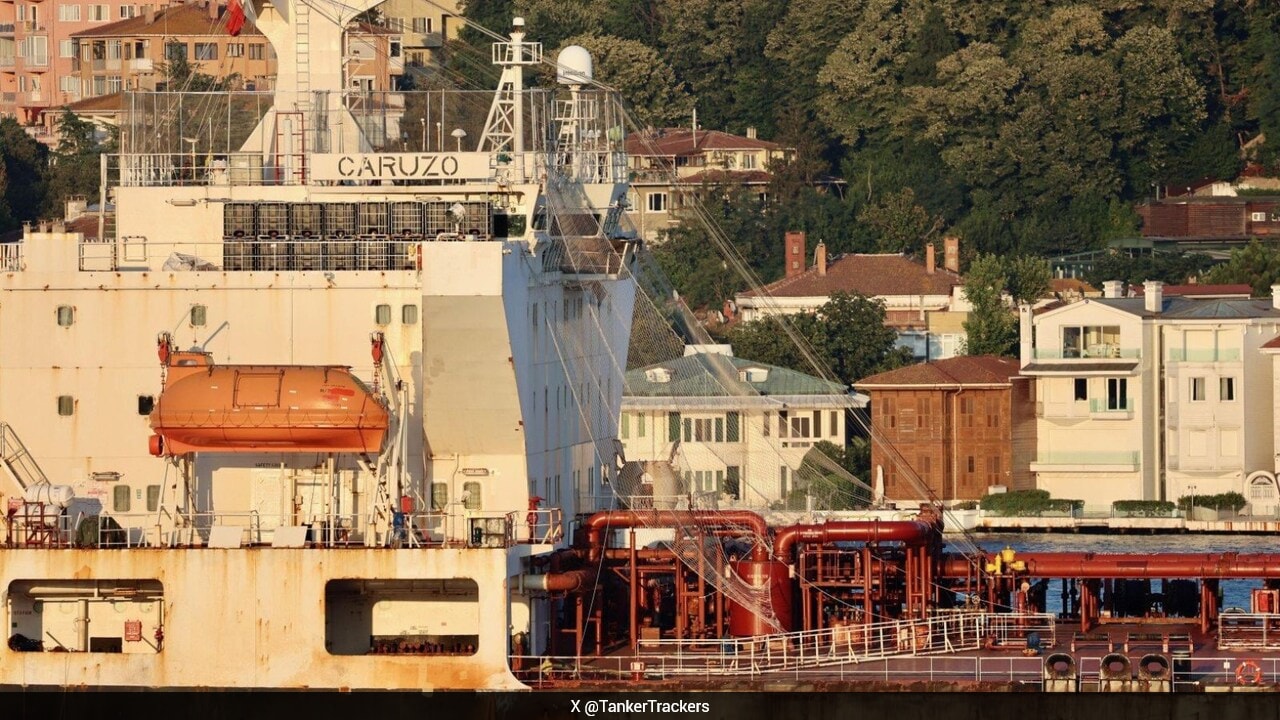
Every mainstream defense analyst with a Wi-Fi connection and a subscription to open-source intelligence feeds spent the last year mocking the Russian Navy. They looked at the improvised wire cages welded over the decks and turrets of patrol boats, corvettes, and landing ships and laughed. They called them "cope cages." They posted memes comparing Black Sea Fleet commanders to post-apocalyptic warlords strapping scrap metal to pickup trucks.
The lazy consensus is comforting. It lets armchair observers pretend that military procurement operates on a neat, linear spectrum from high-tech perfection to pathetic desperation.
The narrative goes like this: expensive warships outfitted with advanced missile defense systems are reduced to stringing chicken wire and chain-link fences across their superstructures because high-tech electronic jamming failed against cheap uncrewed surface vessels. Therefore, the cages are a sign of systemic collapse, institutional rot, and technological bankruptcy.
The narrative is dead wrong.
I have spent two decades looking at how military hardware actually behaves when it meets the chaotic, unforgiving physics of an active combat zone. I have watched defense departments blow billions on pristine, over-engineered solutions that fail on day one, while desperate troops win wars with welded pipe and scrap iron. What the media dismisses as amateurish improvisation is actually a masterclass in cost-asymmetrical defense engineering.
We need to talk about why those welded wire boxes on Russian hulls are working well enough to change naval warfare forever, and why mocking them exposes a fundamental ignorance of how kinetic energy actually behaves.
The Physics of the Cheap Threat
To understand why the cage works, you have to look at the weapon it is designed to defeat. The primary vector terrorizing modern naval assets in restricted waters is the explosive-laden uncrewed surface vessel. Think of it as a jet ski packed with hundreds of kilograms of high explosives, guided by satellite navigation and a video feed, roaring toward a multi-million-dollar target at forty knots.
Conventional naval point defense systems—rapid-fire CIWS cannons, remote weapon stations, and heavy machine guns—were designed to handle fast jets, incoming anti-ship cruise missiles, and traditional surface threats. They are calibrated for velocity, radar signatures, and predictable ballistic trajectories.
A low-slung fiberglass hull skimming the wave crests presents a nightmare targeting problem. Radar clutter from the water surface makes locks difficult. Thermal signatures can be masked. By the time the threat is positively identified, the closing velocity leaves seconds for human reaction or automated tracking handoffs.
If the drone gets close enough, it does not need a precision kinetic impact to cripple a ship. It needs to detonate against the hull plates, punching a hydraulic-hammer crater through steel, flooding compartments, and breaking the spine of the vessel.
Enter the cage.
Why Proximity Fuses Hate Air Spacing
The mainstream critique of the cage relies on a profound misunderstanding of how shaped charges and contact-detonated explosives interact with armor.
Critics point out that a wire mesh will not stop a massive warhead from detonating. True. A chain-link fence will not halt a two-hundred-kilogram high-explosive blast. But stopping the explosive is not the point. Disrupting the detonation geometry is.
Most modern kamikaze sea drones use impact fuzes or simple contact pins mounted on the forward nose of the craft. When the nose strikes a hard surface, the circuit closes, and the main charge detonates instantly against the primary structure.
By erecting a standoff perimeter—a cage built two to three meters away from the actual hull—engineers force a premature physical interaction.
Imagine a scenario where a drone crashes into the outer screen at thirty-five knots. The cage crumples, deforms, and absorbs kinetic energy, but more importantly, it can trigger the contact fuze or shatter the guidance nose before the main body of the explosive can make hard contact with the actual armor belt or fuel bunker.
In ballistics, standoff distance is everything. When an explosive detonates away from a target surface, the energy disperses spherically through open air. By the time the blast wave and high-velocity fragment stream reach the actual ship's hull, the inverse-square law has brutally degraded their destructive power. The pressure peak drops exponentially. What would have been a catastrophic structural breach becomes a surface-scouring flash that burns off paint and dents sheet metal.
It is not high-tech. It is brutal, functional, thermodynamic arithmetic.
The Economics of Attrition
Defense intellectuals love talking about exquisite systems. They want lasers, autonomous counter-swarm algorithms, and acoustic dampening. They want solutions that cost fifty million dollars per hull.
That mindset is a trap.
Warfare at sea has reverted to a war of attrition where the side with the cheaper attrition vector wins. If a state can build a deadly sea drone for fifty thousand dollars, and the defense requires a guided missile worth two million dollars to intercept it, the defender is bankrupting themselves long before the enemy runs out of targets.
The cage costs roughly what a local metal shop charges for a few hours of labor and some structural steel tubing. It requires no software updates. It cannot be jammed by electronic warfare pods. It has no microchips to suffer from supply chain bottlenecks.
When you scale this across an entire fleet operating in a contested littoral zone, the economic asymmetry flips back in favor of the defender. You are forcing the attacker to use more explosives, heavier warheads, or smarter fuzes just to bypass a barrier made of construction materials you bought at a local hardware equivalent.
The critics call it "Mad Max." History calls it adaptation.
The Downside Nobody Mentions
Intellectual honesty requires admitting where this makeshift engineering falls short. I have seen the structural trade-offs firsthand, and they are real.
Adding tons of steel framing to the upper decks and superstructures of ships changes their center of gravity. Top-heaviness is an enemy to seamanship. In heavy seas, a high-profile cage acts like a sail, catching crosswinds and making station-keeping miserable for helmsmen. It increases the radar cross-section, turning a sleek silhouette into a jagged reflector that stands out on modern sensors. It interferes with egress routes for crew members during damage control operations.
If a ship takes a direct hit from a heavy aerial weapon or a sophisticated anti-ship missile, the twisted remains of those external cages can turn into shrapnel fields, complicating fire suppression and evacuation.
These are severe operational compromises. No competent naval architect would design a ship from scratch with chicken wire cages bolted to the bridge.
Yet, complaining about compromised aesthetics or poor aerodynamics while your ships are being hunted by explosive watercraft is the ultimate luxury of the safe observer. In an existential fight, perfection is the enemy of survival. The Russian Navy chose survival over looking pretty for Jane’s Fighting Ships.
The Real Lesson for Modern Militaries
The obsession with mocking these modifications reveals a deeper sickness in modern defense planning. Western procurement agencies have become allergic to brute-force, low-cost field expedients. They are trapped in a feedback loop of gold-plated requirements that take ten years to develop and fail the moment they encounter a novel tactical environment.
We are entering an era of cheap, proliferated lethality. Every coastline will soon be swarming with autonomous drones, loitering munitions, and cheap surface craft. If your entire defense doctrine relies on having enough multi-million-dollar interceptors to handle every cheap vector, you have already lost the math problem.
The ships with the welded wire boxes understand something the critics refuse to admit: when the rules of the game change overnight, you do not wait for a procurement cycle. You weld steel to the deck, you test it in the dirt, and you let the internet laugh while your ships stay afloat.
Stop looking for the magic weapon. Start looking for the scrap metal.