The cabin of a commercial airliner at night is a study in collective vulnerability. It is a space of low murmurs, the soft amber glow of overhead reading lights, and the steady, hypnotic drone of twin-turbofan engines cutting through the dark. Some passengers sleep, foreheads pressed against the cool plastic of the window shades. Others watch movies, their faces illuminated by the flickering blue light of seatback screens. Ice clinks in plastic cups. A toddler whimpers and is quietly shushed.
In these moments, hundreds of strangers surrender total control of their existence to a system they cannot see and rarely think about. They trust the aluminum tube, the pilots up front, and the disembodied voices in the control tower to keep the chaos of the universe at bay.
Then comes the sudden, violent surge of thrust.
It does not happen with a warning chime or an announcement from the captain. It is an immediate, visceral deceleration or a desperate, clawing climb into the sky—the kind that slams your spine against the seat and leaves your stomach floating somewhere near your throat. In those fleeting seconds, the illusion of routine shatters.
On a cold night at Boston Logan International Airport, that illusion did not just shatter. It vanished into a terrifyingly narrow margin of air.
The Physics of a Near-Miss
To understand what happened on the tarmac and in the airspace over Boston, you have to discard the sterile language of official federal investigation reports. The authorities use phrases like "loss of separation" and "surface incident." They speak in knots, headings, and coordinated universal time.
But aviation safety is ultimately measured in something far more primal: distance. Specifically, three hundred feet.
To a person standing on the ground, three hundred feet feels like a substantial distance. It is the length of a football field. You could park twenty cars bumper-to-bumper in that space. But when you are dealing with two massive pieces of engineering—one a heavy jetliner barreling down a runway at a hundred and fifty miles per hour, and the other a regional aircraft climbing through the darkness—three hundred feet is a terrifyingly thin sliver of safety.
Consider the sheer scale of the machinery involved. A standard commercial jet has a wingspan that can easily stretch over a hundred feet. When two of these vehicles occupy the same patch of geography, a margin of three hundred feet means they missed a catastrophic metal-on-metal impact by a mere handful of seconds. A slight gust of wind, a delayed reaction of a fraction of a heartbeat by either flight crew, or a moment of hesitation in the cockpit would have transformed a terrifying close call into a national tragedy.
The human brain is not naturally wired to process speed and mass on this scale. We understand the physics of a car braking at a red light. We do not intuitively grasp the momentum of hundreds of thousands of pounds of aluminum, fuel, and human lives rushing toward a single, intersecting point in space.
The Invisible Symphony of the Tower
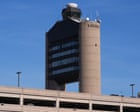
Every flight begins and ends with a complex, highly choreographed dance orchestrated by air traffic controllers. From their glass-walled perch high above the airfield, these individuals manage a sprawling, fast-moving puzzle. They are the guardians of the invisible boundaries that keep air travel safe.
The job is a relentless exercise in mental visualization. A controller must look at a flat radar screen, listen to a chaotic torrent of radio static, and construct a three-dimensional map of the sky in their mind. They must calculate speeds, predict trajectories, and anticipate human error—all while speaking in a calm, measured monotone that betrays absolutely no stress.
But the system, as sophisticated as it is, relies heavily on clear communication. A single misunderstood word, a clipped transmission, or a temporary lapse in situational awareness can disrupt the entire sequence.
On the night of the Boston incident, one aircraft was cleared for takeoff, its engines roaring to life as it began its sprint down the pavement. At the same time, another flight was crossing or preparing to cross an intersecting runway. It is the aviation equivalent of a blind intersection in a busy city, except the vehicles involved cannot simply slam on the brakes and avoid a collision.
When the conflict became apparent, the system had to rely on its final, most critical layer of defense: the instinct and training of the pilots.
The Anatomy of a Split-Second Decision
Imagine sitting in the cockpit. You are executing a routine departure or arrival. You have performed these actions thousands of times. The checklists have been read, the switches flipped, the parameters verified. The environment is intensely focused, yet comfortable.
Suddenly, the voice in your headset changes tone. The calm cadence of the controller is replaced by an urgent, sharp command. Or perhaps, looking through the thick windshield into the glare of runway lights and strobe flashes, you see a shape where it should not be.
Your body reacts before your conscious mind can fully process the data. Adrenaline floods your system. Your heart rate spikes. The training takes over.
In an emergency avoidance maneuver, a pilot does not have the luxury of debating options. They must pull back on the yoke or push the throttles to their absolute limits. The engines scream as they demand maximum power. The airframe groans under the sudden, unexpected aerodynamic stress. Inside the cabin, passengers are thrown back, cups spill, and the sudden tilt of the horizon through the windows confirms that something is profoundly wrong.
It is in these precise moments that the true value of aviation training becomes clear. Pilots are not paid for the hours they spend cruising smoothly at thirty-five thousand feet; they are paid for the five seconds where their rapid, decisive actions determine whether hundreds of people return home to their families.
The Lingering Echoes of the Almost
There is a unique kind of psychological trauma associated with a near-miss. When a disaster actually happens, there is a tangible aftermath—wreckage to inspect, data recorders to recover, a clear sequence of destruction to analyze. But when a disaster is averted by a margin of three hundred feet, the aftermath is entirely invisible. It exists only in the minds of those who realized how close they came to the edge.
The passengers on those flights likely went about their weeks, perhaps complaining about a bumpy ride or a sudden jolt during their travel day. They hailed cabs, hugged their loved ones at baggage claim, and went to sleep in comfortable beds, completely unaware of how close their names came to being read on the evening news.
But the industry itself cannot afford to forget. Every close call leaves a trail of data that must be painstakingly dissected. Investigators from the National Transportation Safety Board look at radar plots, listen to audio recordings, and interview the crews to understand not just what happened, but why the system allowed it to happen.
The goal is never to simply assign blame. The goal is to find the gaps in the safety net. Was it a confusing runway layout? A flawed phrase used over the radio? A temporary blind spot in the tower’s radar coverage?
Air travel remains remarkably safe precisely because the industry treats every near-miss with the same gravity as an actual accident. The lessons learned from those three hundred feet in Boston will be woven into future training protocols, tower procedures, and cockpit checklists, quietly protecting millions of future travelers who will never know they were in danger.
The engines eventually quiet down. The plane lands safely. The passengers step off the jet bridge and vanish into the terminal crowd. The invisible symphony continues, balancing the immense weight of human life against the unforgiving laws of speed and distance, one breath at a time.


