The human eye cannot see the South Korean coastline from the shores of Shandong province. Between them lies the Yellow Sea, a vast stretch of unpredictable water, frequently choked with maritime traffic, military patrols, and sudden, violent swells. To look out across that horizon with the intention of crossing it on a tiny, open vessel is not a calculated risk. It is an act of absolute desperation.
For one Chinese dissident, whose identity had long been reduced to a target by the state security apparatus in Beijing, that gray horizon was the only remaining exit.
He did not choose a commercial airliner. He could not. His passport was a useless piece of paper, his name flagged on databases that would freeze him at any border checkpoint long before he could ever reach a boarding gate. When the state decides to narrow your world, the walls close in with remarkable speed. The digital dragnet monitors your transactions, your messages, and your physical movements until your life shrinks to the size of an interrogation room.
To break out of a prison that large, you have to look for the gaps where the digital world gives way to raw, unforgiving nature. You have to look to the sea.
The Sound of a Outboard Motor
Imagine the absolute stillness of a coastal night, punctuated only by the low, rhythmic chugging of a small engine.
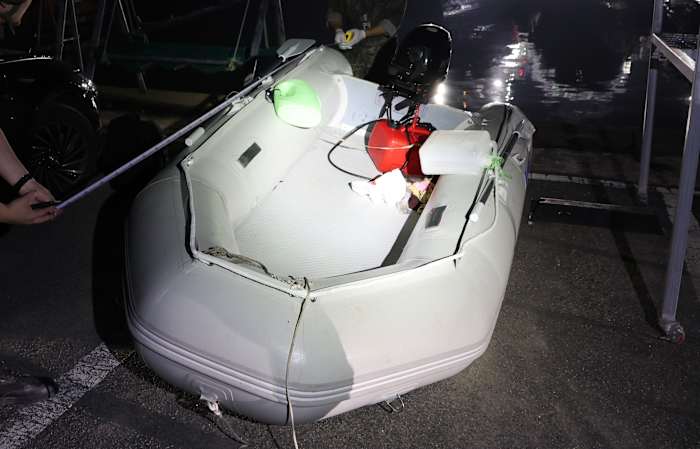
The dissident stepped into a inflatable dinghy. It was the kind of watercraft designed for leisurely coastal recreation or short trips between a yacht and a marina, not for navigating international waters. It possessed no cabin, no shelter from the elements, and no protection against the crushing wake of the container ships that plow through these shipping lanes.
He carried fuel. Lots of it. Canisters of gasoline were strapped to the sides of the craft, a volatile cargo that turned the tiny vessel into a floating fire hazard. One stray spark, one cigarette tossed from a passing fishing boat, or a single mechanical failure in the pounding waves, and the journey would end in fire or drowning.
He steered south and east.
The physical toll of such a journey is difficult to comprehend for those who have only experienced travel through the cushioned isolation of modern transport. The sea is loud. The wind cuts through clothing within the first hour. As the shore recedes, the darkness becomes total, save for the stars and the erratic glare of distant vessel lights. Every wave threatens to flip the dinghy. The driver must constantly adjust the throttle, gripping the tiller until his hands cramp, eyes strained against the salt spray to spot rogue waves or drifting debris that could tear the hull open.
Hours bled into a blur of exhaustion. The human mind, when subjected to intense fear and sensory deprivation over long periods, begins to play tricks. The shadows of waves look like patrol boats. The roar of the engine sounds like voices. Yet, he kept moving forward, driven by the knowledge of what lay behind him if he turned back.
He traveled for hundreds of miles.
By the time the low-lying islands of South Korea’s western coast finally materialized out of the morning mist, the fuel was nearly gone, and the human body inside the dinghy was pushed to its absolute limit. He had crossed an international boundary on a toy boat. He had survived the sea, but his journey into the complex machinery of global geopolitical asylum was only just beginning.
The Limbo of the Shore
When an undocumented traveler arrives on a western beach by water, the reception is rarely celebratory. It is bureaucratic.
South Korean authorities intercepted the vessel. For the coast guard, a lone man arriving from China on a heavily fueled dinghy is a security anomaly, a potential intelligence threat, and a flagrant violation of immigration law. The romantic notion of a daring escape instantly collides with the cold reality of national security protocols.
He was detained.
For months, the dissident remained in a state of suspended animation. Detention centers are quiet places where time stretches out endlessly. The immediate physical danger of the ocean crossing was replaced by the slow, grinding anxiety of legal uncertainty. South Korea occupies a delicate geopolitical position. It shares a maritime border with China and relies heavily on Beijing for economic stability and diplomatic leverage regarding North Korea. Accepting Chinese dissidents openly is a diplomatic landmine for Seoul.
The dissident’s friends and international human rights advocates began working frantically behind the scenes. They knew that if he were deported back to China, the consequences would be severe. He would disappear into the penal system, a clear warning to anyone else who might contemplate using the sea as an escape route.
Consider what happens next when the gears of international diplomacy actually turn.
Activists quieted their public campaigns to allow quiet negotiations to take place. The goal was not permanent residency in South Korea, which was politically unfeasible, but safe passage to a third country that could offer true sanctuary. Air travel, once impossible, became the prize. But this time, it required the cooperation of multiple governments, UNHCR representatives, and legal proxies working in the shadows.
The Cold Air of the Great White North
The resolution came without a press conference or an official declaration. It arrived via a quiet message from a close friend of the dissident, sent to a handful of activists and journalists who had been tracking the case.
He had landed in Canada.
The transition from a detention cell in South Korea to the arrivals terminal of a Canadian airport is a jarring piece of human displacement. Within the span of a single flight, the dissident moved from the immediate sphere of Beijing’s influence to a nation defined by its vast geography and its historical willingness to accept those fleeing tyranny.
The friend confirmed that the dissident was safe, exhausted, and finally free from the immediate threat of repatriation.
Canada offers space. It offers a fresh start. But for a dissident who has risked everything to flee his homeland, arrival is not a simple happy ending. It is the beginning of a profound exile. The culture, the language, and the climate are entirely foreign. The network of informants and state surveillance that he fled doesn't entirely disappear either; transnational repression means that activists abroad often continue to watch their backs, checking their phones for spyware and wondering if their families back home are paying the price for their freedom.
The ocean crossing was a test of physical endurance. The life ahead in Canada will be a test of psychological resilience.
He survives as a living testament to the lengths a human being will go to secure the right to speak, to think, and to breathe without permission. The dinghy he rode across the Yellow Sea remains somewhere in a South Korean port, a small, deflated piece of plastic that somehow carried the entire weight of a man's future across the deep.