The National Mall in Washington, D.C., is a place of heavy, monumental silence. Millions of visitors walk its paths every year, looking up at marble giants and reflecting on history. But during the brutal humidity of midsummer, a different kind of silence used to creep over the Lincoln Memorial Reflecting Pool. It was the quiet of stagnation. The water would turn a thick, murky green, choked with algae that feasted on the stagnant heat.
To the casual tourist, it was just an eyesore. To scientists, it was a miniature symptom of a massive, global heart attack.
Water needs to breathe. When it cannot, life dies. For years, the solution to a choked pond or a dying lake was simple: pump it full of chemicals or use massive, noisy aerators that shoot fountains into the air. But these are superficial band-aids. They are loud, energy-hungry, and ultimately temporary.
Now, imagine standing by that same pool and seeing nothing but crystal-clear water, completely oblivious to the fact that a quiet revolution is happening just millimeters beneath the surface. There are no roaring engines. There are no toxic chemical plumes. Instead, there is an army of the invisible.
The Physics of a Ghost Town
To understand the solution, we have to look at how water suffocates. Think of a crowded room with the windows welded shut. At first, everyone is fine. But as time ticks on, the oxygen level dips. People grow sluggish. Eventually, they pass out.
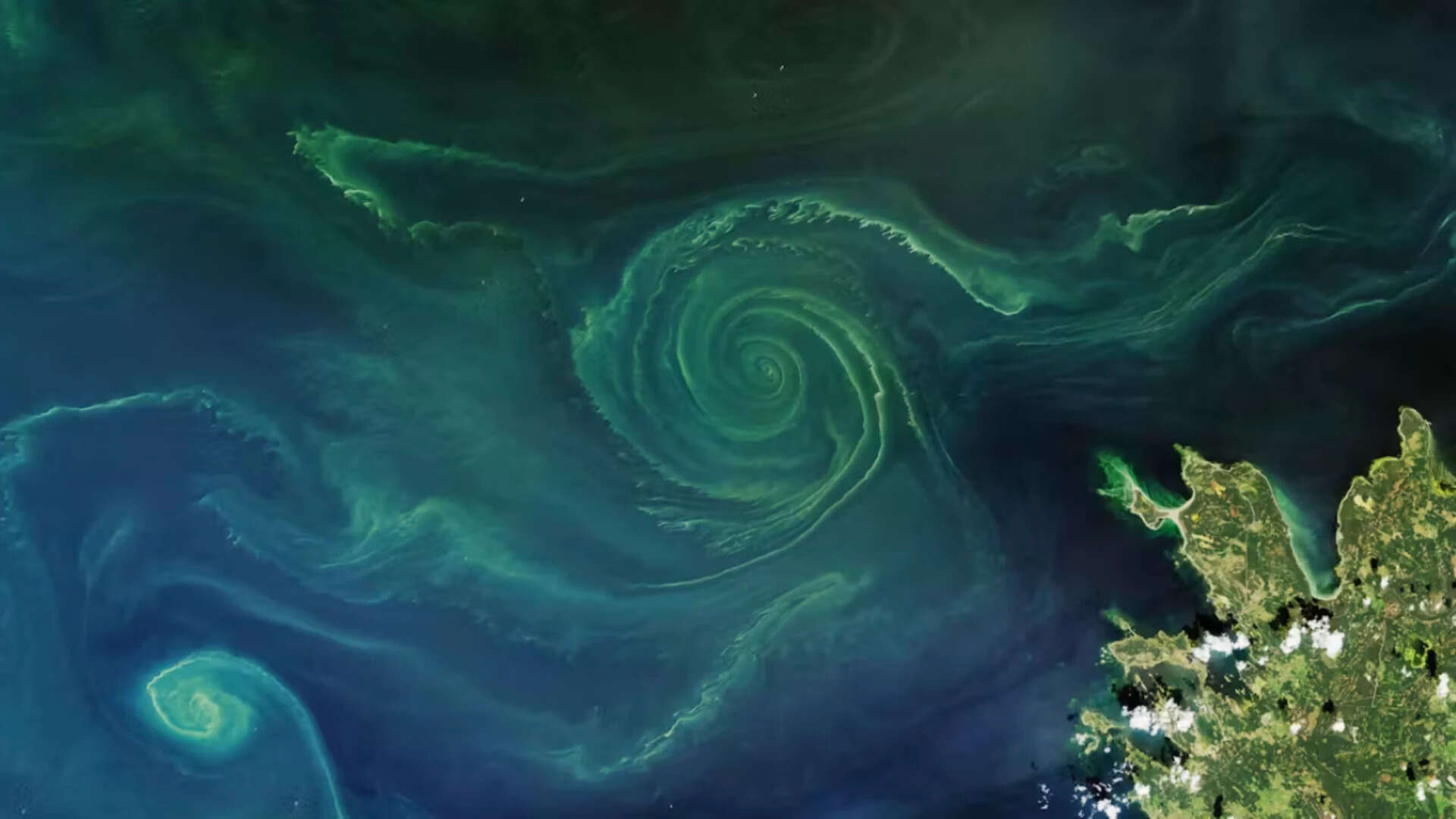
In the natural world, this is called hypoxia. It creates "dead zones"—vast swathes of the ocean and large lakes where nothing can survive. The Gulf of Mexico has one the size of New Jersey. The Baltic Sea is choking.
When algae blooms on the surface of a body of water, it blocks sunlight. When that algae dies, it sinks to the bottom. Bacteria then rush in to decompose the dead organic matter. These bacteria are ravenous, and they consume vast amounts of dissolved oxygen to do their job.
The fish flee. The creatures that cannot swim away, like clams and worms, suffocate in the mud. The water turns into an aquatic ghost town.
Standard aeration systems—the kind that spray water into the air—try to fix this by forcing mechanical contact between water droplets and the atmosphere. It works, but it is wildly inefficient. The bubbles are too big. They rise to the surface too fast, popping in a matter of seconds and releasing their oxygen back into the sky instead of the water.
That is where the engineers stepped in with a piece of hardware that feels like science fiction. They went small. Incredibly small.
Shifting the Scale
The breakthrough deployed at the Reflecting Pool relies on nanobubbles.
To understand the scale we are dealing with, look at a single strand of human hair. A nanobubble is roughly 2,500 times smaller than the width of that hair. They are so small that they defy the basic laws of buoyancy that we learn in grade school.
A normal bubble, like the one rising in a glass of soda, is buoyant. It rushes to the top and pops. A nanobubble does not rise. It lacks the buoyancy to overcome the natural currents and molecular forces of the water. Instead, it hovers. It drifts. It can remain suspended in a liquid for weeks, even months, moving randomly in a state known as Brownian motion.
Because they stay underwater indefinitely, they have an incredibly high oxygen transfer efficiency. Nearly every molecule of gas inside a nanobubble dissolves into the water rather than escaping into the air.
But the engineers at the Reflecting Pool did not just use oxygen. They used ozone.
Ozone is a volatile molecule made of three oxygen atoms. It is a fierce sanitizer. When injected into the water as a nanobubble, it tracks down algae, viruses, and bacteria, destroying them on contact without leaving a single chemical residue behind. Once the ozone does its job, it naturally breaks down into pure, life-giving oxygen.
The machine doing this work sits quietly on the sidelines. It draws in water, compresses gas, and shears the mixture through a specialized nozzle. The water that returns to the pool looks exactly the same to the naked eye. But at a microscopic level, it has been weaponized against decay.
From a Capital Pool to the Open Ocean
The Lincoln Memorial Reflecting Pool serves as a perfect, high-profile test bed. It holds roughly four million gallons of water, sits under a baking sun, and is constantly bombarded by organic debris and tourist litter. If you can keep this concrete basin clean without relying on trucks full of chlorine, you can prove the technology works anywhere.
But the scientists watching this experiment are looking far beyond the borders of Washington, D.C. They are looking at the horizon.
Our oceans are warming. Warmer water holds less oxygen than colder water. Combine that physical reality with agricultural runoff—fertilizers washing down rivers into the sea—and you have a recipe for global ecological collapse.
Consider the fishermen whose livelihoods depend on the health of coastal waters. When a dead zone rolls into a bay, the catch disappears overnight. It is a slow-motion economic disaster that unfolds beneath the waves, invisible to the consumers buying seafood at a grocery store thousands of miles away.
The scaling up of nanobubble technology offers a glimmer of defiance against this trend.
Engineers are already designing systems that can be mounted on the hulls of commercial ships or anchored in polluted estuaries. These systems can treat millions of gallons of water passively as ships transit through threatened ecosystems, leaving a trail of hyper-oxygenated water in their wake. It is a method of healing the scar tissue we have inflicted on the planet, one microscopic bubble at a time.
The Friction of Innovation
It is easy to get swept up in the elegance of a technological savior. But every breakthrough comes with friction.
The skepticism from traditional water management sectors is real. For decades, the answer to water treatment has been infrastructure: bigger pipes, heavier pumps, harsher chemicals. It is a trillion-dollar industry built on concrete and chlorine. Suggesting that an invisible bubble can do the job better feels, to some old-school operators, like snake oil.
There is also the question of energy. While nanobubble generators are vastly more efficient than traditional aerators per unit of oxygen dissolved, running pumps across massive, open ocean dead zones requires power. Doing so with fossil fuels would defeat the purpose, trading water pollution for air pollution. The future of this technology is inextricably linked to the rise of localized solar and wave-energy harvesting.
We are at a delicate intersection where physics, ecology, and human stubbornness meet.
The Depth of the Unseen
Walking past the Reflecting Pool in the evening, the water mirrors the sky, perfectly still. The monument to Lincoln stands illuminated, cast in sharp lines across the surface.
It is a beautiful view, but the real triumph is what you cannot see.
Beneath that glassy reflection, trillions of microscopic spheres are spinning, hovering, and collapsing. They are tearing apart the cells of stagnant algae. They are flooding the shallows with oxygen. They are proving that human ingenuity does not always have to be loud, destructive, or massive to change the world.
Sometimes, the most powerful force for restoration is completely invisible to the eye, working quietly in the dark to make the world breathe again.