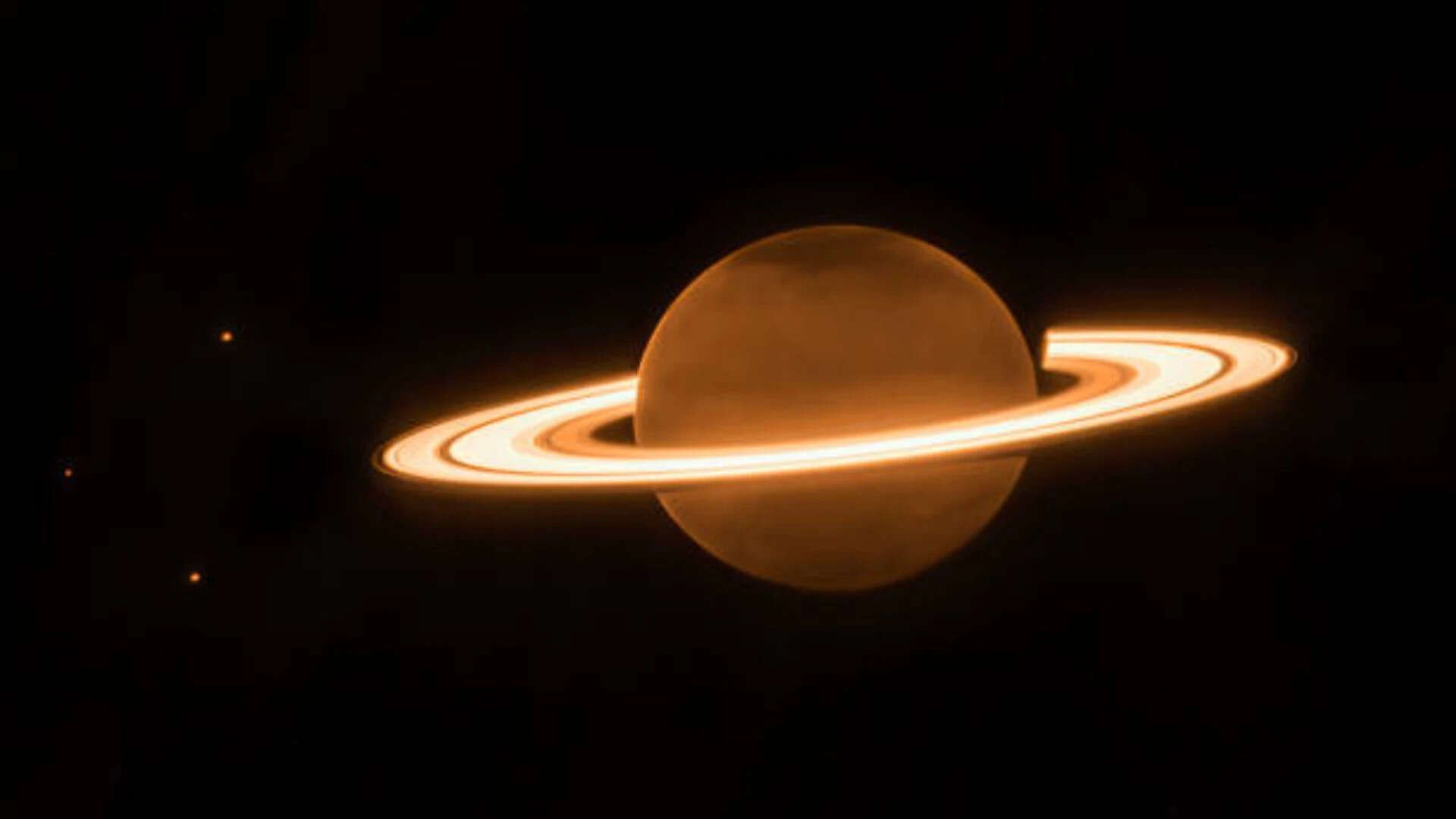
Every space blogger on the internet is currently drooling over the latest whiteboard sketches from a pair of theorists who claim NASA can safely graze Saturn's ring particles without turning a probe into cosmic shrapnel. The lazy consensus is simple: we built Cassini, we survived the Grand Finale orbits through the gap, so obviously our next engineering ego trip should involve physically tasting the ice.
It is a terrible idea. Not because it is impossible, but because it is a monumentally expensive exercise in answering a question nobody actually needs to ask.
We are looking at a classic trap of modern planetary science. When an agency runs out of low-hanging fruit, it invents high-risk stunts to justify its budget line. I have watched aerospace contractors pitch billion-dollar instruments to solve local anomalies while fundamental data sets closer to home rot in unanalyzed archives. Diving into the rings of Saturn for a scoop of primordial frost is not bold exploration. It is an expensive vanity project.
The Physics of Orbital Slaughter
Let us address the core misconception pushed by the pro-ring-touching lobby. The standard narrative suggests that because Cassini slipped between the planet and the inner edge of the rings twenty-two times back in twenty-eighteen, we have somehow mastered the ring plane.
That comparison is dangerously dishonest.
Cassini threaded a clean vacuum gap roughly two thousand kilometers wide, deliberately kept clear by the gravitational broom of small moons like Atlas and Prometheus. Grazing the actual rings is an entirely different tactical nightmare. You are dealing with a dense disc of particulate matter ranging from micron-sized dust grains to house-sized boulders of water ice, all orbiting at roughly twenty kilometers per second.
At that velocity, relative impact speeds are not measured in polite kilometers per hour. They are measured in explosive vaporization.
Proponents argue that the density of the ring material in the outer fringes is low enough to navigate with statistical safety. They model the particle distribution like a thin mist. But orbital mechanics in a ring system do not care about your average density models. Ring systems are dynamic, clumping, chaotic gravity wells governed by tidal forces and electrostatic charging. A single unmapped pebble, invisible to long-range optical navigation, hits a solar panel at twenty kilometers per second and your multi-billion-dollar flagship mission instantly transforms into a expanding cloud of expensive confetti.
The Data We Already Have Versus The Data We Want
Why are we so obsessed with physical contact?
We already have the mass spectrography data from Cassini's terminal dive. We know the composition. We know the organic molecules, the silicates, the trapped gases, and the isotopic ratios. Touching a snowball in the B-ring will not fundamentally rewrite our understanding of solar system formation. It will just confirm, to three more decimal places, what our remote sensors already strongly indicate.
This is the dirty secret of planetary exploration. We often chase in-situ physical samples not because they yield a higher return on scientific investment, but because "we touched it" plays better in congressional budget hearings than "we built a better spectrometer."
Imagine a scenario where a private equity firm funded a deep-sea expedition to fetch a specific grain of sand from the deepest trench on Earth simply because nobody had touched it yet, while ignoring the entire marine ecosystem failing above it. That is what ring-grazing proposals look like to anyone who actually evaluates mission ROI.
The Opportunity Cost of Stunt Science
Space agencies operate under strict fiscal gravity. Every dollar spent engineering a localized armor shield and active laser-dodging guidance system for a suicide run through Saturn's backyard is a dollar stolen from missions that can actually answer existential questions.
If you want to understand the origins of organic chemistry in the outer solar system, look at Titan's surface chemistry or Enceladus's plume oceans. Enceladus does the heavy lifting for you. It shoots subsurface liquid water directly out into space, allowing a passing orbiter to taste the internal chemistry of a moon without ever risking a collision with jagged ice boulders. Nature built a natural geyser pump, yet theorists are pushing to fly through a blender instead.
The prioritization is inverted. We are letting romantic notions of daredevil orbital acrobatics dictate the allocation of scientific capital.
The Uncomfortable Truth About Planetary Ambition
We love the mythology of the stunt. We want our probes to graze cliffs, thread needles, and scrape surfaces because it mirrors our terrestrial obsession with extreme sports. But science is not an extreme sports highlight reel.
When you strip away the press releases and the artist renderings of golden spacecraft cutting through luminous ice halos, you are left with a simple ledger. High risk, marginal data gain, and immense financial exposure.
Stop trying to turn planetary physics into a demolition derby. Leave Saturn's rings alone, let the ice chunks orbit in peace, and put those billions into instruments that do not require dodging a cosmic shotgun blast just to satisfy an engineer's bucket list.