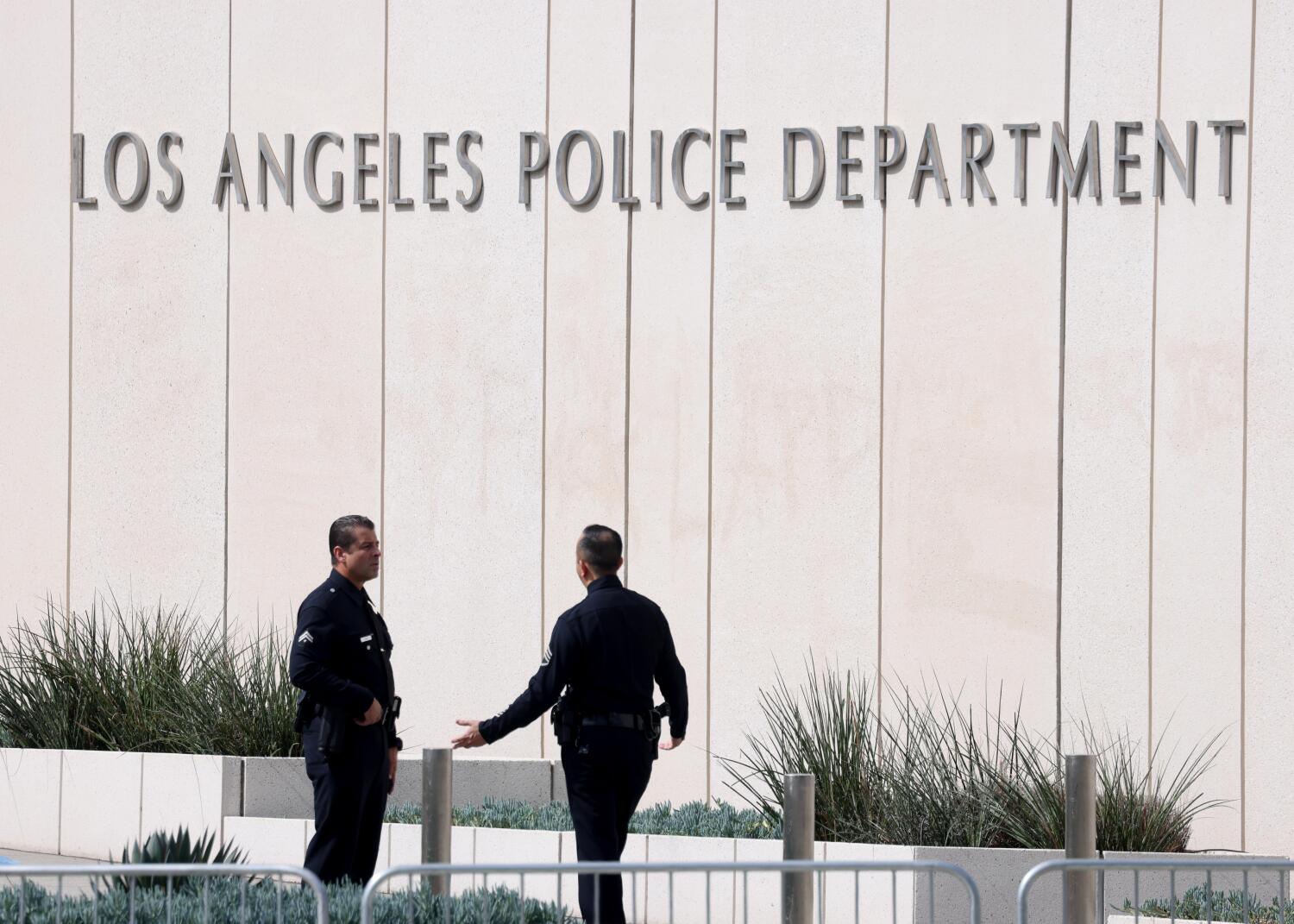
The Los Angeles City Council is patting itself on the back for passing a motion to limit "pretextual" traffic stops. They believe they’ve solved a civil rights crisis with a stroke of a pen. They haven't. They’ve merely shifted the theater of operations. The current discourse suggests that if we just stop police from pulling people over for broken taillights or expired tags, we’ll magically fix systemic bias and improve road safety. This is a fairy tale for the politically naive.
The truth is far grittier. We are witnessing the slow-motion dismantling of proactive policing under the guise of "equity," while failing to provide a single viable alternative for the chaos that follows. If you think the LAPD policy not changing immediately is the problem, you’re looking at the wrong map. The real crisis is the vacuum of accountability that both the council and the police department are too terrified to address.
The Myth of the Harmless Pretext Stop
Civil rights advocates argue that pretext stops—using a minor equipment violation to investigate a more serious crime—are purely discriminatory. Law enforcement argues they are essential for getting guns and drugs off the street. Both are oversimplifying a complex mechanical reality of urban decay.
I’ve sat in rooms with city planners and police brass where the "data" is sliced to fit whatever budget request is on the table. Here is what they won't tell you: pretext stops are a blunt, inefficient tool, but they are often the only tool left in a gutted enforcement toolkit. When you remove the ability to stop a vehicle for a "fix-it" ticket, you aren't just protecting a driver from a fine. You are signal-boosting to the entire city that the rules of the road are now optional.
The Broken Windows of the 405
The "Broken Windows" theory has been dragged through the mud for decades, but the core logic remains: small instances of disorder breed larger ones. When a city council announces that minor infractions will no longer be enforced, they aren't just changing police procedure; they are changing public psychology.
- Risk Assessment: Criminals aren't stupid. They calculate risk. If the probability of being stopped for a non-moving violation drops to zero, the "mobile concealment" of illegal assets becomes a low-risk venture.
- Infrastructure Decay: We are already seeing a surge in unregistered vehicles and "ghost plates" in Los Angeles. By removing the incentive to keep a vehicle legal, the city is effectively subsidizing a shadow fleet of untraceable cars.
- The Escalation Ladder: Most high-speed pursuits or violent encounters don't start with a murder warrant; they start with a nervous driver in a car that shouldn't be on the road. By ignoring the small stuff, we are letting the pressure cook until it explodes into a tragedy that "nobody could have seen coming."
LAPD Policy vs. City Council Posturing
The media loves the "Council vs. Cops" narrative. It’s easy. It’s dramatic. It’s also largely irrelevant. The LAPD’s internal policy has already shifted significantly toward "public safety" stops over "investigative" stops. The reason the policy "hasn't changed yet" following the Council's vote is because the Council doesn't actually run the department—the Police Commission does.
This delay is a feature, not a bug. It allows politicians to claim a win for their base while letting the police department maintain the status quo just long enough for the next news cycle to take over. It’s a shell game.
The Problem with "Alternative" Enforcement
The Council wants to move toward civilian traffic responders or automated cameras. On paper, it sounds clean. In reality, it’s a logistical nightmare that ignores human nature.
- Civilian Responders: Imagine a city employee with no badge and no gun trying to pull over a vehicle in South LA at 2:00 AM for a broken headlight. It is a recipe for workplace compensation claims and violence.
- Automation Bias: Speed cameras and automated plate readers (ALPR) don't see race, but they do see zip codes. If you saturate high-crime areas with cameras to "compensate" for lack of police, you end up with the same disparate impact, just with a digital paper trail.
What No One Admits About Road Safety
We talk about traffic stops as a racial justice issue—which they often are—but we forget they are supposed to be a transportation issue. Los Angeles has some of the deadliest roads in the country. Vision Zero, the city’s grand plan to end traffic deaths, is a categorical failure. Why? Because we’ve divorced enforcement from engineering.
If the City Council actually cared about the people being stopped, they would stop focusing on the police and start focusing on the asphalt.
"We are trying to use armed officers to solve problems that should have been solved by a civil engineer twenty years ago."
If a street is designed in a way that encourages speeding, people will speed. If a neighborhood lacks affordable mechanics, people will drive with broken lights. The "contrarian" truth is that the LAPD shouldn't be doing traffic stops at all—not because of "pretext," but because the city has failed to build an environment where traffic stops are unnecessary.
The Data Trap
Look at the numbers being touted. The proponents of the limit point to a decrease in stops as a sign of progress. But look at the secondary metrics:
- Hit and Run Rates: Skyrocketing.
- Uninsured Motorist Claims: Increasing.
- Street Racing Incidents: Becoming a nightly occurrence.
We are trading a specific type of friction (the police stop) for a generalized state of danger. Is that a win? For a politician seeking reelection, yes. For a mother crossing the street in Koreatown, absolutely not.
A Scarcity of Accountability
I’ve spent years analyzing municipal budgets and police data. The most glaring omission in this entire "limit traffic stops" debate is the lack of a "Plan B."
Imagine a scenario where the LAPD stops all non-safety traffic enforcement tomorrow. Within six months, the revenue from registrations would crater, the number of unroadworthy vehicles would double, and the "equity" gained by fewer stops would be offset by the "inequity" of the poor being the primary victims of uninsured accidents.
We are performing surgery on the body politic with a chainsaw because we’re too lazy to use a scalpel.
The Superior Path (That Won't Be Taken)
If we wanted to actually disrupt this cycle, we wouldn't just "limit" stops. We would transform the entire vehicle code.
- Decouple Revenue from Enforcement: Stop using traffic fines to fund the courts. If the money doesn't go back into the system, the incentive for "quota-lite" policing vanishes.
- Point-of-Service Vouchers: Instead of a ticket for a broken light, give a voucher for a free repair at a local shop. This solves the safety issue without the financial burden or the criminal justice entanglement.
- Physical Speed Mitigation: You don't need a cop to stop speeding if the road is narrow and lined with trees. Spend the police budget on concrete, not cruisers.
The Harsh Reality of the "Win"
The City Council’s vote is a placebo. It makes the city feel like it’s doing something about the "LAPD problem" without having to fix the "Los Angeles problem."
The LAPD will eventually update its manual. The number of stops will go down. The Council will hold a press conference. And meanwhile, the streets will get meaner, the cars will get more dangerous, and the underlying tension between the community and the state will remain exactly where it has been for fifty years: simmering just below the surface, waiting for the next "minor" stop to go wrong.
Stop looking for "policy changes" to save you. A policy change in a broken system is just a new way to manage the wreckage.
Don't wait for the police to stop pulling you over. Start asking why the city is so comfortable letting its infrastructure rot that it needs an armed force to keep the peace on its boulevards.
The Council didn't fix the LAPD. They just gave them permission to look the other way while the city burns.