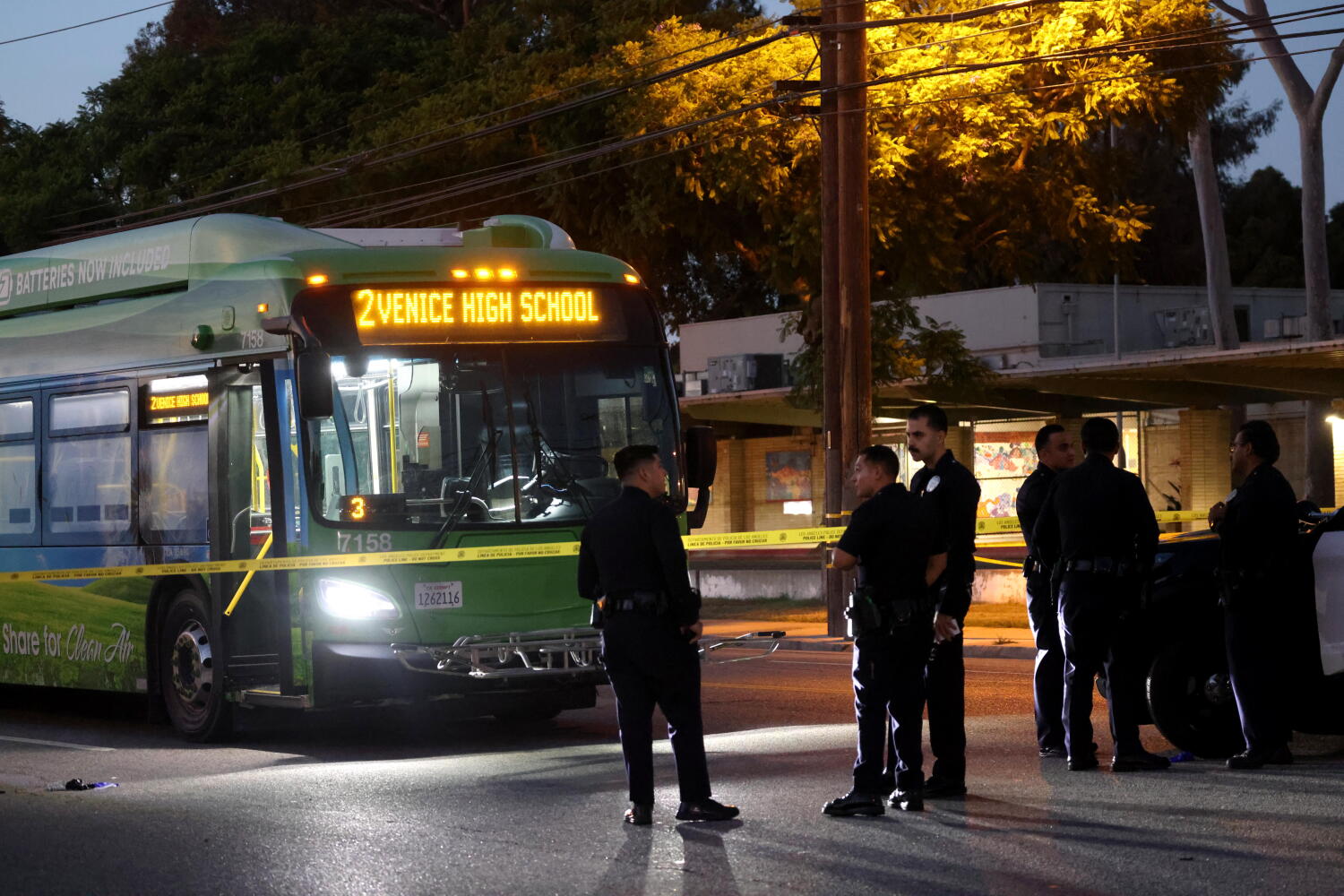
The fatal shooting of a longtime Culver CityBus driver exposes systemic vulnerabilities in urban public transit infrastructure, shifting the security discourse from isolated criminal acts to structural risk management. When a municipal transit operator becomes the target of lethal violence while performing routine duties, the failure extends beyond individual threat mitigation to encompass the operational architecture governing public mobility networks. Public transit systems operate under conflicting mandates: maintaining open, accessible public spaces while ensuring absolute asset and personnel protection. Resolving this tension requires an analytical framework that deconstructs transit security into three core components: environmental exposure, personnel vulnerability, and emergency response latency.
The Exposure Calculus of Open Transit Networks
Urban transit systems are inherently high-exposure environments characterized by open access, high passenger turnover, and fluid boundary conditions. Unlike secure facilities equipped with biometric checkpoints or persistent perimeter defense, buses and trains function as decentralized public spaces operating within uncontrolled streetscapes.
The security cost function of an open transit network is governed by the equation of accessibility versus control. Maximizing passenger throughput and community accessibility inherently reduces the friction of entry, which simultaneously lowers the barrier for bad actors introducing weapons or volatility into a confined cabin.
System Risk = (Volume of Open Access × Unscreened Entry Points) / (Real-Time Intervention Capability + Environmental Hardening)
In the case of the Culver CityBus incident, the vehicle served as a mobile containment unit with zero physical separation between the operator and the passenger compartment in older or standard configurations, or inadequate physical barriers that fail to absorb ballistic threats. The structural geometry of a standard transit bus places the driver at the focal point of all cabin interactions, exposing them to direct physical threats without spatial buffering. Transit agencies historically prioritize schedule adherence and customer service over security hardening, creating an operational trade-off where driver safety is subordinated to transit velocity and cost containment.
Personnel Vulnerability and the Human Cost Function
Transit operators function as frontline municipal workers operating in high-stress, low-support environments. The occupational hazard profile of a bus driver includes chronic exposure to erratic passenger behavior, fare dispute escalation, and isolation from immediate law enforcement intervention.
When analyzing operator vulnerability, three distinct failure points emerge:
- Information Asymmetry: Drivers possess limited real-time situational awareness regarding the background or behavioral state of boarding passengers, operating without the intelligence tools or security screening available in aviation or commercial building management.
- Spatial Confinement: The driver's seat represents a terminal node with no tactical retreat path. In an active threat scenario, the operator cannot increase distance from the assailant due to the mechanical requirements of vehicle control.
- Escalation Asymmetry: Routine policy enforcement—such as fare collection or route compliance—places the driver in a disciplinary role without the training, authority, or protective equipment of sworn law enforcement personnel.
The structural failure occurs when municipal systems assign law enforcement responsibilities to civilian operators while failing to provide corresponding physical or institutional protection mechanisms.
Operational Remediation and System Hardening
Mitigating recurrent transit violence demands a transition from reactive security measures—such as post-incident vigils and temporary police presence—to structural system redesign. Transit authorities must evaluate interventions across three operational tiers:
- Physical Engineering: Retrofitting fleets with ballistic-grade driver enclosures. Modern transit design must treat the operator cabin as a fortified control center, utilizing polycarbonate or laminated glass barriers that withstand physical strikes and ballistic impacts while maintaining acoustic and visual communication channels.
- Access Architecture: Implementing controlled boarding protocols, automated fare collection that eliminates cash-handling disputes at the point of entry, and real-time telemetry linking driver distress triggers directly to municipal emergency dispatch systems with live audio-visual feeds.
- Protocol Redesign: Shifting the burden of policy enforcement away from drivers. Operational policies must mandate that operators prioritize personal egress and vehicle containment over fare compliance or verbal dispute resolution when threatened.
The prevention of future transit tragedies requires treating driver safety not as an administrative afterthought, but as a critical operational constraint. If municipal transit networks fail to harden their infrastructure and isolate operators from direct physical exposure, the systemic cost will manifest in acute labor shortages, increased operational friction, and degraded public mobility reliability. The ultimate strategic imperative is the systematic decoupling of public transit revenue collection and route management from direct interpersonal security enforcement.