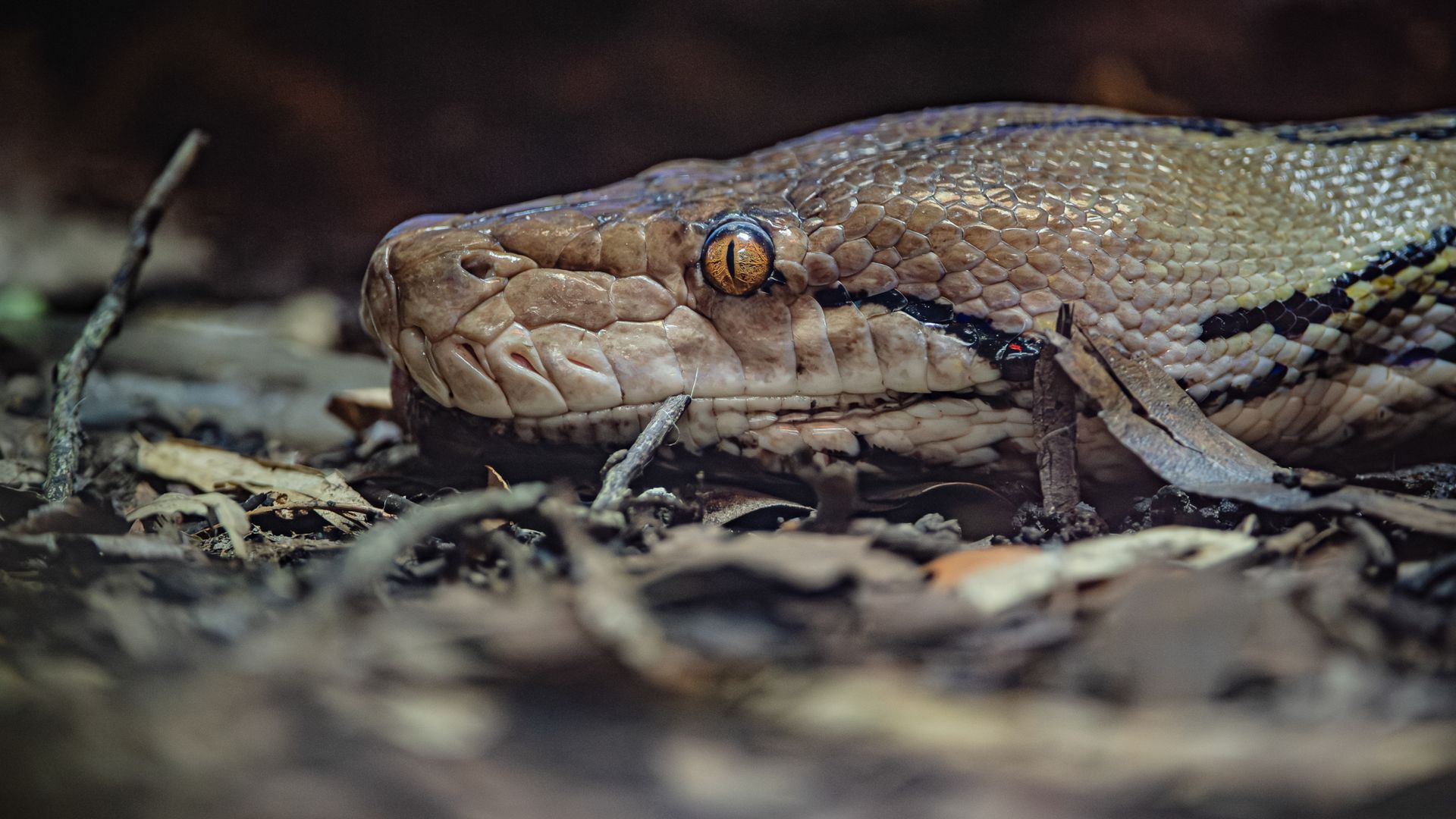
Advanced veterinary oncology requires structural adaptation when applied to non-traditional mammalian models, exposing a significant operational gap between human cancer protocols and reptilian physiology. When Chester Zoo veterinarians and University of Liverpool specialists treated a 15-foot, 50-kilogram reticulated python diagnosed with a malignant fibrosarcoma, they faced a dual constraint: the physical scaling limits of standard veterinary hardware and the pharmacological unknowns of administering human-grade electrochemotherapy to a reptile. Deconstructing this intervention reveals the exact biochemical, mechanical, and logistical frameworks required to successfully execute translational cross-species medicine.
The Anatomical Bottleneck and Mechanical Scaling
Treating a macro-reptile presenting with a localized jaw malignancy introduces immediate physical friction. Standard operating infrastructure assumes mammalian dimensions, standard weight distribution, and homeothermic stability. A 4.5-meter specimen requires the reconfiguration of baseline surgical architecture.
- Dimensional Incompatibility: Standard veterinary operating tables cannot support a distributed 50-kilogram mass without structural sagging, necessitating the assembly of a dual-table platform matching the footprint of a double bed.
- Thermal Regulation Failure Modes: As ectotherms, pythons cannot regulate core body temperature under general anesthesia. Ambient operating room dissipation leads to rapid metabolic depression. Mitigation requires continuous surface heating via thermal blankets and localized warm-air convection units to preserve baseline metabolic stability during a ninety-minute intervention.
- Anesthetic Delivery Logistics: Transporting an adult reticulated python post-induction introduces mechanical stress and safety hazards. Primary chemical immobilization must occur within the native enclosure habitat prior to transfer into the surgical suite.
The Biophysical Mechanics of Electrochemotherapy in Squamates
Surgical resection alone often fails in infiltrative sarcomas because microscopic residual disease remains embedded within dense connective tissue or bone matrix. In this case, initial surgical excision of the fibrosarcoma failed to prevent recurrence, leading to bone invasion in the mandible. Complete mandibulectomy is non-viable for a constrictor dependent on kinetic skull mechanics to secure prey. The veterinary team deployed electrochemotherapy as a localized adjuvant to spare structural bone while sterilizing the margin.
Electrochemotherapy relies on electroporation, a biophysical phenomenon where short, high-voltage electrical pulses induce transient permeabilization of the cell membrane lipid bilayer. This drastically increases the cytotoxicity of non-permeant or low-permeant chemotherapeutic agents like bleomycin.
- Vascular and Cellular Targeting: The chemotherapeutic drug bleomycin is administered systemically or locally. It exhibits high intrinsic toxicity to DNA but poor cellular uptake across intact lipid membranes.
- Electrical Pulse Application: Needle electrodes placed directly into the tumor bed deliver specific electrical fields. This creates temporary aqueous pores in the cancer cell membranes, allowing intracellular concentrations of bleomycin to spike by several orders of magnitude.
- Margin Preservation: Because the electrical field is strictly confined to the electrode array, surrounding healthy connective tissue and the remaining structural jawbone avoid broad systemic toxicity or thermal ablation damage.
This mechanism bypasses the need for massive tissue margins, making it uniquely suited for localized sarcomas in anatomical zones where tissue removal impairs fundamental survival behaviors—such as the kinetic quadrate-mandible joints of snakes used for swallowing mass items exceeding their head diameter.
Comparative Efficacy Across Veterinary Taxa
While electrochemotherapy has established clinical safety profiles in companion mammals (such as dogs and cats) and occasional deployment in chelonians and lizards, its application to advanced ophidian models exposes specific translational variables.
| Parameter | Mammalian Protocols | Ophidian Translation (Ophidia) |
|---|---|---|
| Metabolic Rate | High, constant homeothermy; rapid drug clearance. | Low, variable poikilothermy; extended pharmacokinetics. |
| Tissue Perfusion | Predictable capillary bed density and blood flow. | Compartmentalized flow dependent on thermal gradients and activity. |
| Wound Healing | Rapid cellular turnover, high infection susceptibility in soft tissue. | Slow fibroplasia and epithelialization; prolonged recovery horizons. |
The extended metabolic half-life of pharmaceutical agents in reptiles requires modified clearance monitoring. Because cellular proliferation rates in reptiles are generally lower than in mammals, the synchronization between electrical pulse delivery and cell-cycle phase dependency must account for slower mitotic turnover within the neoplasm.
Protocol Standardization for Exotic Oncology
The clinical success achieved with this intervention provides a reproducible blueprint for managing aggressive neoplasms in large zoo specimens, but it highlights systemic limitations in contemporary veterinary oncology. Most oncological therapeutics are commercially formulated, dosed, and tested exclusively for human clinical pathways or domestic companion animals. Translating these assets to exotic species requires empirical dosing adjustments, improvised surgical rigs, and inter-institutional collaboration between specialized zoological veterinarians and university human-cancer research departments.
Establish clinical registries for exotic oncology cases to aggregate pharmacological response data across uncommon reptilian species, and formalize translational surgical guidelines for multi-operator handling of large-scale poikilothermic subjects.