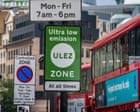
Transport for London just launched a legal assault worth up to one billion pounds against major car manufacturers over Ultra Low Emission Zone compliance.
The lazy consensus screams that corporate greed poisoned the air and automakers must pay for the public health bill.
It sounds noble. It plays well on the evening news. It is also an expensive financial magic trick designed to mask institutional failure.
I have spent years watching public authorities try to claw back budgetary black holes through high-stakes litigation instead of facing operational reality. When an organization expands a charging zone to cover millions of residents and watches revenue projections wobble while compliance costs soar, reaching for the legal department becomes an institutional reflex. Blaming carmakers for building the exact vehicles regulators certified is a masterclass in shifting accountability.
The Compliance Myth
Let us look at the core premise of this legal crusade. Transport for London argues that manufacturers misled regulators or consumers regarding emissions standards, leading to higher-than-expected pollution levels within the zone.
That argument collapses the second you examine how type-approval works in the United Kingdom and across Europe.
Automakers do not invent their own testing metrics in a vacuum. They build vehicles to meet strict legal frameworks established by government bodies and international agencies. If a diesel or petrol car carries a specific Euro standard certification, it received that stamp of approval from authorized regulatory authorities who tested it against the legal standards of the day.
Suing a manufacturer for delivering a product that passed government-set benchmarks is like a restaurant inspector handing out a five-star hygiene rating, watching the chef cook the food, and then suing the kitchen for serving a meal.
If the standards were flawed, the fault lies with the architects of the framework, not the builders who followed the blueprint.
The Revenue Trap and the Real Motive
Behind the billion-pound figure lies a simpler economic truth. Urban transit authorities face chronic funding deficits. Fare box revenue fluctuates, central government subsidies shrink, and maintenance bills for aging infrastructure skyrocket.
Expanding clean air zones was initially pitched as an environmental crusade. When motorists adapted faster than expected by upgrading vehicles or when travel patterns shifted away from the central zones, the anticipated stream of penalty charges and daily tolls experienced a shortfall.
Imagine a scenario where a city builds a toll bridge to fund its upkeep, assuming every driver will cross it daily. When drivers take alternative routes or buy electric vehicles to bypass the fee, the toll collector suddenly faces a budget crisis. Do they admit their financial model was built on sand? No. They look for someone with deep pockets to sue.
This lawsuit is a financial bail-out disguised as consumer advocacy. Car manufacturers possess massive legal reserves and balance sheets that look attractive when a public balance sheet is bleeding red ink.
What the Public Gets Wrong About Emissions
Ask anyone on the street why air quality remains a challenge in major metropolitan areas, and they will point a finger straight at diesel tailpipes.
That narrow focus ignores urban physics and traffic flow dynamics.
A modern internal combustion engine operating at a steady highway speed emits a fraction of the pollutants it produces when crawling at five miles per hour in bumper-to-bumper congestion. By creating artificial stop-start bottlenecks through lane reallocations, reduced speed limits, and complex charging perimeters, urban planners often exacerbate the very emissions problems they claim to solve.
Manufacturers cannot control how a municipality manages traffic signaling, road layouts, or congestion bottlenecks. Pushing the blame onto corporate engineering departments lets urban planners off the hook for decades of shortsighted infrastructure management.
The Dangerous Precedent of Retrospective Litigation
If this legal action succeeds, it establishes a toxic precedent for every industry operating in the British market.
It tells businesses that compliance is a moving target. It signals that a company can invest billions of pounds, build products that satisfy every active government regulation, secure official certification, and still face ruinous multi-billion-pound lawsuits years later if political winds shift or public finances run dry.
No corporate board will invest in long-term infrastructure, green technology transitions, or manufacturing plants in a jurisdiction where regulatory approval acts as a temporary shield rather than a binding contract.
Certainty is the lifeblood of capital investment. Introduce retroactive litigation into the mix, and capital flees to more predictable regulatory climates.
The Unspoken Trade-off
Let us be completely transparent about the downside of this aggressive posture. Transport for London is spending public resources and legal fees to pursue a case with a dubious foundation.
If these manufacturers choose to push back aggressively, scale back fleet allocations for the UK market, or redirect their lobbying and legal firepower to freeze future mobility partnerships with local governments, the British consumer absorbs the ultimate blow.
We are watching a desperate administrative body pick a fight it cannot logically win, simply because admitting that the funding model of the congestion zone needs a fundamental rethink is too politically toxic to utter out loud.
Stop pretending this is about clean air. Clean air is achieved through better traffic management, smarter public transit integration, and realistic technological transitions. Suing the people who built the cars you certified does not lower a single particle of particulate matter. It only pays legal fees.