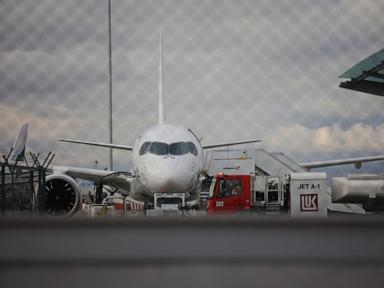
You're sitting on the tarmac in Frankfurt or Dublin, waiting for the cabin doors to close, when the pilot suddenly announces a return to the gate. No mechanical issue. No bad weather. Just a vague mention of a "security concern" while armed police surround the aircraft.
If you've flown across Europe recently, this scenario probably sounds uncomfortably familiar. A wave of hoax bomb threats targeting European flights has triggered emergency landings, fighter jet escorts, and massive terminal evacuations across the continent.
Most travelers assume these scares are isolated pranks by bored teenagers or disgruntled passengers trying to delay a flight they're running late for. They're wrong. While individual copycats certainly exist, aviation security analysts and European law enforcement agencies have linked many of these coordinated disruptions to broader hybrid warfare tactics, anonymous swatting networks, and geopolitical friction.
Understanding what actually happens behind the scenes when an airline receives an anonymous threat changes how you view airport delays—and what you should do when your flight gets caught in the crossfire.
How a Single Email Grounds an Entire Terminal
Airlines can't afford to guess. Even when an anonymous email or phone call screams "fake," aviation protocols treat every single threat as completely real until proven otherwise.
Think about the sheer scale of the response. When an anonymous message claims an explosive device is aboard a commercial jet over European airspace, air traffic control immediately clears a corridor. Military interceptors—like Eurofighter Typhoons or Rafales—frequently scramble to visually inspect the airliner and escort it to a designated remote stand at the nearest major airport.
Once the plane touches down, the real logistical nightmare begins. Passengers evacuate via stairs or emergency slides, leaving every single carry-on bag behind. Bomb disposal units sweep the cabin with explosive-sniffing dogs. Every piece of checked luggage gets pulled from the hold, lined up on the tarmac, and manually re-screened.
I've watched this play out from inside European terminals during peak travel windows, and the domino effect is brutal. A single diverted Ryanair or Lufthansa flight doesn't just delay two hundred people. It freezes gate operations, strands flight crews who hit their legal maximum working hours, and cascades across connecting hubs from London to Warsaw for the next forty-eight hours.
Why European Flights Are Prime Targets Right Now
You might wonder why European aviation is bearing the brunt of these hoax bomb threats compared to other regions. A mix of geography, geopolitical tension, and digital anonymity makes the continent uniquely vulnerable.
First, look at the airspace density. Europe packs dozens of sovereign nations, budget carriers, and major international hubs into a relatively tight geographic footprint. A threat called into a small regional airport in France or Belgium can easily disrupt international routes connecting North America, the Middle East, and Asia.
Second, European intelligence agencies—including officials from Europol and national security services—have repeatedly warned about state-sponsored hybrid threats. In recent years, European authorities investigated wave after wave of coordinated email threats targeting schools, government buildings, and airports simultaneously. Using encrypted email providers, virtual private networks, and spoofed caller IDs, bad actors can send hundreds of identical bomb threats from thousands of miles away with virtually zero financial cost.
It's asymmetric disruption at its simplest. A perpetrator spends five minutes writing a threatening email from a burner account, and an airline loses hundreds of thousands of euros in fuel dumps, crew overtime, and passenger compensation claims.
The Copycat and "Swatting" Problem
Not every threat comes from a geopolitical playbook, though. Cybercrime units across Europe have also tracked an uptick in cross-border "swatting" groups—online communities that treat emergency response mobilization like a competitive sport.
Sometimes the motive is painfully petty. A passenger stuck in traffic on the way to the airport calls in a threat hoping to hold the plane at the gate. They rarely realize that modern telecom metadata and international police cooperation almost always lead investigators straight back to the caller. Across the European Union, making a false bomb threat carries severe prison sentences alongside astronomical civil restitution bills from the affected airlines.
What Actually Happens to Your Passenger Rights
Here's where travelers get tripped up. When a hoax bomb threat cancels or delays your flight by six hours, your instinct is probably to demand cash compensation under European Union law.
Slow down. You need to know how EU Regulation 261/2004 actually works in security emergencies.
Under EU261, airlines must pay up to €600 in compensation when flights are delayed or canceled due to issues within their control, like routine maintenance or crew scheduling failures. Security threats, terrorism alerts, and air traffic control restrictions caused by bomb scares fall squarely under extraordinary circumstances.
That means the airline does not owe you statutory cash compensation for the delay itself.
However, extraordinary circumstances do not erase your right to care. Even when a hoax threat grounds your plane, the airline is legally required to provide:
- Meals and refreshments proportional to your waiting time
- Hotel accommodation if the security sweep forces an overnight delay
- Transportation between the airport and your hotel
- Two free phone calls, emails, or messages so you can update family or employers
If the airline staff is overwhelmed at the gate—which happens constantly during terminal evacuations—keep every single receipt for reasonable food and hotel expenses. You can submit those directly to the carrier for reimbursement later. Just don't book a five-star luxury suite and expect them to foot the bill.
How to Protect Yourself When Security Alerts Hit
You can't stop an anonymous caller from disrupting European airspace, and you certainly can't rush a bomb squad doing their job on the tarmac. You can, however, set yourself up so a security diversion doesn't completely wreck your trip.
Start with how you pack your carry-on. During an emergency evacuation or a mandatory security deplaning, cabin crew will order you to leave all overhead luggage behind. Keep your passport, wallet, essential medications, and phone charger in a small crossbody bag or jacket pocket on your person during takeoff and landing. If you get stuck in a terminal holding area for six hours while dogs sweep the aircraft, having your ID and basic essentials in your pocket makes all the difference.
Second, skip third-party online travel agencies when booking multi-leg European flights. When a security incident forces sudden rebookings, airlines prioritize passengers who booked directly through their official app or website. If you bought your ticket through a discount middleman, you'll spend hours stuck in a customer service queue while direct bookers snag the remaining seats on the next departure.
Finally, download your airline's mobile app and enable push notifications before you ever step foot in the airport. Gate agents are often the last to receive clear updates during an active police investigation, while airline operations centers frequently push automated rebooking options directly to your phone the moment a flight is officially scrubbed. Keep your documents on your person, book direct, and let the app handle the rebooking while everyone else lines up at the service desk.