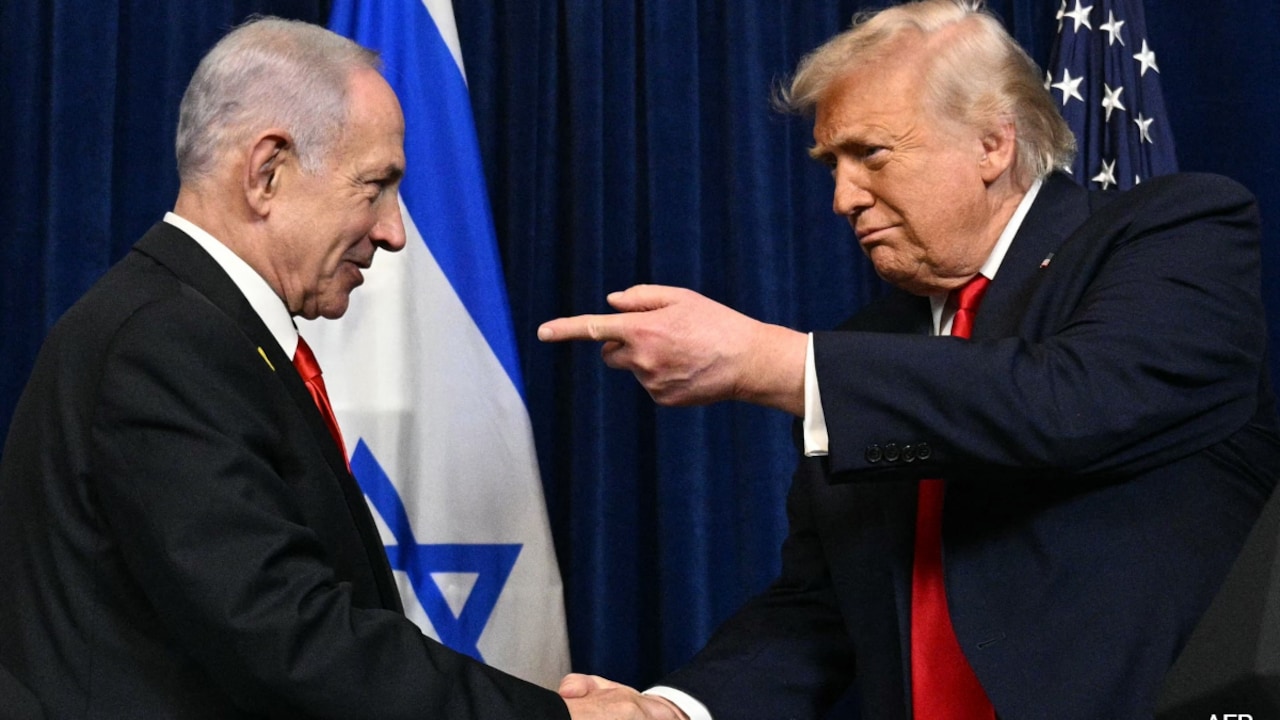
The mainstream political press loves a simple hierarchy. When a dominant political figure states that a foreign leader has "no choice" but to fall in line, commentators rush to paint a picture of absolute leverage. They analyze the power dynamic like a corporate buyout, assuming the entity holding the capital dictates every single operational move.
This corporate-takeover model of geopolitics is fundamentally broken.
The widespread assumption that Israeli foreign policy can be turned on a dime by a directive from Washington ignores decades of strategic reality. When Donald Trump asserts that Benjamin Netanyahu will be forced to accept a theoretical diplomatic deal with Iran, he is playing to a domestic audience that craves the image of an all-powerful dealmaker. The reality on the ground is far more stubborn. Washington can influence, pressure, and incentivize, but it cannot fundamentally dictate the core existential survival metrics of a sovereign state.
The Illusion of Absolute Leverage
The narrative of total American dominance relies on a surface-level reading of military and financial aid. Yes, foreign assistance flows from the American taxpayer to the Israeli defense apparatus. Yes, diplomatic cover at the United Nations is a vital strategic asset. But observers confuse dependency with compliance.
History shows us that client states often drive the policy of the patron, especially when the client perceives an existential threat. In political science, this is known as the "wag the dog" dynamic, or more formally, asymmetric leverage in patron-client relationships. When a state believes its literal survival is on the line—as Israel views the Iranian nuclear program—external economic or political pressure ceases to function as an effective deterrent.
Imagine a scenario where a corporate parent company tells a subsidiary to stop auditing its local facility for safety hazards because it hurts quarterly profits. If the local managers believe the facility might explode, they will ignore the parent company, accept the corporate penalties, and fix the valve anyway. Survival beats compliance every single time.
Why the Zero-Sum Framework Fails
Mainstream analysis treats the relationship as a binary choice: either Jerusalem submits to the White House's diplomatic agenda, or a catastrophic rupture occurs. This ignores the vast grey zone of strategic non-compliance.
- The Intelligence Asymmetry: Washington relies heavily on regional intelligence gathered by local actors. Jerusalem knows that cutting off intelligence sharing hurts American interests in the Middle East just as much as it hurts theirs. Leverage is a two-way street.
- Domestic Political Constraints: Netanyahu does not answer to the American electorate; he answers to his domestic coalition. Forcing an unpopular, externally mandated deal on a population that views Iran as an immediate threat is political suicide. A leader will always choose a fight with a foreign ally over political oblivion at home.
- The Red Line Reality: For decades, the explicit policy of various Israeli administrations has been that a nuclear-armed Iran is a hard red line. Diplomatic agreements that merely delay this outcome, rather than dismantle the capability, are viewed in Jerusalem as a slow-motion catastrophe. No amount of rhetorical pressure from a US president changes that calculation.
Dismantling the Consensus on Diplomatic Pressure
People frequently ask: Can the US simply cut off military aid to force compliance?
The brutal, honest answer is that while a sudden halt in military aid would cause severe operational friction, it would not stop unilateral military action if Jerusalem felt pushed into a corner. In fact, threatening to cut off aid often produces the exact opposite of the intended effect. It creates a "use it or lose it" mentality, accelerating independent military action before the pipeline dries up entirely.
I have watched policy analysts spend years arguing that economic sanctions and diplomatic isolation can force any nation to heel. It is a view born out of comfortable think-tank offices, completely detached from the visceral realities of state survival. When a nation’s leadership convinces its public that they face an existential threat, the standard economic levers of foreign policy lose their bite.
The Cost of the Contrarian Reality
Acknowledging this dynamic comes with a harsh truth. Accepting that the United States cannot fully control the actions of its closest ally in the Middle East means admitting the limits of American power. It means recognizing that the world is multi-polar, chaotic, and resistant to the desires of a single executive leader, no matter how skilled a negotiator they claim to be.
This lack of control creates massive instability. It means the risk of regional escalation remains high, regardless of what agreements are signed in Washington or Geneva. For businesses, investors, and energy markets, relying on the promise that a US president can simply order a cessation of regional hostilities is a dangerous gamble.
The regional actors are driven by their own internal logic, their own historical traumas, and their own domestic survival instincts. They are not pieces on a chessboard waiting to be moved by a master strategist across the Atlantic.
Stop analyzing foreign policy through the lens of political theater and bravado. The next time a leader claims a foreign sovereign power has "no choice," look closely at what that power requires to survive. You will quickly realize they always have a choice, and it rarely aligns with the script written for them in Washington.