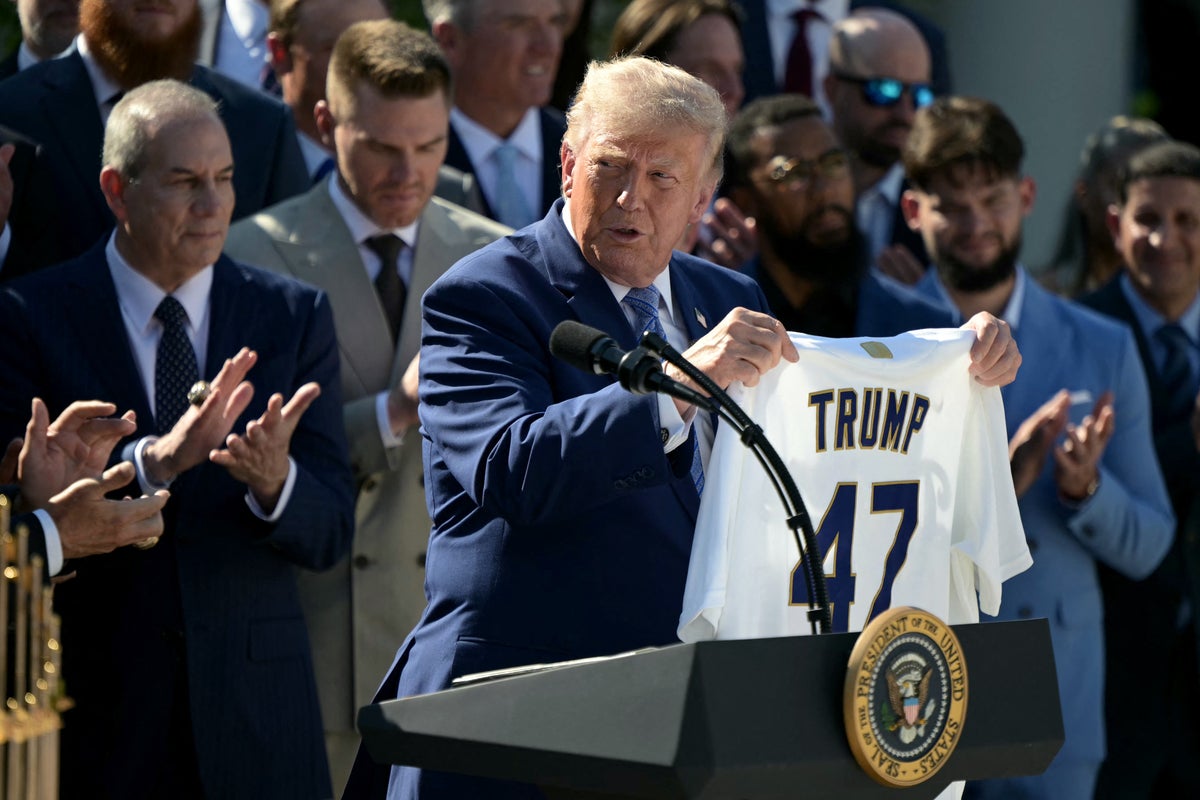
When Donald Trump hosted the Los Angeles Dodgers at the White House and paraded them as "one of the great brands in the world," sports media fell right into its usual mindless rut. The standard headlines framed the moment as a classic blend of politics and American nostalgia—a politician praising a historic franchise for its dominance, heritage, and star power.
That narrative is completely wrong. Meanwhile, you can find other developments here: When the King Stepped Through the Blue Door.
Viewing sports teams through the lens of pure corporate branding misses the fundamental decay happening beneath the surface. When a sports franchise transitions from an organic community asset into a hyper-calculated globally optimized brand, fans do not win. Culture does not win. What actually happens is the slow, deliberate extraction of soul in exchange for corporate yield. Calling a sports team a "great brand" isn't a compliment to its greatness; it’s an autopsy of its authenticity.
The Financialization Trap: How Modern Franchises Traded Glory for Global Yield
Look at the modern LA Dodgers payroll structure and marketing playbooks. The mainstream consensus celebrates their massive spending, their star-studded roster, and their aggressive push into overseas markets like Japan. Pundits point to sky-high TV ratings and stadium merchandise sales as proof of an elite blueprint. To understand the bigger picture, we recommend the excellent analysis by Yahoo Sports.
They are confusing financial engineering with cultural resonance.
I have spent years observing how private equity money and corporate suits re-engineer classic institutions. The goal is no longer to build a team that reflects a specific city's grit or identity. The goal is to build an international, risk-mitigated cash engine.
When team owners focus on brand optimization, every decision gets filtered through marketability rather than raw competitive passion:
- Ticket Prices Skyrocket: Real, generational fans get priced out of home games, replaced by corporate sponsors and secondary market tourists.
- Uniforms Become Ad Spaces: Iconic jerseys are slapped with commercial patches, turning tradition into digital impression metrics.
- Roster Decisions Become Marketing Exercises: Signings are evaluated by their ability to open up new overseas ad revenue streams as much as their WAR (Wins Above Replacement).
When a politician stands up and calls a team a "brand," they are unintentionally admitting that the sport has been stripped down to balance sheets and logo equity.
The Myth of the "Global Brand" Victory
The sports media industry loves to ask: How can other franchises replicate this brand expansion model?
The premise of the question is completely flawed. Most sports franchises attempting to build a global brand end up alienating their local base while capturing only superficial, fair-weather international attention.
Imagine a scenario where every major league team adopts the exact same mega-corporate strategy. You end up with four mega-franchises monopolizing the best assets while twenty-six other teams act as glorified farms, unable to compete financially because they lack the raw population density to scale their "brand." That isn't a healthy league; it's a broken oligopoly disguised as entertainment.
Real value in sports isn't generated by slick PR campaigns or White House photo ops. It is generated by friction, regional rivalries, and genuine emotional investment. When you sanitize a team to make it globally palatable to every casual observer, you erode the very passion that made the franchise valuable in the first place.
| Traditional Sports Identity | Modern Corporate "Brand" Identity |
|---|---|
| Built on local community, generational loyalty, and regional pride | Built on international market expansion and social media impressions |
| Success measured by championships and long-term fan devotion | Success measured by valuation jumps and sponsorship yield |
| High friction, authentic rivalries, unscripted emotion | Sanitized messaging, risk-averse PR, optimized content streams |
Why "Brand-First" Sports Strategy Eventually Collapses
There is a major downside to this contrarian view that even critics have to acknowledge: building a mega-brand objectively works on a spreadsheet. In the short term, prioritizing brand equity over sports culture drives franchise valuations into the billions. The Dodgers, the New York Yankees, Real Madrid—these organizations are undeniably financial juggernauts.
However, long-term brand equity in sports is an illusion if it depends entirely on endless spending and slick packaging.
When performance dips—and in sports, performance always eventually dips—a brand-driven fanbase disappears overnight. Corporate fans do not stick around through decade-long rebuilding phases. Local, culturally rooted fanbases do. By sacrificing deep local loyalty for broad global awareness, teams trade structural resilience for volatile popularity.
The industry needs to stop celebrating sports teams as if they are tech startups or luxury fashion houses.
Stop asking how teams can maximize their brand output. Start asking how much authentic sports culture is being destroyed to keep those valuations climbing.
If the ultimate goal of modern athletics is simply to earn praise from politicians for being a "great brand," then sports aren't sports anymore—they are just another branch of corporate entertainment, and everyone watching is getting played.


