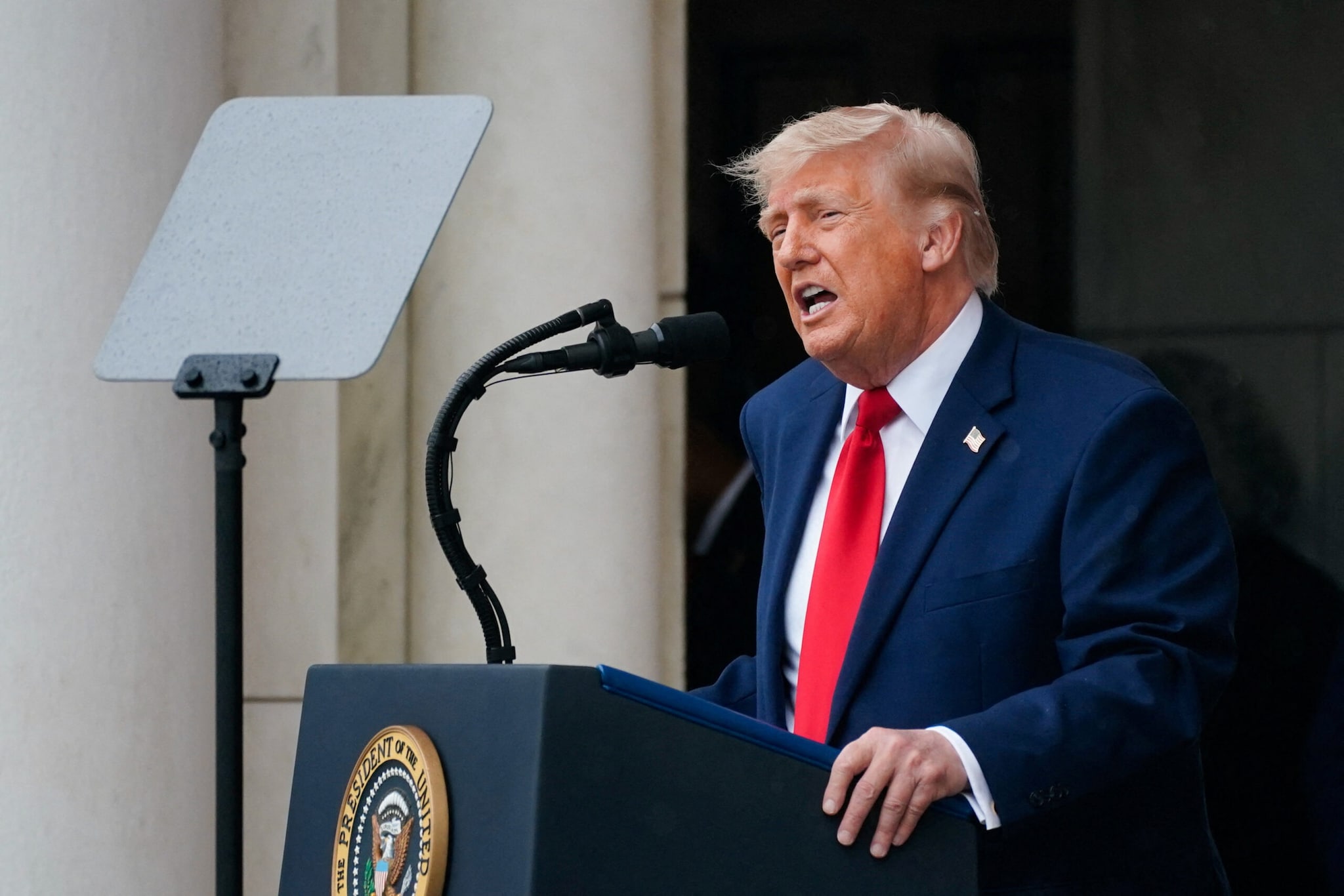
Donald Trump says Iran has already agreed to forgo nuclear weapons. He claims the massive geopolitical bottleneck at the Strait of Hormuz could ease up soon, hinting at a Labor Day timeline. It sounds like the kind of monumental breakthrough that reshapes global markets overnight.
Except it isn't. Not yet, anyway.
If you look past the headlines from Trump's recent appearance on the New York Post's "Pod Force One" podcast, the reality on the ground tells a completely different story. We are currently staring down a brutal conflict that is approaching its 100th day. While the White House projects absolute confidence, the actual diplomatic landscape is a messy, volatile game of brinkmanship where public statements rarely match behind-the-scenes actions.
What Trump actually claimed on Pod Force One
During his podcast interview, Trump dropped a characteristic bombshell. He insisted that the Iranian regime had already conceded on the single biggest issue of the conflict.
"Regardless of how well we're doing economically, we can't let them have a nuclear weapon," Trump said. "They've already agreed they're not going to have a nuclear weapon."
When the host pushed him to confirm if Tehran had truly signed off on giving up its nuclear ambitions, Trump doubled down. "Oh yeah, they've agreed to that." Then came the immediate qualifier. "I mean, now they can change their mind, but that was one of the things they've had to agree, they've agreed to that. That was the big thing."
Trump also hinted that the maritime blockade in the Strait of Hormuz—the vital choke point for global oil supplies—could see significant relief by Labor Day if things stay on track.
It paints a picture of a done deal. But if you talk to seasoned diplomats or look at the moves Iran is making right now, you quickly realize the celebrations are incredibly premature.
The massive gap between Washington rhetoric and Iranian reality
Here is what most people get wrong about these announcements. Trump is treating a high-level talking point as a finalized treaty.
Secretary of State Marco Rubio tried to inject some nuance during his testimony before the Senate Foreign Relations Committee. Rubio noted that Iran has agreed to negotiate aspects of its nuclear program that it refused to touch a month ago. That is progress, sure. But agreeing to discuss something during a ceasefire is a galaxy away from actually dismantling enrichment facilities.
In fact, Iran's foreign ministry flatly declined to comment on Trump's podcast claims. Meanwhile, Iranian state media reported that Tehran had actually halted message exchanges with Washington via intermediaries. They blamed recent military actions in Lebanon as a direct violation of the fragile April ceasefire.
Consider the mixed signals happening simultaneously:
- The Nuclear Stockpile: Trump previously insisted that Iran must hand over its highly enriched uranium to the United States or see it destroyed. Iran's Atomic Energy Organization has repeatedly stated it will not accept permanent limits on its domestic enrichment.
- The Compromise: Rumors suggest Trump might settle for a 20-year suspension of enrichment rather than a permanent ban. Even then, the verification guarantees are nowhere near finalized.
- The Leadership Dynamic: Trump claims that Iran's new Supreme Leader, Mojtaba Khamenei, is directly involved in these secret talks. Yet, Mojtaba hasn't been seen in public since the war began on February 28, following the strike that killed his father, Ali Khamenei.
The Strait of Hormuz bottleneck won't clear easily
You can't talk about a peace deal without talking about oil. The effective closure of the Strait of Hormuz has kept global oil prices uncomfortably high, hovering just under the $100 mark.
Trump's suggestion that restrictions could ease by Labor Day sounds great for energy markets, but it ignores the literal explosives in the water. Reopening the strait means Iran has to actively clear the naval mines it deployed earlier this year. It also means they have to stop charging illegal tolls and guarantee they won't fire on commercial vessels.
Right now, the trust required to make that happen simply doesn't exist. Just hours after Trump's interview aired, U.S. Central Command confirmed that American aircraft had used a Hellfire missile to disable an oil tanker attempting to run the counter-blockade toward an Iranian port. We are still actively shooting at targets in the gulf. Believing that a seamless shipping lanes agreement will magically manifest by September is wishful thinking.
Netanyahu and the fracturing allied front
To make matters more complicated, the U.S. isn't operating in a vacuum. Israeli Prime Minister Benjamin Netanyahu recently went on CNBC to remind everyone that any return to full-scale military action rests squarely in Trump's hands.
Behind the scenes, the relationship is tense. Trump confirmed he had a fierce, expletive-laden phone call with Netanyahu regarding Israel's ongoing operations in Lebanon. Netanyahu is explicitly pushing for a total dismantlement of Iran's nuclear infrastructure and the complete removal of all enriched material from Iranian soil.
If Trump cuts a deal that allows Iran to keep a civilian nuclear program or settles for a temporary 20-year freeze, Israel may refuse to honor it. That leaves us with a peace deal that doesn't actually bring peace.
How to read the situation moving forward
Don't buy into the immediate hype of a breakthrough. If you want to know whether a real deal is happening, ignore the political podcasts and watch these specific indicators instead:
- Watch the daily CENTCOM briefings. If the U.S. military is still striking targets on Qeshm Island or disabling tankers in the gulf, the ceasefire is nothing more than a paper shield.
- Look for real movement on the ground by the IAEA. True compliance means international inspectors getting verified access to sites like Natanz and Fordow. Until tech inspectors are on the ground counting centrifuges, verbal agreements mean zero.
- Track the price of Brent Crude. The markets are incredibly smart. If oil stays stubbornly high, it means the shipping industry doesn't believe the Strait of Hormuz is opening anytime soon, regardless of what politicians say about Labor Day.
Expect more wild swings in rhetoric over the coming weeks. Trump wants a massive foreign policy win, and Tehran wants relief from a counter-blockade that is draining hundreds of millions of dollars a day from its economy. They both have reasons to talk, but assuming the hard part is over is a massive mistake. Stick to tracking the actual shipping data and verified enrichment levels, not the political spin.