Don't let the word "ceasefire" fool you. While President Trump just pushed back the deadline for a renewed bombing campaign against Iran, the situation in the Persian Gulf is anything but peaceful. He's playing a high-stakes game of economic strangulation, and he's not letting up on the throat of the Iranian economy just because the missiles have stopped flying for a few days.
Early Wednesday morning, the White House confirmed that the two-week truce, which was supposed to expire, has been extended. This didn't happen because of some sudden breakout of diplomatic goodwill. It happened because Pakistan’s Prime Minister, Shehbaz Sharif, practically begged for more time to get a "fractured" Iranian leadership to the table in Islamabad.
The Blockade Stays Put
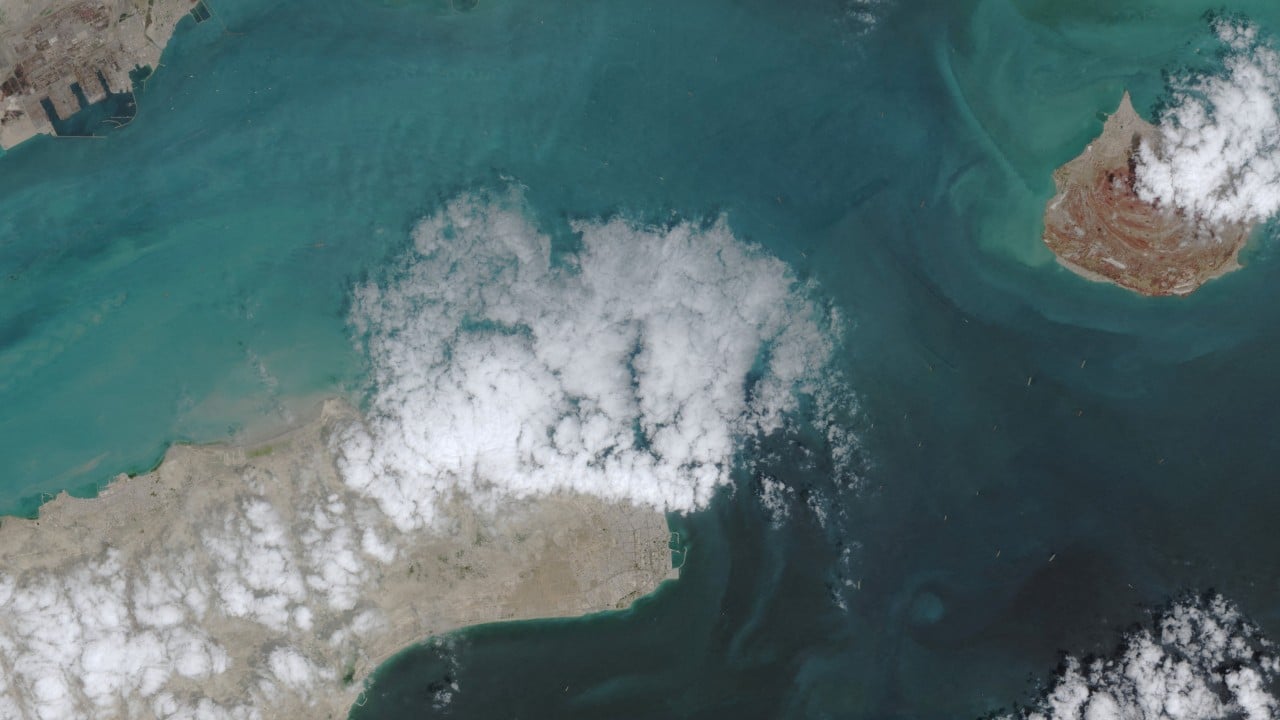
If you're waiting for gas prices to drop or for global shipping to return to normal, I’ve got bad news. Trump made it very clear on Truth Social that the naval blockade of the Strait of Hormuz isn't going anywhere. He’s basically telling Tehran they can have their ceasefire, but they’re still going to starve for cash.
Right now, roughly 20% of the world’s oil and 25% of its liquefied natural gas (LNG) are effectively trapped. Qatar has already declared force majeure on its exports. That’s a fancy legal way of saying, "We can't deliver the gas we promised because there’s a literal war zone in our driveway." If you think $4.00 a gallon at the pump is bad, just wait until the market fully prices in a permanent shutdown of the world’s most vital energy artery.
Violence in the Silence
The "ceasefire" is a joke on the water. Just hours after the extension was announced, the Iranian Revolutionary Guard Corps (IRGC) opened fire on trade vessels in the Strait. They’ve already taken custody of two ships—the Panama-flagged MSC Francesca and the Liberia-flagged Epaminondas.
This isn't a peace. It’s a siege.
Iran’s leadership is split down the middle. On one side, you have the "negotiators" like Parliament Speaker Mohammad Bagher Ghalibaf, who are trying to find a way out of the financial collapse. On the other, you have the IRGC hardliners who would rather see the whole region go up in flames than surrender. When the IRGC fires on a container ship, they’re not just attacking a vessel; they’re trying to sabotage their own government’s chance at a deal. They know Trump has a short fuse, and they’re begging him to light it.
The Economic Collapse of Iran
Trump’s strategy is simple: don’t waste bombs when you can use bank accounts. He’s claiming Iran is "collapsing financially," and honestly, he’s not wrong. The rial is in freefall, and the blockade has cut off almost all of their energy revenue.
But here’s what the mainstream media keeps missing. This isn't just an Iranian problem. The entire Gulf Cooperation Council (GCC) is starting to panic. These countries rely on the Strait for about 80% of their food. We’re seeing a "grocery supply emergency" where staples like rice and flour are being airlifted into cities like Dubai and Riyadh. Prices have jumped by 120% in some areas. Trump is betting that the regional pressure will force Iran to cave, but he’s also risking a total humanitarian disaster for our allies in the process.
What a "Unified Proposal" Actually Means
Trump says he’ll wait for a "unified proposal" from Tehran. What does that look like?
- Total reopening of the Strait: No more IRGC gunboats harassing tankers.
- Nuclear surrender: A permanent end to their enrichment programs.
- Regional retreat: Pulling support for proxies in Lebanon, Yemen, and Iraq.
Iran’s current 10-point plan is the exact opposite. They want war reparations and an immediate end to all sanctions before they even think about moving their ships. The gap between these two positions isn't a gap; it’s a canyon.
The Pakistan Factor
Pakistan is stuck in the middle of this mess. They’re the only ones both sides will talk to, but even their patience is wearing thin. Vice President JD Vance was supposed to fly to Islamabad to lead the U.S. team, but that trip was cancelled at the last minute. That tells you everything you need to know about how "close" we are to a real deal.
What You Should Watch For
Don't get distracted by the headlines about "peace talks." Look at the ship tracking data. As long as the MSC Francesca is sitting off the Iranian coast and the U.S. Navy is seizing Iranian cargo ships in the Sea of Oman, the war is still on. It’s just moved from the air to the water.
If you’re an investor or just someone worried about their heating bill, keep an eye on the Brent Crude benchmarks. Analysts are already warning that we could lose a billion barrels of production if this drags on through the summer. The "ceasefire" extension is likely only a 3-to-5-day window. Trump has already told CNBC he’d rather be bombing because "that’s a better attitude to go in with."
The clock isn't just ticking; it's about to run out. If a "unified proposal" doesn't land on Trump's desk by the end of the week, the ceasefire won't be the only thing that expires. Expect the blockade to turn into a full-scale kinetic engagement by Monday. You should probably top off your tank now.
Next Steps for Readers
- Monitor Energy Stocks: Watch for volatility in companies with heavy exposure to Middle Eastern LNG.
- Track Shipping Rates: Follow the Baltic Dry Index to see how the Hormuz shutdown is impacting global logistics costs.
- Prepare for Inflation: If the blockade continues, expect a secondary spike in food and consumer goods prices by mid-May.