At a November 1, 2026 campaign rally in Dubuque, Iowa, President Donald Trump told supporters he could have won the Vietnam War in a single week if he had been in charge. His proposed strategy? Stop spraying forests with chemical defoliants and instead "go after Ho Chi Minh City".
There's just one massive problem with that plan. During the Vietnam War, Ho Chi Minh City wasn't called Ho Chi Minh City—it was called Saigon, and it was the capital of South Vietnam, America's own ally.
The backlash online was immediate, sharp, and brutally specific. Historians, military analysts, and social media users quickly pointed out that attacking Saigon would have meant bombing the headquarters of U.S. military operations and the government Washington was fighting to protect. As one viral post noted, targeting South Vietnam's capital certainly would have ended the war in a week—just not in America's favor.
What Actually Happened at the Iowa Rally
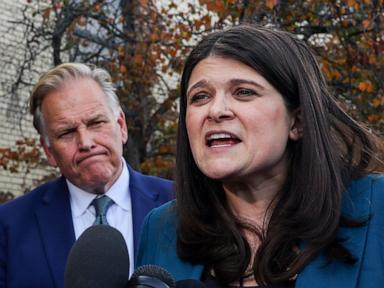
Trump made the remarks during a two-hour speech at the Five Flags Event Center in Dubuque while campaigning for Republican Representative Ashley Hinson's Senate run. He was defending the timeline of the ongoing conflict with Iran against criticism from both sides of the political aisle.
To argue that the Iran conflict hadn't dragged on too long, Trump contrasted it with past American quagmires in Vietnam and Afghanistan. According to rally transcripts reported by outlets including Hindustan Times and Clash Report, Trump argued that past presidents "never fight to win" and called them "stupid, stupid presidents".
Then came the specific claim about Vietnam. Trump told the crowd that U.S. forces wasted years dropping "whatever the hell that red crap is" on forests—prompting attendees to shout "Agent Orange"—instead of striking Ho Chi Minh City. He repeated the punchline twice: he would have won the war in one week.
Why the Geography and History Don't Add Up
The factual breakdown of Trump's statement comes down to basic Cold War geography and military history. Community notes on X and fact-checks across major news organizations highlighted three core errors in the rally remarks.
Saigon Was the Allied Capital
From 1954 until the end of the war in April 1975, the southern metropolis was named Saigon. It served as the political seat of the Republic of Vietnam (South Vietnam) and hosted the U.S. Embassy alongside the Military Assistance Command, Vietnam (MACV). Hundreds of thousands of American troops and diplomats rotated through Saigon. The city was only renamed Ho Chi Minh City after North Vietnamese forces captured it on April 30, 1975, and unified the country under communist rule in July 1976.
Hanoi Was the Enemy Capital
The actual seat of the North Vietnamese government—the adversary the United States was fighting—was Hanoi, located roughly 700 miles to the north. Confusing Ho Chi Minh City with Hanoi isn't a minor slip of the tongue; it flips the entire map of the conflict upside down.
The U.S. Did Bomb North Vietnam Heavily
Trump's framing also suggested that American presidents held back from attacking North Vietnamese cities and only focused on jungle defoliation. Historical records show the opposite. Between 1965 and 1968, the U.S. executed Operation Rolling Thunder, a sustained aerial bombardment campaign against North Vietnam. In 1972, Operation Linebacker and Operation Linebacker II unleashed massive B-52 bombing raids directly on Hanoi and the major port city of Haiphong. Over the course of the war, the U.S. dropped more tonnage of bombs on Indochina than all sides dropped during World War II combined—and still couldn't force a quick surrender.
A Pattern of Escalating Claims
This wasn't the first time Trump suggested he could have wrapped up the Vietnam War effortlessly, though his estimated timeline keeps shrinking.
In an earlier Fox News interview, Trump criticized previous administrations' handling of Vietnam and claimed, "If it were me, I would have had that war done in three months, four months". Later, during an April 21, 2026 phone interview on CNBC's Squawk Box, he compared the length of the Iran conflict to Vietnam's 19-year span and insisted, "I would have won Vietnam very quickly. I would have, if I were president". By November in Dubuque, three to four months had compressed into seven days.
Trump made a parallel argument about Afghanistan at the same Iowa rally, asserting he could have won that war quickly too. Critics were quick to push back on that point as well. Eurasia Group analyst Gregory Brew noted on X that Trump's first administration negotiated the 2020 Doha agreement with the Taliban, which set the stage for the 2021 U.S. withdrawal. Writer Jonah Goldberg of The Dispatch pointed out on social media that Trump had four years in office to "win" Afghanistan if it were that simple, yet spent most of his first term trying to pull American troops out. Others noted that Trump himself received draft deferments during the Vietnam era and never served in the conflict.
Why Leaders Keep Falling for the "Quick Win" Myth
Beyond the viral embarrassment of mixing up Saigon and Hanoi, Trump's remarks tap into a persistent myth in American foreign policy: the idea that guerrilla wars can be won overnight if a commander just takes the gloves off.
In January 1969, Henry Kissinger wrote a famous essay titled "The Vietnam Negotiations" that captured why conventional superpowers struggle in asymmetric conflicts. His core observation remains the gold standard for military strategists: "The guerrilla wins if he does not lose. The conventional army loses if it does not win".
You can't bomb a decentralized insurgency into submission in a week—not in Vietnam in 1968, not in Afghanistan in 2018, and not in modern regional conflicts. Vietnam wasn't lost because Washington didn't drop enough ordnance or didn't know which city was on the map. It failed because military firepower couldn't build a viable, popular government in Saigon or eliminate an opponent willing to absorb catastrophic losses for decades.
When evaluating bold claims about effortless military victories, check the basic facts first. Verify the geography of the conflict, look at whether massive bombing campaigns were already tried, and examine what happened when the speaker actually held command. History rarely bends to a one-week deadline.