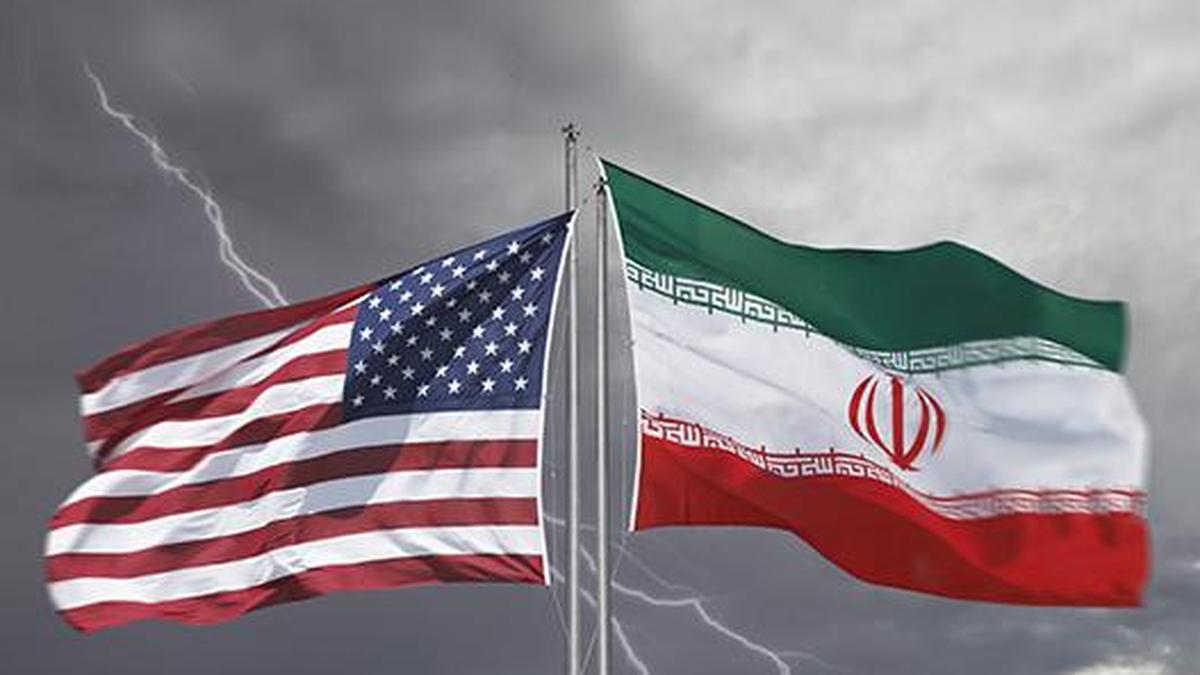
The foreign policy establishment is running its favorite play: diagnosing a "strategic gridlock" where none exists. Listen to the mainstream analysis surrounding the current U.S.-Iran standoff, and you will hear a tired, uniform narrative. They claim that because the mid-April ceasefire mediated by Pakistan has stalled, and because President Trump is toggling daily between threatening a "full, large-scale assault" on Truth Social and abruptly calling off strikes at the request of Gulf monarchs, Washington is trapped. They see the frantic backchannel messaging through Islamabad and Doha as proof of paralysis.
They are entirely wrong.
What the commentariat misinterprets as a gridlock is actually a deliberate, highly transactional application of maximum leverage designed to break a structural status quo that has failed for forty years. The assumption that Trump is stuck assumes he wants a conventional, neat diplomatic framework like the 2015 JCPOA. He does not. The current theater—the naval blockade of Iranian ports, the abrupt pausing of "Project Freedom" in the Strait of Hormuz, and the public countdowns—is not a sign of diplomatic confusion. It is an intentional squeeze play where the friction itself is the strategy.
The Myth of the Paralyzed Superpower
The core argument of the lazy consensus is that the United States is boxed in by its own escalation. Mainstream analysts point to Iran’s aggressive counter-measures—tightening maritime control over the Strait of Hormuz, demanding full sanctions relief, and moving military reconnaissance assets like RC-130s to Pakistan’s Air Force Base Nur Khan—as proof that American deterrence has failed. They look at Brent crude hovering around $109 a barrel and conclude that Washington is too terrified of an energy shock to pull the trigger.
This analysis completely misunderstands how transactional power works. I have spent years tracking macroeconomic risk and political execution; if there is one thing that exposes an outsider, it is the belief that public saber-rattling must always lead to immediate kinetic action to be deemed "successful."
Consider the mechanics of the current standoff:
- The Demands: Washington is demanding that Tehran surrender 400 kilograms of enriched uranium, limit its operations to a single nuclear facility, and drop all claims for war compensation.
- The Resistance: Iran counter-claims sovereignty over the Strait of Hormuz and demands an immediate lifting of the blockade before talking.
- The Intermediaries: Saudi Arabia, Qatar, and the UAE are actively begging Washington to delay strikes to allow their own backchannels to work.
This is not a gridlock; it is an asymmetric auction. By preparing a massive strike for May 19 and then publicly calling it off "as a favor" to Gulf leaders, the White House did not show weakness. It outsourced the enforcement mechanism. It effectively told Riyadh and Abu Dhabi: If you do not want Iranian missiles hitting Dubai or your desalination plants, you use your financial and diplomatic weight to force Tehran to blink. ## Dismantling the De-escalation Fallacy
Every "People Also Ask" box on the internet right now is flooded with variations of the same flawed premise: How can the U.S. achieve long-term stability in the Middle East? The brutal, honest truth that nobody in Washington wants to say out loud is that long-term stability is an illusion, and seeking it is a losing strategy. The mistake of past administrations was treating Iran as a problem to be permanently solved through treaties. But regional revisionist powers do not stay solved.
When the U.S. and Israel launched offensive operations on February 28, the goal was never a regime change that would collapse the Islamic Republic into chaos. The goal was structural degradation. Treasury Secretary Scott Bessent’s short-term extensions of sanctions waivers on Russian oil demonstrate that Washington is fine-tuning the global economic engine in real time to sustain a long-term siege, not looking for a quick exit ramp.
Let’s look at the actual data regarding Iran's leverage. The mainstream press warns that Iran's blockade of Hormuz threatens 20% of global oil exports. But who suffers most from a prolonged maritime chokehold? Not the United States, which remains a net exporter of petroleum liquids. The pain hits Beijing and European capitals. By allowing the friction in the Strait to simmer under a strict U.S. naval counter-blockade, Washington forces China to pressure Tehran behind the scenes. Trump’s recent communications with Xi Jinping regarding the opening of the strait prove this exact dynamic: the U.S. is leveraging the global threat of an energy crisis to force other superpowers to police Iran for them.
The Real Risk the Experts Miss
The true vulnerability of this contrarian strategy is not that Iran will launch a war it knows it will lose. The risk is the fragmentation of American alliance structures through sheer exhaustion.
When you run a strategy based on constant, high-stakes brinkmanship, your partners suffer from permanent whiplash. Qatar and Pakistan are burning through immense diplomatic capital to maintain a fragile truce line. Israeli Prime Minister Benjamin Netanyahu’s security cabinet is under immense domestic pressure to resume unilateral strikes on Iranian assets in Lebanon and Gaza, viewing any pause as a tactical gift to Tehran.
If Washington holds the line too long without either executing the strike or signing a deal, the regional architecture will fracture not from Iranian strength, but from partner fatigue. That is the downside of the transactional model: when everything is a deal, nothing is permanent.
But do not confuse this calculated instability with an intellectual gridlock. The administration's conditions—especially the surrender of the 400kg uranium stockpile—are designed to extract total capitulation or establish a clean pretext for an asset-stripping air campaign. There is no middle ground, no "peace process," and no desire for an elegant diplomatic compromise. The clock is ticking because Washington set the timer, wound the spring, and is perfectly comfortable watching the gears turn.