Donald Trump doesn’t have friends. He has assets.
When the former President and current candidate broadcasts his "love" for Prime Minister Narendra Modi and the Indian people while the Middle East burns, the mainstream media treats it like a heartwarming hallmark card. They frame it as a deep, ideological bond between two nationalist titans. That reading is lazy, shallow, and dangerously wrong.
The breathless reporting on Trump’s latest praise—invoking Modi’s name while discussing the threat of war with Iran—isn't a sign of a diplomatic alliance. It is a calculated deployment of a psychological lever. If you think this is about shared values or personal affection, you’ve been sold a narrative that ignores how real power functions.
The Myth of the Ideological Bond
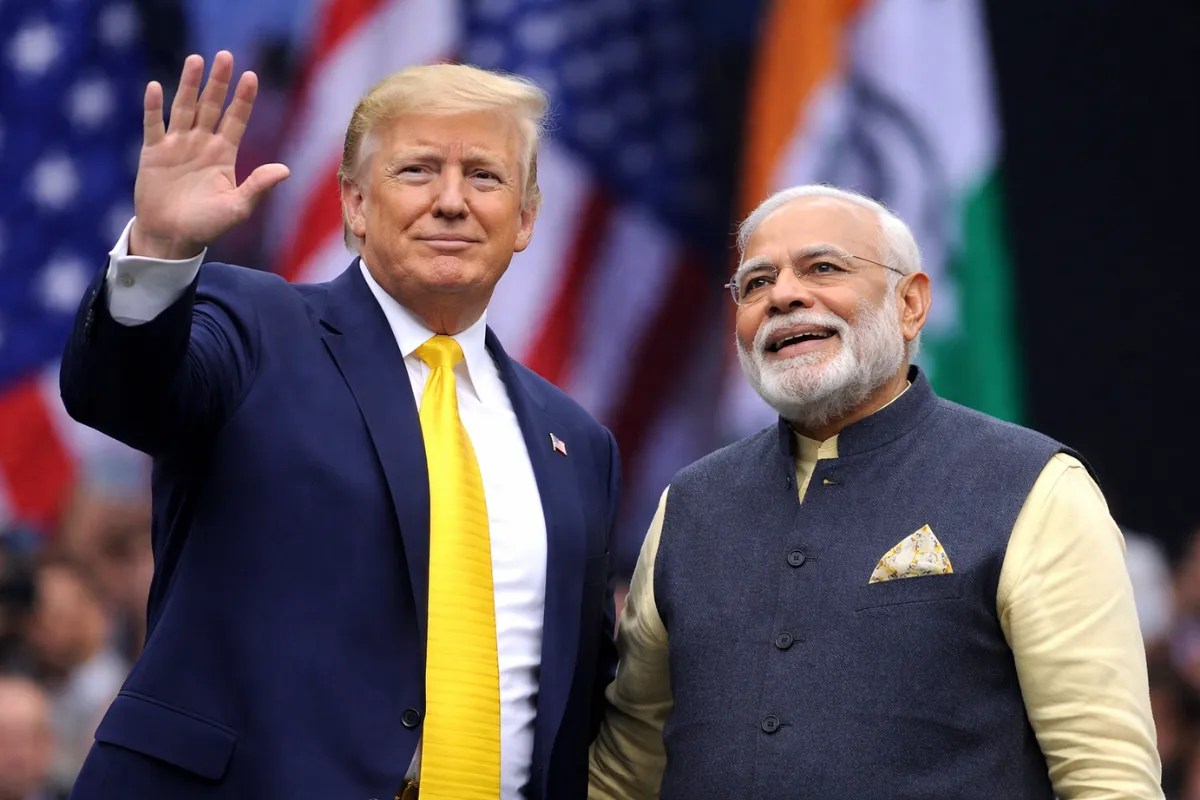
The "lazy consensus" suggests that Trump and Modi are two sides of the same populist coin. Pundits love to point to the "Howdy Modi" and "Namaste Trump" rallies as proof of a fundamental shift in US-India relations. They see the hug and miss the ledger.
Trump’s foreign policy has always been an exercise in brand management and bilateral bullying. His "love" for Modi is a utility. By praising Modi during a crisis involving Iran, Trump is doing two things: he is signaling to the massive, influential Indian-American diaspora that he is their champion, and he is reminding the world that he prefers strongmen who can deliver stability over institutionalists who demand consensus.
But look at the data, not the handshakes. During his first term, Trump’s administration suspended India’s preferential trade status under the Generalized System of Preferences (GSP). He took a blowtorch to a trade relationship that had existed for decades because the "math" didn't look good for his America First optics. You don't strip a "best friend" of trade benefits that impact billions of dollars in exports if the relationship is built on anything other than cold, hard leverage.
Iran is the Foil, India is the Shield
Why bring up Modi when discussing a potential conflict with Iran? Because it creates a false dichotomy of "Good East" versus "Bad East."
Trump’s rhetoric uses India as a regional counterweight to justify his hawkish stance on Tehran. By elevating the relationship with New Delhi, he creates a vacuum where the complexities of India’s own relationship with Iran are conveniently ignored. India needs Iranian oil. India invested heavily in the Chabahar Port to bypass Pakistan. India cannot afford a total collapse of the Iranian state.
When Trump claims he "loves" India while threatening to turn Iran into a parking lot, he is actually putting New Delhi in an impossible position. He is forcing a choice that Indian diplomats have spent seventy years trying to avoid: alignment.
The status quo media fails to mention that India’s strategic autonomy is its most guarded asset. Trump’s "embrace" is actually a squeeze. He is attempting to pull India into a Western-led security architecture that serves American interests, often at the expense of India’s long-standing policy of non-alignment.
The Diaspora Vote is the Real Battlefield
Let’s be brutally honest about the timing. We are in an election cycle where every percentage point in swing states matters. In places like Pennsylvania, Michigan, and Georgia, the Indian-American vote is no longer a rounding error; it is a decisive factor.
I’ve seen political consultants spend millions trying to "crack the code" of minority voting blocs. Trump’s strategy isn't subtle. He knows that many Indian-Americans are proud of India’s rising global stature. By showering Modi with praise, he is attempting to bypass traditional Republican talking points and speak directly to ethnic pride.
It is a marketing play.
- Identify the target: High-income, politically active Indian-Americans.
- Associate the brand: Link the Trump name to a popular figure (Modi).
- Neutralize the opposition: Make it difficult for Democrats to attack his foreign policy without appearing "anti-India."
This isn't diplomacy. It’s a retail political campaign masquerading as a geopolitical strategy.
The Defense Industry Reality Check
If you want to know the "truth nobody admits," look at the defense contracts. The US-India relationship isn't held together by "love"; it’s held together by $25 billion in defense deals.
The US has replaced Russia as a primary supplier for high-end military hardware. We are talking about Predator drones, jet engine technology transfers, and maritime surveillance. This is the "nuance" the headlines miss. Trump views India as a massive, emerging market for the American military-industrial complex.
The rhetoric is the sugar-coating on a very large, very expensive pill. India is buying its way into the "inner circle," and Trump is the ultimate salesman. He praises the customer because the customer is writing checks. If India stopped buying American hardware and started pivoting back toward S-400 missile systems from Russia, that "love" would evaporate faster than a campaign promise.
The Problem With "Strategic Partners"
People also ask: "Is India finally a true ally of the US?"
The answer is a brutal no. India is a partner, not an ally. There is a massive difference. An ally (like the UK or Japan) generally follows the US lead on global sanctions and military interventions. India does not. India maintained its trade with Russia throughout the Ukraine conflict. India will maintain its channel with Iran because it has to.
Trump’s rhetoric ignores this friction because his brand cannot tolerate complexity. He needs a hero (Modi) and a villain (the Iranian regime). By flattening the nuances of Indian foreign policy into a simple narrative of friendship, he misleads the American public about how much influence the US actually has over New Delhi.
Stop Falling for the "Chemistry" Narrative
The media loves the "chemistry" between leaders because it’s easy to write. It’s much harder to analyze the Intellectual Property Rights (IPR) disputes that plague US-India trade or the H-1B visa restrictions that Trump tightened, which directly hurt Indian professionals.
I have seen the fallout of these policies firsthand. I have seen the tech giants in Bangalore and Hyderabad scramble when "friend of India" Donald Trump signed executive orders that put their employees' futures in jeopardy. You cannot claim to "love" a people while simultaneously making it your mission to restrict their ability to work and thrive in your country.
The contradiction is the point. Trump operates on a dual-track:
- Track A: Public adoration and "strongman" solidarity for the cameras.
- Track B: Protectionist policy that prioritizes domestic optics over international stability.
The High Cost of the Trump Hug
For India, the "Trump hug" is a double-edged sword. While it elevates India’s status on the global stage, it also paints a bullseye on New Delhi for America's rivals. When Trump uses India as a rhetorical weapon against Iran, he is spending India’s diplomatic capital to settle his own scores.
If you are an investor or a policy wonk, you need to ignore the adjectives. "Great," "wonderful," "unbelievable"—these are empty fillers. Look at the tariff structures. Look at the visa quotas. Look at the technology transfer limitations. That is where the relationship actually lives.
The Transactional Truth
The status quo is obsessed with the idea of a "new world order" led by Washington and New Delhi. The reality is far more cynical.
Trump is using India to:
- Bolster his "tough on Iran" credentials.
- Court a wealthy domestic voting bloc.
- Pressure China by signaling a regional encirclement.
None of these goals require him to actually care about the long-term stability of the Indian subcontinent. It is a series of short-term wins designed to serve a singular ego.
India, for its part, is playing the game. Modi is a pragmatist. He knows that a public endorsement from a US President (or a potential one) is a useful tool for domestic consumption and regional posturing. They are both using each other.
There is no "bromance." There is no "special relationship."
There is only the deal. And in Trump's world, the deal is only good until he decides he can get a better one somewhere else.
If war breaks out in the Middle East, India will be left to navigate the wreckage of its energy security and regional ties, while Trump will have moved on to the next headline, the next rally, and the next "great friend."
Stop looking for heart in a room full of calculators.