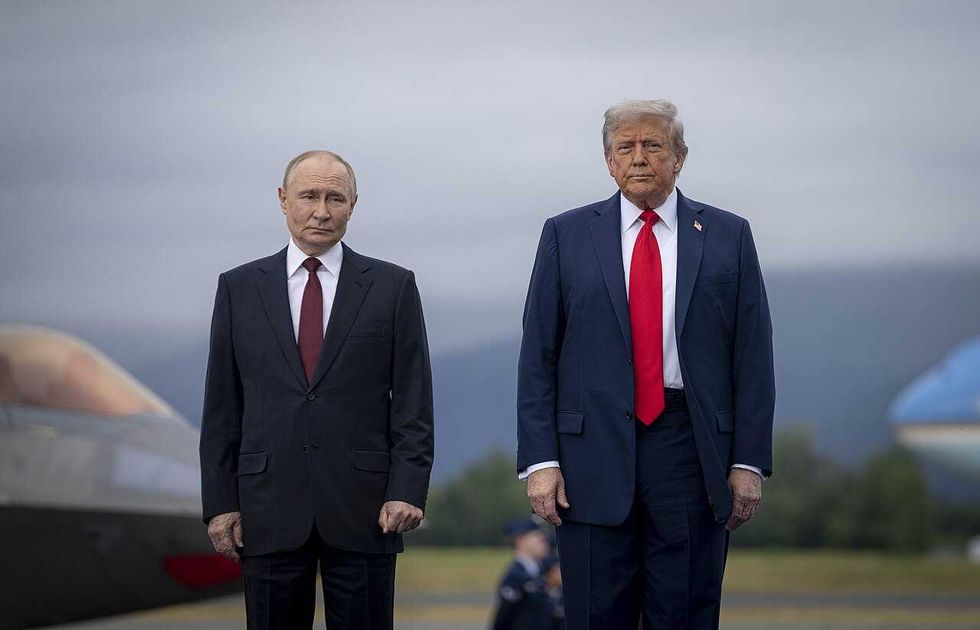
For decades, the core identity of the conservative movement relied on one foundational rule: Moscow was the ultimate adversary. Ronald Reagan’s shadow loomed large over every congressional district, and standing up to the Kremlin was a non-negotiable litmus test for anyone carrying the GOP banner. That reality is dead. Donald Trump didn't just bend foreign policy rules; he fundamentally rewired the emotional and political architecture of his party, leaving old-guard hawks stranded in a movement they barely recognize.
The friction isn't happening behind closed doors anymore. When high-level envoys head to St. Petersburg or when trade concessions and diplomatic pardons are floated, the backlash on Capitol Hill is immediate and fierce. Lawmakers who spent their entire careers championing a muscular foreign policy are openly clashing with a White House that views Vladimir Putin through an entirely different lens. This isn't just a disagreement over tactics. It's an existential civil war about what conservatism actually means in the modern era.
The Death of Reagan's Cold War Orthodoxy
To understand why this fracture hurts so deeply, you have to look at how fast the ideological shift happened. Traditional Republicans built their worldview on American exceptionalism, NATO alliances, and a deep distrust of Russian autocracy. They viewed foreign policy through a moral lens where democratic institutions stood in direct opposition to authoritarian regimes.
Trump shattered that binary. By projecting a strange kind of personal respect and diplomatic accommodation toward Putin, he offered the Russian leader a level of global stature and legitimacy that left traditional conservatives gasping. Trump supporters, meanwhile, stopped seeing Russia through the old Cold War prism. Instead, many began viewing the Kremlin through a domestic culture-war lens—cheating the progressive playbook by embracing traditionalist rhetoric, anti-woke posturing, and a defense of national sovereignty against globalist institutions.
That ideological pivot created a massive chasm within the party. On one side, you have institutionalists who warn that cozying up to Moscow destroys the transatlantic alliance. On the other side, you have a populist base that is utterly exhausted by foreign interventions and foreign aid, caring far more about domestic grievances than eastern European borders.
The Breaking Points in Congress
The tension regularly spills out into open view during high-stakes legislative fights and closed-door party meetings. Whenever executive actions ease pressure on Russian energy networks or signal a softening stance on the war in Ukraine, senior Republican senators and House members push back. They argue that projecting weakness to the Kremlin invites broader aggression and undermines decades of American deterrence.
Yet, trying to rein in Trump's foreign policy instincts carries a heavy political price. The modern GOP primary voter doesn't punish candidates for breaking with cold war orthodoxy; they punish them for being insufficiently loyal to the populist agenda. This leaves congressional leaders walking a tightrope. They want to maintain traditional defense postures, but they know the party's grassroots base has completely moved on from the Reagan playbook.
What This Means for the Future of American Foreign Policy
The transformation of the Republican party isn't a temporary glitch or a passing phase. It represents a permanent generational handover. The old guard—those who view the world through the wreckage of the Berlin Wall—are retiring or losing primaries. In their place is a younger, more isolationist faction that views foreign entanglements as a waste of American blood and treasure.
When a political party completely reverses its foundational foreign policy tenets in less than a decade, the shockwaves don't stop at the water's edge. They reshape global alliances, rattle foreign capitals, and leave international partners wondering if American commitments are worth the paper they're written on. The fight over Putin's legitimacy isn't just about Russia. It's about who gets to define the soul of the American right, and that battle is only just beginning.
WTF, Steve? GOP Backlash Over Putin Meeting
This short clip breaks down the heated Republican reactions on Capitol Hill following high-level diplomatic engagements with Moscow.