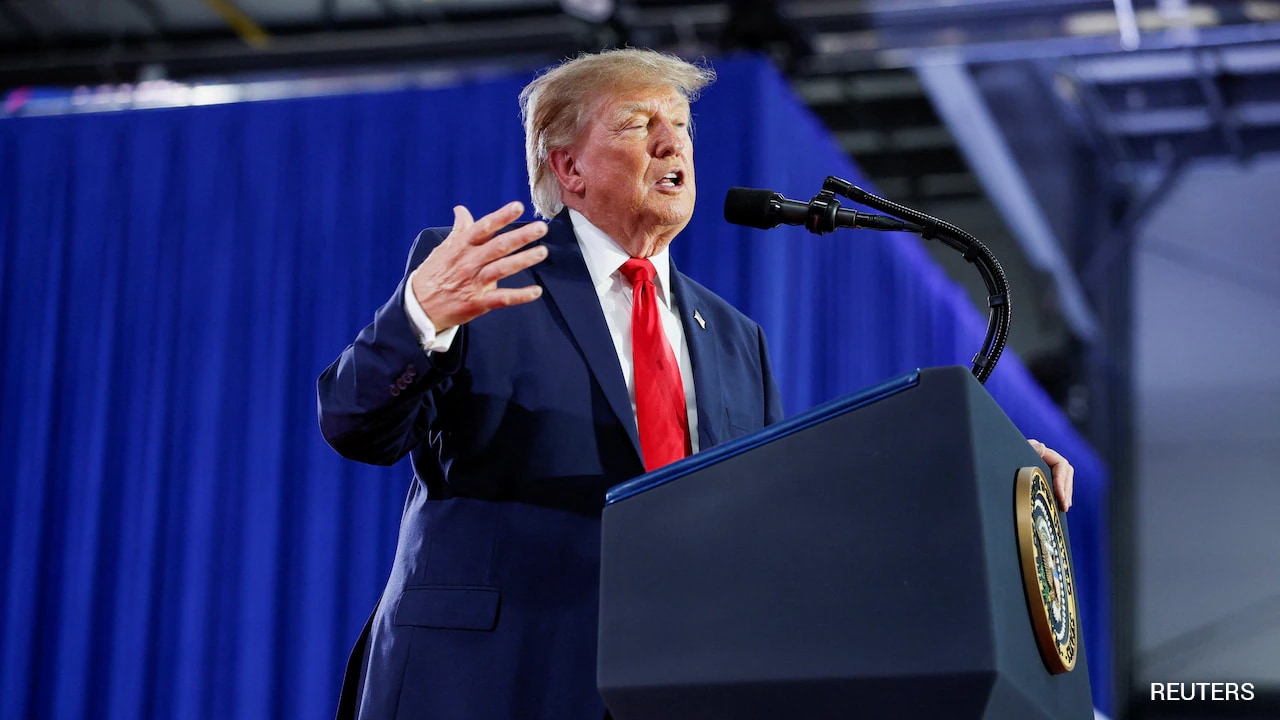
Ask a sitting president about their physical fitness, and you expect a rehearsed talking point from a press secretary. You don't expect to get told, "You look like hell," right in front of the cameras.
Yet that's exactly what happened when a reporter pressed Donald Trump on his health. The clip went viral within minutes, sparking the usual cycle of outrage on cable news and celebratory memes across social media. Most coverage treated it like just another outburst—a throwaway moment of political theater. That's a massive misreading of what actually occurred in that exchange.
When Trump body-shames a reporter who asks about his health, he isn't just losing his temper. He's executing a deliberate, time-tested rhetorical maneuver designed to flip the scrutiny away from his own physical condition and put the questioner on trial instead. If you've spent years watching political press conferences and crisis communications, you recognize this playbook immediately. It's classic counter-punching, and it works because modern media ecosystems reward the spectacle over the original question.
The Anatomy of the "You Look Like Hell" Deflection
Let's look at the mechanics of the moment. A journalist does their job by asking a completely standard, public-interest question about the health of the Commander-in-Chief. Questions about presidential stamina, medical exams, and cognitive sharpness have been fair game for decades—from Dwight D. Eisenhower's heart attacks to Ronald Reagan's age, Joe Biden's physical frailty, and Trump's own medical disclosures.
Instead of answering the question or pivoting to a prepared statement about his doctor's latest physical, Trump attacked the messenger's appearance.
"You look like hell," he shot back.
Short. Brutal. Instantly clippable.
In three seconds, the entire framing of the interaction changed. Nobody watching the clip on X or TikTok was talking about the substance of the health question anymore. They were talking about the insult. They were debating whether it was funny, cruel, unpresidential, or "classic Trump." By turning the camera's metaphorical lens back onto the reporter's physical appearance, Trump successfully dodged the inquiry without ever having to say "no comment."
Honestly, from a purely tactical media perspective, it's ruthless. Most politicians try to evade tough questions with word salad—long, winding non-answers that bore the audience until the press corps moves on. Trump does the exact opposite. He creates a bigger explosion to distract from the first one.
Why Presidential Health Questions Trigger Such Sharp Reactions
Presidents hate talking about their health. Every single one of them.
The modern presidency is built on an image of relentless strength and vitality. Looking weak—or even human—is treated as a political liability both domestically and abroad. Think back to how Franklin D. Roosevelt's staff went to extraordinary lengths to hide the extent of his paralysis from the public, or how John F. Kennedy concealed his Addison's disease and chronic back pain while projecting the image of a youthful, vigorous athlete.
For Trump, projecting strength isn't just part of the job; it's the core foundation of his entire political brand. Since his 2015 escalator ride, his appeal has rested heavily on being perceived as a fighter with unmatched stamina—someone who sleeps four hours a night, holds marathon rallies, and outworks opponents decades younger.
Any question about his health directly threatens that brand. It implies vulnerability. It suggests aging, fatigue, or physical decline. When a reporter brings up health, they aren't just asking a medical question; they're poking directly at the central mythos of his leadership style.
So he strikes back where he knows it hurts most in a visual medium like television—appearance. Calling a journalist's looks into question is a way of saying, Who are you to judge my vitality when you don't look great yourself? It's playground logic, sure, but on a national stage, it's remarkably effective at neutralizing a line of questioning.
A History of Turning Appearance Into a Weapon
This incident didn't happen in a vacuum. Using physical appearance as a political cudgel has been a defining feature of Trump's public persona since long before he entered the Oval Office.
If you track his rhetoric over the last decade, a clear pattern emerges. Whenever an opponent, critic, or journalist challenges his competence, honesty, or fitness, the counterattack almost always targets how they look:
- Political rivals: During the 2016 primaries, Marco Rubio became "Little Marco," and Jeb Bush was framed as "low energy." In 2024, Ron DeSantis's footwear and posture became regular talking points at rallies.
- Female journalists and critics: Over the years, Trump has repeatedly commented on the physical appearance of female reporters and anchors—from Megyn Kelly to Mika Brzezinski—often linking their looks to their credibility or intelligence.
- Male reporters and officials: Men aren't exempt either. He has mocked the weight, height, hair, and facial expressions of male correspondents, intelligence officials, and lawmakers whenever they cross him.
What makes the "you look like hell" remark stand out isn't that it's new, but that it happened in direct response to a question about his own physical state. It's pure projection as a defensive shield.
Media researchers and political communication scholars have studied this dynamic extensively. Research from institutions like the Pew Research Center and the Shorenstein Center on Media, Politics and Public Policy consistently shows that personalized attacks generate vastly higher engagement online than policy discussions or standard press briefings. Algorithms don't care about nuance; they care about emotional reaction. An insult about someone's appearance triggers immediate tribal responses—outrage from critics, laughter from supporters—ensuring the clip dominates the news cycle for days.
The Impossible Position of the White House Press Corps
If you've ever watched a live press gaggle or a briefing room scrum, you know how fast these moments unfold. Journalists have maybe five seconds to get a question out while dozens of colleagues are shouting over each other. There's no time to craft a literary masterpiece.
When a president responds to a legitimate question by telling you that you look like hell, you're trapped in a lose-lose scenario.
- If you fire back: You immediately lose your journalistic neutrality. You become part of the story, giving partisan media outlets ammunition to claim you're an activist rather than an objective reporter.
- If you ignore it and repeat the question: You risk looking rattled or weak on camera, while the president simply moves on to a friendlier outlet in the room.
- If you laugh it off: Critics accuse you of normalizing verbal abuse and failing to hold power to account.
Experienced political reporters generally follow one golden rule in these moments—never take the bait. Sam Donaldson, Helen Thomas, and modern correspondents like Kaitlan Collins or Peter Alexander have all faced sharp pushback from various administrations over the decades. The seasoned pros let the insult hang in the air, keep their tone completely flat, and ask the follow-up anyway. The contrast between a calm, focused journalist and an agitated official speaks louder than any snappy comeback ever could.
What Voters Actually Take Away From Moments Like This
Here's where pundits often get things wrong. Inside the Washington beltway, an exchange like this is analyzed through the lens of decorum and institutional norms. Commentators write columns about the erosion of presidential dignity and the mistreatment of the free press.
Outside the beltway, people process it very differently.
To Trump's base, telling a reporter "you look like hell" isn't a breach of decorum—it's proof of authenticity. Many voters view the mainstream press not as neutral referees, but as hostile political actors trying to take down a leader they like. When Trump insults a reporter, his supporters see him punching back against an institution they already distrust. To them, it looks like strength, humor, and refusal to play by polite establishment rules.
To his critics, the exact same clip reinforces every concern they already have about temperament, bullying, and a lack of transparency regarding presidential health.
Nobody's mind gets changed by the clip itself. Instead, it acts like a Rorschach test. You see what you already believed going in.
The Real Issue That Got Buried
While everyone argued over whether the remark crossed a line, the underlying issue—presidential health transparency—got completely sidelined. And that's a problem regardless of who occupies the Oval Office.
Americans have a right to clear, verifiable information about the physical and cognitive health of the person holding the nuclear codes. History shows that administrations from both parties have downplayed medical issues when it suited them politically. Woodrow Wilson's 1919 stroke was hidden from the public for months while his wife Edith effectively managed executive duties. John F. Kennedy's doctors issued misleading statements about his health during the 1960 campaign. More recently, questions around both Trump's and Biden's medical disclosures have sparked intense public debate.
Currently, there is no constitutional requirement forcing a president to undergo an independent, standardized medical or cognitive exam and release the raw results to the public. Presidents choose their own physicians—often White House doctors who are military officers serving under the president's command—and decide how much or how little data to share.
When a reporter asks about a president's health, they're trying to bridge that transparency gap. When the answer is a personal insult about the reporter's face, the public ends up with zero new information and a whole lot of noise.
How to Watch Political Press Exchanges Without Getting Played
Next time a clip like this blows up your feed, pause before reacting to the headline or the outrage cycle. You can spot the distraction play in real time if you know what to look for.
First, identify the original question that triggered the outburst. Nine times out of ten, the sharpest personal insults happen right after a reporter touches a nerve—whether it's health, legal trouble, polling numbers, or a policy failure. The intensity of the insult usually tells you how sensitive the topic actually is.
Second, watch what happens in the 30 seconds after the viral clip ends. News aggregators love to cut the video right at the punchline because that's what gets clicks. Watching the full, unedited C-SPAN feed often shows whether the reporter stood their ground, whether other journalists backed them up by repeating the question, or whether the entire press corps let the deflection succeed.
Third, separate the theater from the substance. You can find a remark funny, offensive, or shocking, while still recognizing that a basic question about public accountability went unanswered. Don't let a three-second soundbite make you forget what was actually being asked in the first place.