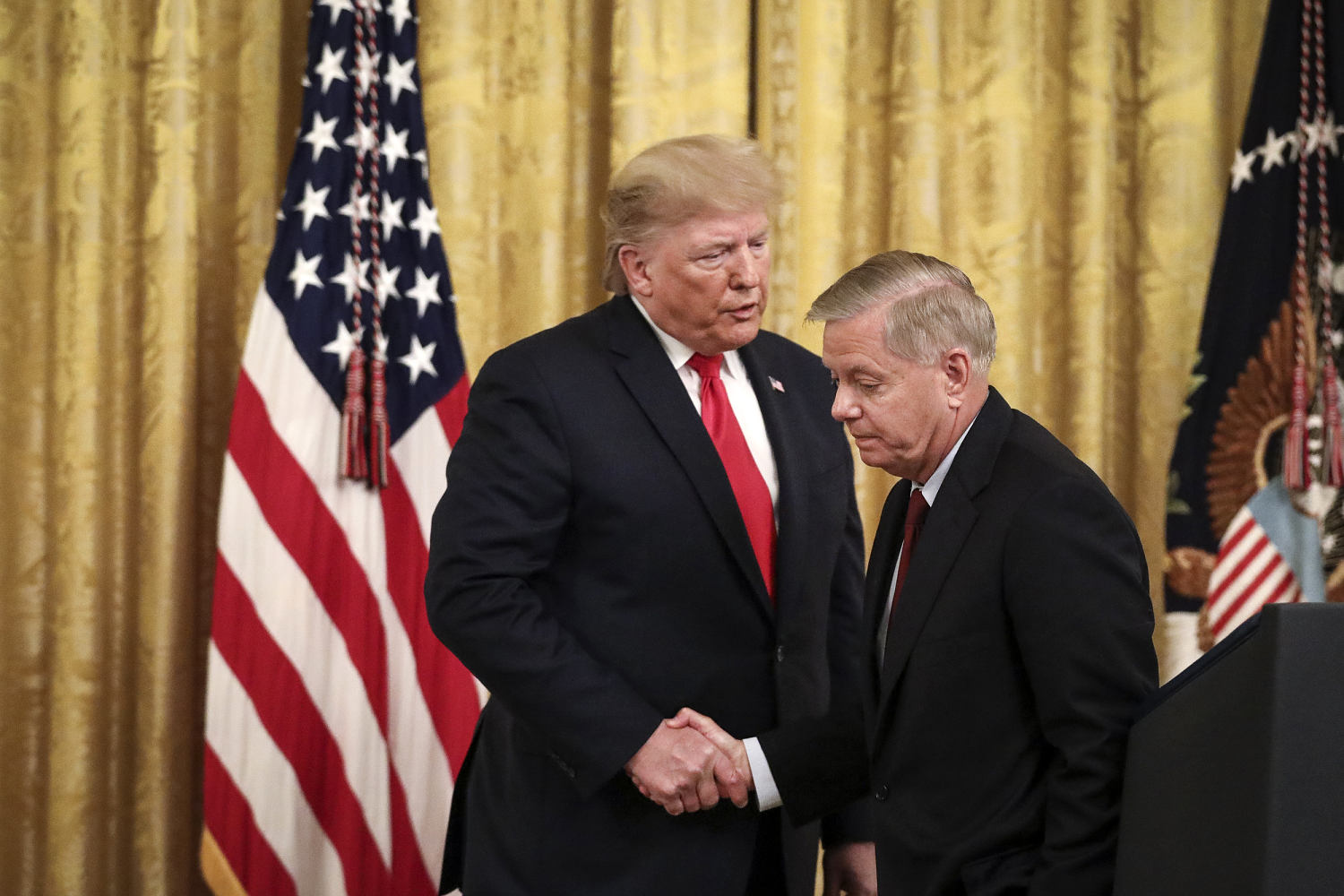
The sudden passing of South Carolina Senator Lindsey Graham has left Washington in absolute shock, but the political storm brewing in the aftermath is even more intense. Graham, a towering figure in Republican politics and a fierce foreign policy hawk, died at age 71 following a medical emergency at his Capitol Hill home. Almost immediately, the internet did what the internet does best: it spun a web of wild conspiracy theories.
Because Graham had just returned from a high-profile diplomatic trip to Ukraine, online commentators wasted no time suggesting foul play by foreign actors. The speculation grew so loud that the FBI actually stepped in to assist local authorities, sending agents to swarm Graham’s D.C. residence.
But President Donald Trump isn't having any of it. Speaking directly from the Oval Office, Trump made his stance crystal clear, stating that the bureau is simply "wasting their time" by chasing these ghost stories. It is a rare moment where Trump is actively trying to de-escalate an FBI investigation rather than demanding one, and his reasoning reveals a lot about the reality behind the curtain.
The Tragic Reality Behind the Speculation
Let’s look at the actual facts before the rumors get completely out of hand. The District of Columbia medical examiner’s preliminary findings show that Graham died of an aortic dissection brought on by arteriosclerotic cardiovascular disease. Basically, it was a sudden, catastrophic tear in his main artery, likely exacerbated by high blood pressure and hardening arteries.
Trump pointed out that this wasn't some mysterious, engineered medical anomaly. It is a tragic family trait.
"His father had a very similar problem, as you know," Trump told reporters, referencing how Graham’s father passed away from a sudden heart attack at the relatively young age of 69.
The timeline of that tragic Saturday night backs this up perfectly:
- 8:30 PM: Emergency medical services receive a call regarding a man suffering severe chest pains at Graham's Capitol Hill home.
- 8:55 PM: Dispatch audio reveals first responders performing CPR on a patient in full cardiac arrest.
- 9:30 PM: Graham is rushed via ambulance to George Washington University Hospital, where he was later pronounced dead.
Trump himself noted that he spoke to Graham just hours before the emergency call. The senator admitted he was feeling incredibly tired after his grueling flight back from Kyiv, but otherwise seemed completely fine. It is clear Trump believes this was a heartbreaking case of a stressed, exhausted lawmaker whose genetics finally caught up with him. "I wish he took better care of himself," Trump added bluntly.
Why Federal Agents Swarmed the Capitol Hill Row House
If the medical diagnosis is so straightforward, why did nearly 20 federal agents from the FBI and other agencies show up at Graham’s house two days after his death?
This is where public perception and law enforcement protocol clash. FBI Director Kash Patel noted that the bureau is merely providing resources to assist the Metropolitan Police Department, which technically leads the death investigation. When a high-ranking U.S. Senator with access to top-secret intelligence dies suddenly after visiting a war zone, law enforcement cannot just assume it was natural causes. They have to verify it.
Agents were seen carrying manila folders and large black equipment containers out of the house. They are looking for signs of a break-in, checking digital devices, and ensuring no sensitive state secrets were compromised. Two separate law enforcement sources confirmed that this massive presence is strictly "out of an abundance of caution" and that absolutely no new evidence points to foul play.
Trump’s public pushback is designed to shut down the political theater before it turns into a runaway circus. He knows that every day the FBI spends looking over its shoulder for Russian or Iranian assassins is a day the public remains distracted from the actual governance that needs to happen.
The Major Shift in the Senate Balance
The real story that Washington needs to focus on isn't a geopolitical murder mystery. It is the immediate, chaotic scramble for political power.
Graham’s death throws a massive wrench into the legislative gears. Republicans held a relatively comfortable 53-47 majority in the Senate, but losing Graham narrows that gap right when crucial votes are on the horizon. To keep the wheels turning, South Carolina Governor Henry McMaster acted fast, appointing Graham’s own sister, Darline Graham Nardone, to temporarily fill the vacant seat for the rest of the term.
But this is only a temporary band-aid. Because Graham's seat was already up for grabs in the 2026 midterms this November, voters will decide who takes the mantle permanently in just a few short months.
Instead of getting sucked into online echo chambers feeding on conspiracy theories, look at the concrete shifts happening right now. Pay close attention to how South Carolina’s upcoming election shifts the balance of the Senate, and keep an eye on how the final toxicological reports from the D.C. medical examiner wrap up the formal investigation over the coming weeks. The political reality is far more consequential than any internet rumor.