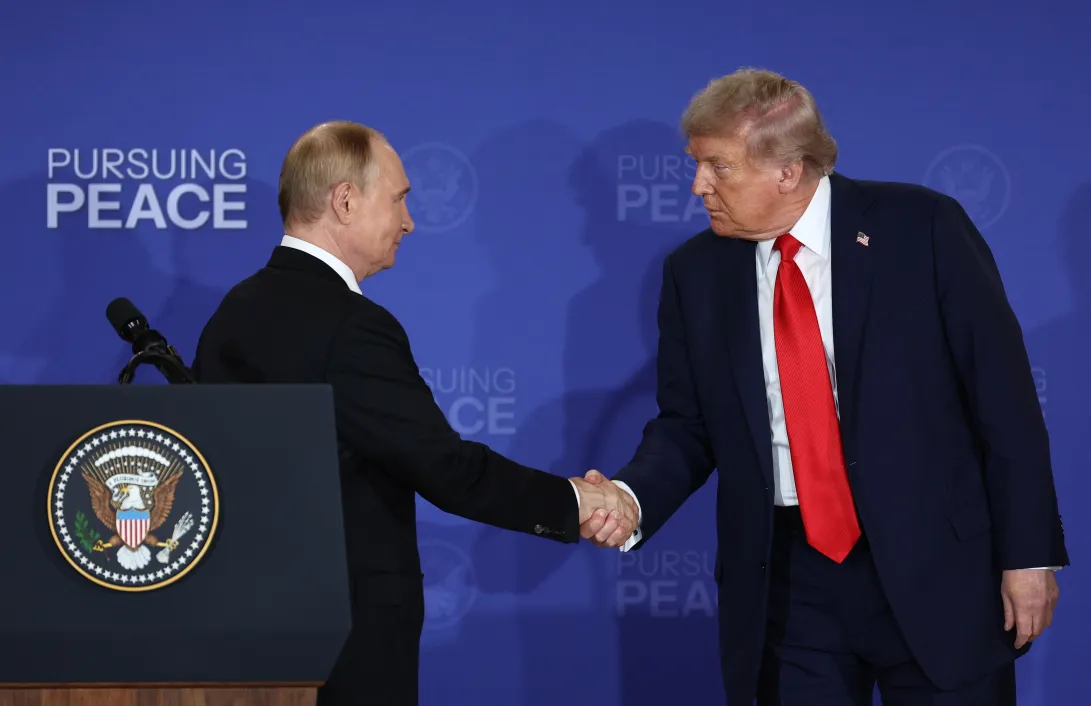
Every policy analyst in Washington is hyperventilating over the exact same talking point right now. They see headlines about a Trump-brokered AI self-regulation accord, and they immediately scream "regulatory capture." They tell you it is a gift to Silicon Valley. They warn that letting frontier labs police themselves is like letting foxes design the security system for the henhouse.
They are completely missing the point.
If you actually read the mechanics of voluntary industry accords—and understand how the current administration uses executive power—you realize this isn't a free pass for Big Tech. It is a trap. Specifically, it is a brutal, market-driven sorting mechanism that shifts crushing legal liability onto AI developers while strapping regulatory anchors to their ankles.
I have sat in boardrooms where general counsels burned millions of dollars trying to comply with vague, premature tech mandates. The worst thing a government can do to a dominant incumbent is pass a massive, rigid law—because the incumbent already has the compliance army to survive it, while their startup competitors get crushed. By pushing a "self-regulation" accord instead of a federal bureaucracy, the White House isn't protecting the tech giants. It is stripping away their favorite shield.
The Regulatory Capture Illusion
The lazy consensus assumes Big Tech hates regulation. That is a fairy tale sold to retail investors and angry voters.
In reality, established AI leaders beg for federal guardrails. Why? Because compliance is a moat. When a government creates a licensing board, mandates expensive compute thresholds, or enforces strict safety audits, it freezes the market in place. The giants lock in their lead. The upstarts die in legal review.
Look at the history of the 2023 Biden Executive Order on AI and the European Union's AI Act. Both frameworks relied heavily on compute caps and pre-deployment reporting. Critics rightly pointed out that these rules disproportionately favored hyperscalers who could afford $50 million safety teams.
When Trump revokes rigid federal mandates in favor of a voluntary "accord," the pundits assume Sam Altman, Dario Amodei, and Sundar Pichai are popping champagne. They aren't. Without a federal statute defining "safe enough," AI companies lose the ultimate corporate defense—regulatory preemption.
If Congress passes a law saying "Follow these ten steps and you are compliant," a company can point to that checklist in court when something goes wrong. Under a self-regulation accord, there is no statutory safe harbor. Every promise a lab makes in a voluntary accord becomes Exhibit A for the plaintiffs' bar and state attorneys general the second a model hallucinates, leaks data, or causes economic damage.
How an AI Self-Regulation Accord Actually Works
To understand why this model is so volatile, you have to stop looking at it as a piece of legislation and start looking at it as a series of public contracts enforced by market terror and the Federal Trade Commission.
A voluntary accord in the tech sector relies on three brutal mechanisms that are far faster and less forgiving than a federal agency:
- The FTC Section 5 Trap: Under Section 5 of the FTC Act, the government doesn't need a specific AI law to destroy a company. It only needs to prove "unfair or deceptive acts or practices." When a tech CEO signs a voluntary accord promising to watermark deepfakes, prevent bio-weapon synthesis, or protect user privacy, that promise becomes legally binding. If they fail to uphold their own voluntary standard, the FTC can prosecute them for deceiving the public. You don't need an AI Czar to enforce rules when you have contract and consumer protection law.
- The Insurance Underwriter Veto: You cannot deploy frontier AI into Fortune 500 enterprises without massive cyber and errors-and-omissions insurance. Underwriters do not care about political rhetoric. They care about actuarial risk. In the absence of federal rules, insurance carriers treat voluntary accords as the absolute baseline for insurability. If a lab refuses to sign or fails an independent audit tied to the accord, its premiums skyrocket—or its coverage vanishes entirely. Enterprise buyers walk away the next morning.
- The State-Level Patchwork Squeeze: A federal accord does not stop California, New York, or Texas from passing their own aggressive laws. By refusing to pass a preemptive federal bill, Washington leaves Big Tech exposed to fifty different state legislatures. Signing a national accord is the only way labs can beg state lawmakers to hold their fire.
Stop Asking If AI Companies Can Be Trusted
Whenever a self-regulation framework hits the news, search engines flood with the exact same naive questions. Let's dismantle them.
"Can we really trust tech billionaires to put safety over profits?"
No. Next question.
If your entire regulatory strategy relies on the moral virtue of billionaires fighting for dominance in a trillion-dollar arms race, you have already lost. You don't trust them. You bind them with financial incentives and existential legal risk. Self-regulation doesn't work because CEOs suddenly grow a conscience. It works when the cost of breaking the accord—via class-action lawsuits, lost enterprise contracts, and FTC consent decrees—exceeds the profit of shipping a reckless product.
"Won't a voluntary accord just be ignored the moment competition heats up?"
This is the classic prisoner's dilemma, and it is the biggest vulnerability of any voluntary framework. Imagine a scenario where three leading US labs sign an accord agreeing to pause training on next-generation models for six months to run safety evaluations. Meanwhile, an open-source collective or a rival lab in Shenzhen ignores the pause and ships a superior model in month two.
In that scenario, the accord collapses overnight. No public company will commit fiduciary suicide to honor a gentleman's agreement. That is why modern accords do not focus on training pauses—which are unenforceable—and instead focus on deployment standards and compute tracking. You can hide a training run; you cannot hide a consumer product serving a hundred million users, and you cannot hide gigawatt-scale data centers from power utilities and chip suppliers.
"Does deregulation mean the US is abandoning AI safety?"
It means the US is shifting its definition of safety from theoretical existential risk to national security dominance.
For the last three years, Washington policy circles were obsessed with science-fiction scenarios—rogue superintelligence wiping out humanity. The Trump doctrine views that obsession as a strategic distraction. From a national security standpoint, the biggest existential threat isn't a rogue American algorithm; it is falling behind an adversarial superpower that has zero interest in safety accords. Self-regulation allows American labs to move at maximum velocity on raw capability while using targeted export controls on semiconductors to starve foreign competitors of compute.
The Dirty Secret of Compliance Theatre
Let's look closely at what happens inside an AI lab when heavy-handed government regulation arrives versus when a lean accord is in place.
I have watched engineering teams at major tech firms spend forty percent of their sprint cycles building "compliance theatre"—dashboards, audit logs, and red-teaming reports designed solely to satisfy bureaucrats who barely understand what a transformer architecture is. That friction doesn't make the software safer. It just makes it slower, dumber, and more expensive.
Look at the real-world divergence between the US and Europe right now. Under the EU AI Act, companies face rigid risk classifications, mandatory conformity assessments, and fines up to seven percent of global turnover. The result? Major tech companies are actively delaying the rollout of multimodal models and advanced reasoning agents across European markets. Europe successfully regulated away its own access to the frontier.
A self-regulation accord flips that dynamic. It keeps the friction low at the research layer while maintaining high accountability at the commercial layer.
| Mechanism | Rigid Federal Statute (EU Model) | Voluntary Industry Accord (US Model) |
|---|---|---|
| Speed of Adaptation | Glacial; takes years to amend laws as tech shifts | Immediate; terms update in weeks via executive pressure |
| Primary Enforcer | New government agencies and bureaucrats | FTC, plaintiffs' attorneys, and enterprise insurers |
| Impact on Startups | Crushing compliance costs; favors incumbents | Low barrier to entry; focus stays on product |
| Legal Safe Harbor | High; checking the boxes shields against liability | Zero; voluntary promises become legal traps if broken |
| Geopolitical Impact | Slows domestic innovation; cedes ground to rivals | Maximizes domestic speed while targeting foreign rivals |
Where the Accord Model Will Actually Break
I am not here to tell you a self-regulation accord is a magic bullet. Any contrarian who refuses to admit the flaws in their own thesis is just another pundit selling snake oil.
The accord strategy has two massive blind spots that will inevitably trigger a crisis:
First, the open-weights problem. You can haul five tech CEOs into the White House and get them to sign a pledge. You cannot get ten thousand anonymous developers on Hugging Face to sign anything. Once an open-weights model is released onto the internet, it cannot be recalled, watermarked, or throttled by a corporate trust-and-safety team. A voluntary accord among major labs does nothing to stop a bad actor from fine-tuning a leaked or open model to automate cyberattacks or generate non-consensual imagery.
Second, the race-to-the-bottom on safety evaluations. When labs grade their own homework, they inevitably optimize for the test. During the voluntary commitments brokered in 2023, leading labs promised independent red-teaming before releasing major models. What actually happened? Companies hired friendly contractors, gave them limited access for a few weeks, and buried the most alarming findings in dense appendixes right before launch day. Without ruthless, truly independent third-party auditing with full weight access, self-reporting degrades into public relations.
How to Operate in a Self-Regulated AI Market
If you are building a company, investing capital, or deploying enterprise AI under this framework, stop waiting for Washington to hand you a rulebook. It isn't coming. The market is now the regulator, and you need to adjust your strategy accordingly.
- Treat voluntary accords as minimum legal standards. If you are an enterprise buyer, write the terms of the White House AI accord directly into your vendor master service agreements. If a vendor breaches the accord, you get an immediate termination clause and indemnification. Turn their PR pledge into your contractual shield.
- Ignore the safety theater; audit the outputs. Do not buy an AI product because the vendor signed a pledge or joined a safety institute. Demand real-time output filtering, zero-data-retention guarantees, and cryptographic provenance on your own infrastructure.
- Prepare for state-level warfare. Do not build your compliance architecture around Washington's relaxed posture. Build it to survive the strictest state attorneys general in California, New York, and Illinois. Federal self-regulation will not save you from a state-level consumer protection lawsuit.
- Watch the chip supply chain, not the press conferences. If you want to know what the administration is actually doing to control AI, ignore the handshakes in the Rose Garden. Watch the Bureau of Industry and Security, semiconductor export licenses, and energy grid permits for data centers. That is where real power is exercised.
The pundits want you to believe that a Trump AI accord means the Wild West has arrived and the tech giants have won. They are looking at the stage instead of the trapdoor beneath it. Washington didn't hand Big Tech a blank check—it handed them a loaded gun, pointed it at their own balance sheets, and told them not to miss.