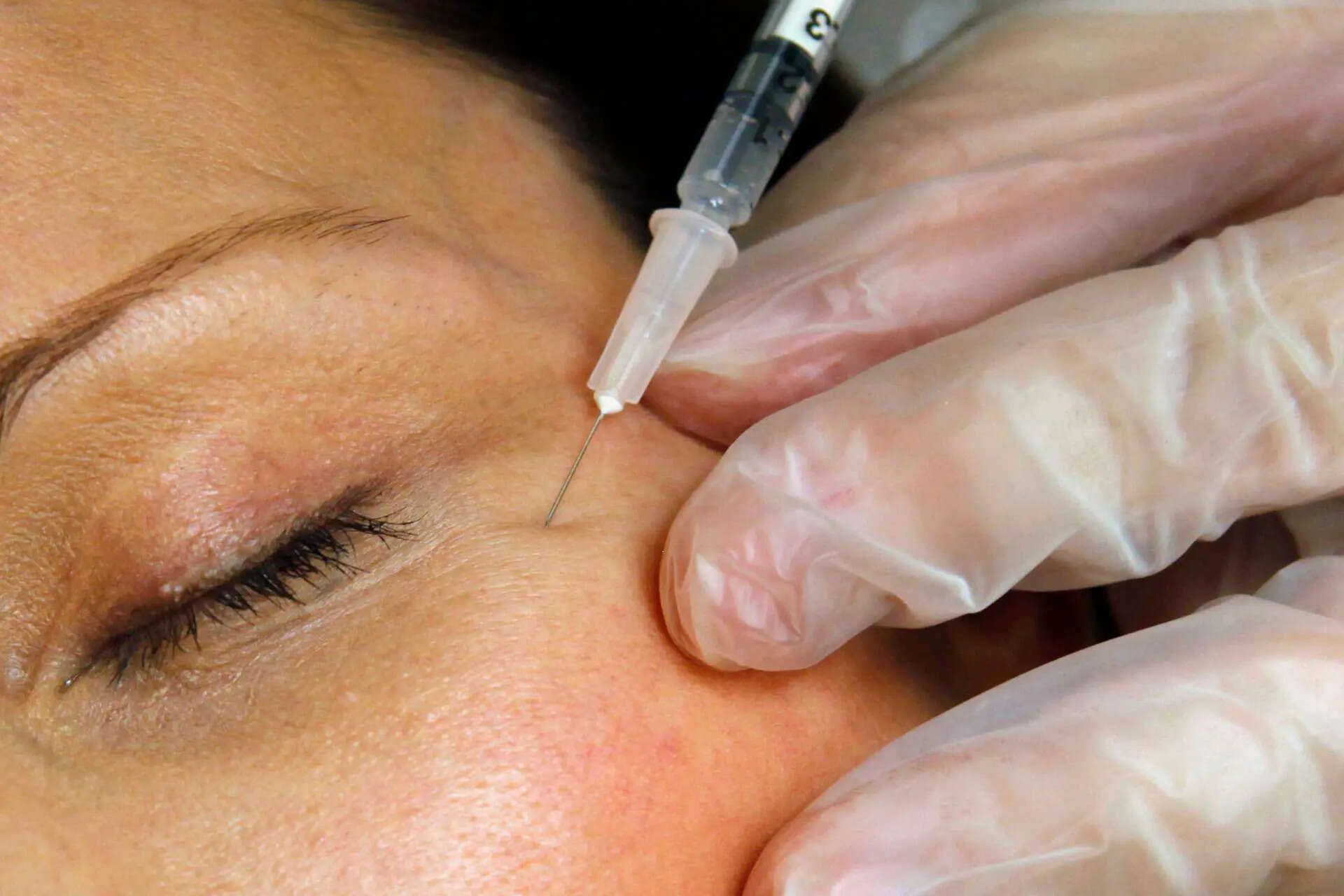
You have probably seen the sensational headlines swirling around social media about zombie filler. It sounds like something straight out of a horror movie. People are willingly lining up at plastic surgery clinics to have fat harvested from human corpses injected into their own breasts, buttocks, and faces.
If you strip away the tabloid framing, you find a massive shift happening right now in aesthetic medicine. The real name for this treatment is allograft adipose matrix. Products like AlloClae and Renuva use processed human fat from screened donors to help living patients regrow their own tissue.
The sudden explosion in demand is not just about shock value. It is directly tied to the mainstream rise of GLP-1 weight-loss drugs like Ozempic. As people drop massive amounts of weight rapidly, they face an unexpected side effect: severe volume loss that leaves their face, breasts, and hips looking completely deflated.
Why Everyone Is Suddenly Talking About Corpse Fat
Traditional fillers like hyaluronic acid work by physically occupying space and drawing in water. They can look puffy or unnatural if overdone. The alternative has always been autologous fat grafting—taking your own fat via liposuction and moving it somewhere else.
But what happens when you have lost so much weight on a GLP-1 medication that you do not have enough body fat left to harvest?
That is exactly where allograft adipose matrices bridge the gap. These products offer an off-the-shelf fat transfer without the need for an invasive surgical harvest site.
The processing of this donor tissue is highly regulated. It happens in tissue banks where human fat undergoes extensive washing and gamma radiation treatments. This removes all cell walls, lipids, and DNA, eliminating the risk of cellular rejection or transferring genetic material. What remains is an acellular matrix—essentially a structural, biological honeycomb rich in natural proteins and growth factors.
When injected, this matrix acts as a scaffolding system. Your body recognizes the structural framework and begins a process called neovascularization, growing new blood vessels and moving its own living fat cells into the empty matrix. You are not actually keeping the dead person's cells; you are using their cellular skeleton to grow your own permanent fat.
The Dark Side of the Lunchtime Volumizer
The marketing pitch for these injectables is incredibly tempting. It is often called a lunchtime breast augmentation or a quick fix for hip dips, taking less than an hour under local anesthesia with virtually zero downtime.
But don't let the ease of the procedure blind you to the very real, unresolved risks.
Treatment Type: Allograft Adipose Matrix (e.g., AlloClae, Renuva)
Primary Benefit: Stimulates permanent, natural fat growth without liposuction
Major Drawbacks: Irreversible results, potential for fat necrosis, lack of long-term data
First, consider the issue of permanence. Unlike standard dermal fillers, you cannot dissolve an adipose matrix with an enzyme injection if you do not like the shape. If your body over-produces fat in response to the scaffolding, or if the injector places it unevenly, the only way to correct it is through surgical removal.
Second, real-world complications are emerging. Some patients have developed fat necrosis—a condition where the injected matrix or the newly formed tissue dies off, causing hard lumps, pain, and in severe cases, oily yellow fluid seeping from the injection sites.
We also have zero data on how these newly formed fat deposits behave during future weight fluctuations. If you go off your weight-loss medication and gain weight, will these newly stimulated areas grow disproportionately? If you lose more weight, will they sag differently than your native metabolic fat? We honestly don't know yet.
Ethical Boundaries and the Regulatory Battle
Beyond the clinical risks, the concept of turning donated human bodies into a commercial beauty product has triggered intense bioethical debates. Ethicists argue that individuals who donate their bodies to science do so under the assumption they are aiding medical research or lifesaving transplants, not plumping up someone's cleavage gap or filling out deflated shoulders.
The regulatory landscape is struggling to keep pace with the trend. While the products are utilized by board-certified plastic surgeons across many parts of the United States, local authorities are pushy about safety boundaries. For instance, New York state health officials actively blocked the distribution of certain donor fat fillers over regulatory compliance concerns, leading to ongoing legal battles between manufacturers and state departments. Internationally, regulatory bodies like Australia's Therapeutic Goods Administration have completely withheld approval, citing a stark lack of long-term human clinical data.
If you are considering an allograft adipose matrix to restore volume loss, don't rush into an appointment based on viral social media trends.
Your first step must be vetting your provider. Avoid medical spas or mid-level injectors who have only recently adopted the product. Seek out a board-certified plastic surgeon who has years of experience specifically with autologous fat grafting. They understand the precise anatomical planes required for fat survival, which dramatically lowers your risk of contour irregularities and tissue necrosis. Demand transparency about where the tissue was sourced, look over the safety record of the specific tissue bank, and explicitly ask about their protocol for managing complications like delayed nodules or asymmetric overgrowth.