The map on the wall of the Situation Room doesn’t show the heat. It doesn’t show the salt-crust forming on the eyelashes of a deckhand or the way the humid air in the Strait of Hormuz feels like a wet wool blanket pressed against the face. On that map, the Strait is just a blue sliver, a tiny throat connecting the Persian Gulf to the rest of the world. It is only twenty-one miles wide at its narrowest point.
Twenty-one miles. That is the distance of a morning marathon. It is the length of a long commute in traffic. Yet, within those coordinates, the pulse of the global economy beats. Or, if the reports trickling out of the West Wing are accurate, that pulse is about to be squeezed. For a different view, check out: this related article.
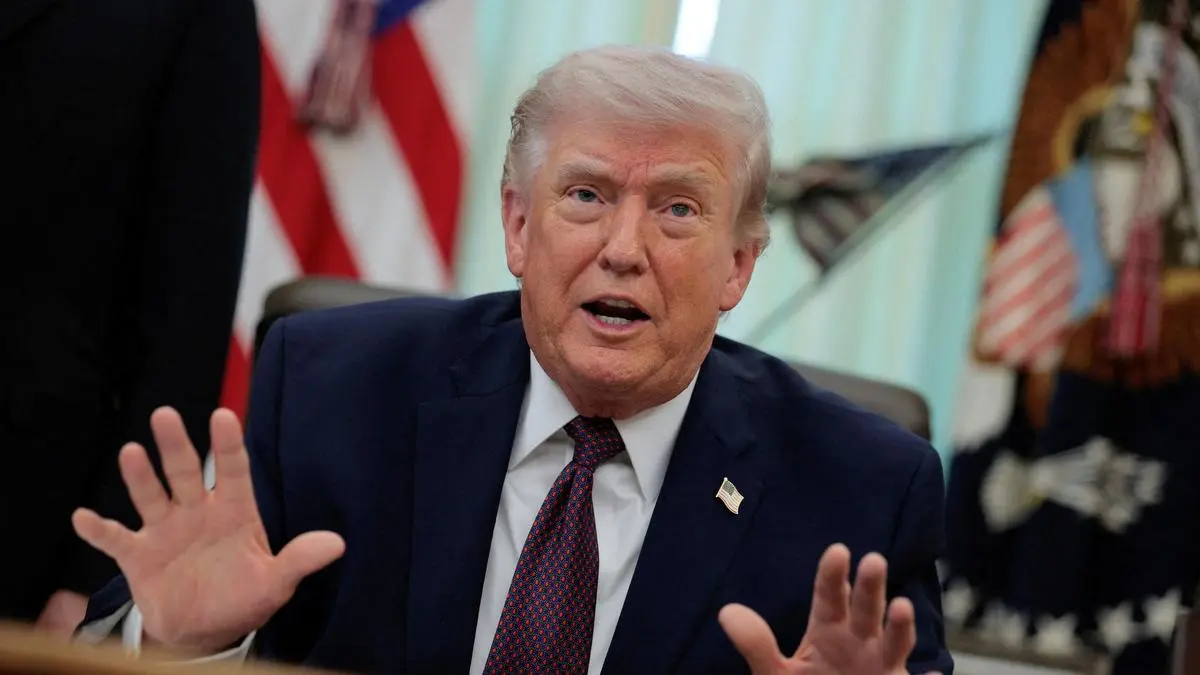
Donald Trump has reportedly instructed his aides to prepare for a scenario that most economists view as a recurring nightmare: a lengthy blockade of the Strait of Hormuz. This isn't a drill or a passing comment made over a golf game. It is a directive to brace for a fundamental rewiring of how the world breathes.
The Ghost in the Machine
To understand why this matters, you have to look past the warships and the satellite imagery. Think instead of a woman named Sarah in a suburb outside Des Moines. She wakes up at 5:30 AM. She hits the ignition on her SUV to take the kids to school before heading to her shift at a local distribution center. Similar reporting on this trend has been published by TIME.
Sarah has never heard of the Musandam Peninsula. She couldn’t point to the Omani enclave on a map. But if a line of tankers stops moving through that twenty-one-mile gap, the price of the gallon of milk in her fridge and the gasoline in her tank starts a climb that doesn't have an obvious ceiling.
About one-fifth of the world’s total oil consumption passes through this choke point every single day. We are talking about roughly 20 million barrels. If that flow stops, the shockwaves don't just hit the gas station. They hit the plastics industry. They hit the pharmaceutical companies that rely on petroleum-based precursors for life-saving meds. They hit the very fabric of modern existence.
The President’s request for "lengthy" preparations suggests a shift in strategy. This isn't about a three-day skirmish or a weekend of saber-rattling. It is an acknowledgment that the standoff with Iran may be entering a cold, hard winter.
The Calculus of Pressure
Why now? The logic in Washington isn't built on a desire for war, but on a belief in the "Maximum Pressure" campaign. The administration is betting that by preparing for the worst, they gain the leverage to demand the best—or at least, the most favorable—terms.
But preparation is a double-edged sword. When you tell your generals and your economic advisors to plan for a blockade, the markets listen. Traders in London and Singapore aren't looking at the political rhetoric; they are looking at the insurance premiums on those massive ULCC (Ultra Large Crude Carrier) tankers.
Imagine you are the captain of one of those vessels. You are sitting on two million barrels of crude. You are essentially a floating city of flammable liquid. As you approach the Strait, you see the Iranian fast-attack boats buzzing like hornets in the distance. You know that if the "prep" the President ordered turns into a reality, your ship becomes a pawn in a game played by people thousands of miles away.
The tension isn't just political. It’s physical. It’s the vibration of the engine room and the silence of the radio.
The Invisible Stakes
We often talk about "energy independence" as if it’s a shield that makes us immune to the whims of the Middle East. It’s a comforting thought. We produce more oil domestically than ever before. But the global market is a bathtub. You can’t pull a plug on one side of the tub and expect the water level to stay high on the other.
A blockade in Hormuz sends the global price of Brent crude skyrocketing. It doesn't matter if your oil comes from Texas or North Dakota; the price is set on a world stage. When the Strait closes, the world’s supply shrinks instantly.
The "lengthy" nature of the proposed preparations is the most chilling part of the report. A short spike is a headache. A lengthy blockade is a systemic heart attack.
Consider the logistics. A blockade doesn't just mean ships can't get out. It means they can't get in. The Gulf nations—Saudi Arabia, Kuwait, the UAE, Iraq—rely on these waters for more than just exports. They need the commerce that flows back in. We are looking at a potential stall in the basic machinery of international trade.
The Human Element in the War Room
In the halls of power, the talk is of "contingency plans" and "strategic reserves." These are sterile terms. They mask the reality of what happens when a superpower decides to dig in its heels for the long haul.
There is a specific kind of arrogance in thinking we can predict how a blockade ends. History is littered with "short-term" interventions that turned into decade-long quagmires. When you prepare for a lengthy blockade, you are essentially telling your opponent that you are willing to watch the global economy bleed until they blink.
But who blinks first? Is it the leadership in Tehran, who have spent decades learning how to survive under the crushing weight of sanctions? Or is it the American voter, who watches their retirement account fluctuate wildly with every headline about a seized tanker?
The President’s aides are reportedly looking at everything from naval escorts to bypassing pipelines. But pipelines have limits. They have fixed capacities. They can’t replace the sheer volume of the sea lanes.
The Sound of Silence
The most frightening thing about the Strait of Hormuz isn't the noise of a conflict. It’s the silence that would follow.
The silence of empty ports. The silence of factories in Asia that can’t get the fuel they need to run their lines. The silence of a supply chain that has been optimized for speed and efficiency, but not for a twenty-one-mile brick wall.
We live in a world that assumes the "flow" is a given. We assume that when we click a button, a product moves. We assume that when we turn a key, the engine starts. This reported directive is a reminder that the "flow" is fragile. It is a house of cards built on a strip of water that you could cross in a motorboat in less than an hour.
The aides in the White House are now crunching numbers, running simulations, and drafting memos. They are trying to quantify the unquantifiable. They are trying to map out a path through a storm that hasn't fully broken yet.
But you can't simulate the desperation of a small business owner watching their shipping costs triple. You can't put a metric on the anxiety of a young family watching the world grow more volatile by the hour.
The tankers are still moving for now. The water is still blue. The deckhands are still wiping the salt from their eyes. But in the quiet offices of Washington, the pens are moving, the plans are being drawn, and the twenty-one miles are starting to feel like an infinite distance.
The world is waiting to see if the throat of the Gulf stays open, or if the squeeze is just beginning. In the end, it isn't the ships that carry the heaviest burden; it is the millions of people who will never see the Strait, but whose lives are anchored to whatever happens in those narrow, turbulent waters.
The light in the Situation Room stays on long after the sun sets over the Gulf.