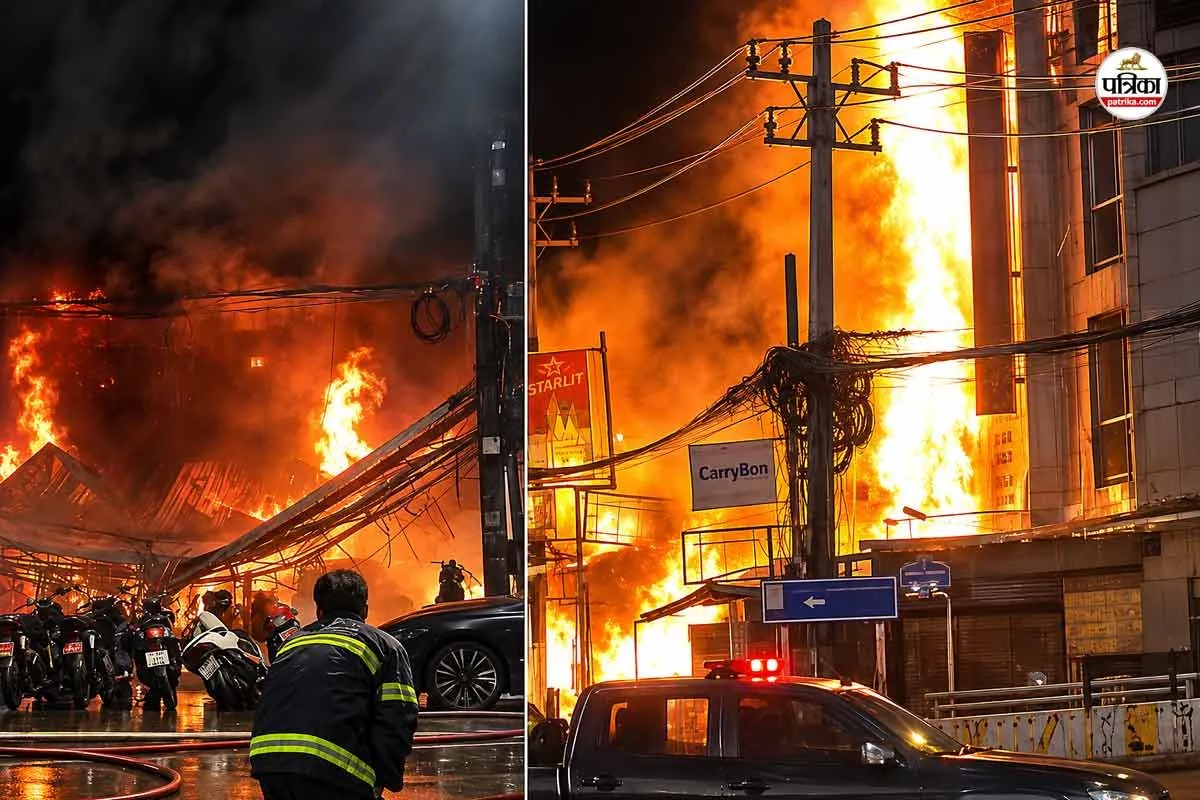
Two million barrels of crude oil just went to the bottom of the Persian Gulf after two commercial vessels struck sea mines in the Strait of Hormuz, according to official statements from Tehran. The incident marks the single largest potential crude loss from a maritime security event in the modern history of the waterway, threatening both an unprecedented regional ecological disaster and an immediate supply shock across global energy markets.
The immediate wire reports focus on the sheer volume of the cargo and the geopolitical finger-pointing between regional capitals. That misses the real story. For decades, energy analysts, naval strategists, and maritime insurers treated a major supertanker sinking in Hormuz as a theoretical war-game scenario—an event too catastrophic for any rational state or non-state actor to actually trigger. Now that steel has met high explosives below the waterline, the physical, financial, and environmental mechanisms that keep the global economy fueled are colliding in real time.
The Anatomy of a Modern Supertanker Casualty
To understand why losing a Very Large Crude Carrier (VLCC) carrying two million barrels is fundamentally different from the tank-war skirmishes of the 1980s or the limpet mine attacks of 2019, you have to look at naval architecture.
Modern supertankers are massive. A standard VLCC stretches roughly 330 meters from bow to stern—longer than the Eiffel Tower is tall—and drafts more than 20 meters of water when fully laden. Under international maritime law, specifically the MARPOL Convention enacted after the Exxon Valdez disaster, every large tanker operating today must feature a double-hull design. This means there is an outer steel skin and an inner cargo-containment hull, separated by an empty void space—often two to three meters wide—designed to absorb the kinetic energy of a grounding or a low-speed collision without breaching the oil tanks.
Naval mines do not care about grounding tolerances.
When a moored contact mine or a bottom-positioned influence mine detonates beneath a hull, the damage is not caused solely by shrapnel. The primary destructive force is the gas bubble pulse. An underwater explosion creates a superheated cavity of gas that expands rapidly, lifts the keel of the ship, and then collapses violently inward. This creates a massive water jet that punches upward with enough hydraulic force to crack the ship's spine—its longitudinal girder strength—in half.
Once the double hull is compromised across multiple cargo wing tanks simultaneously, the physics of buoyancy collapse. Crude oil is lighter than seawater, having a specific gravity typically between 0.80 and 0.95 compared to seawater's 1.025. Normally, that buoyancy helps keep a damaged tanker afloat even if a single tank is ruptured; seawater rushes in, pushes the lighter oil up, and reaches hydrostatic equilibrium. However, if a mine blast ruptures the ballast tanks alongside the cargo holds, the vessel loses its reserve buoyancy entirely. Water floods the void spaces, the trim shifts violently, and a 300,000-ton steel behemoth slips beneath the surface in hours rather than days.
Why Shallow Water Makes Salvage a Nightmare
The Strait of Hormuz is not the open ocean. At its narrowest point between Oman's Musandam Peninsula and Iran, the strait is only 21 nautical miles wide, and the designated Traffic Separation Scheme (TSS)—the inbound and outbound shipping lanes—narrows down to two-mile-wide corridors.
Depths in these shipping lanes generally range between 60 and 100 meters. That is deep enough to swallow a 330-meter supertanker whole, yet shallow enough that the wreck becomes an immediate, immovable underwater hazard to navigation. You cannot simply tow a sunken VLCC out of the channel. Standard salvage tugboats lack the bollard pull to drag a flooded hull off the seabed, and heavy-lift sheerleg cranes capable of sectioning a wreck require weeks of calm weather and absolute military security to operate. Neither is available in an active minefield.
Inside the Mine Warfare Asymmetry
Sea mines remain the ultimate asymmetric weapon in naval warfare because the cost-to-disruption ratio is completely broken.
A basic moored contact mine—essentially a buoyant steel sphere packed with 200 to 500 kilograms of TNT or RDX, held beneath the surface by a cable anchored to a heavy sinker—costs a few thousand dollars to manufacture. Even sophisticated influence mines, which sit quietly on the seabed and use acoustic, magnetic, or hydrodynamic pressure sensors to detect the specific signature of a fully laden supertanker passing overhead while ignoring smaller fishing dhows, cost a fraction of a single anti-ship cruise missile.
Clearing them is agonizingly slow.
Modern mine countermeasures (MCM) rely on specialized non-magnetic fiberglass or wooden-hulled minesweepers, airborne laser detection systems, and unmanned underwater vehicles (UUVs). Even with advanced sonar, an operator must distinguish between a genuine bottom mine and decades of accumulated seabed clutter—discarded oil drums, lost anchors, coral formations, and scrap metal. Every suspect object must be inspected visually by a remotely operated vehicle and neutralized individually with a disposal charge.
In a high-traffic chokepoint like Hormuz, a single confirmed mine strike forces naval authorities to treat the entire shipping lane as contaminated until proven otherwise. You do not send a multi-billion-dollar naval task force or a hundred-million-dollar commercial tanker into unverified waters on a hunch. You halt traffic, bring in the sweepers, and inch forward at three knots.
The Financial Chokehold of War Risk Insurance
Long before the first barrel of physical oil is missed at an Asian refinery, the financial plumbing of the maritime industry seizes up. Shipowners do not move cargo without insurance, and the London underwriting market—specifically the Lloyd's Joint War Committee (JWC)—dictates where global trade can physically go.
Every commercial vessel carries standard Hull and Machinery (H&M) insurance, alongside Protection and Indemnity (P&I) coverage for third-party liabilities like oil spills. However, standard policies automatically exclude acts of war, terrorism, and mine warfare. To enter a JWC-designated Listed Area, a shipowner must purchase a separate Additional War Risk Premium (AWRP) for every single transit, typically valid for a seven-day window.
When two ships strike mines and a supertanker sinks, underwriters do not wait for diplomatic investigations to conclude. They reprice risk instantaneously.
- Premium Spikes: During periods of relative calm, war risk premiums for the Persian Gulf sit around 0.05% to 0.1% of the vessel's hull value. Following verified kinetic strikes, those rates routinely jump to 0.75% or even 1.0% per transit. For a modern VLCC valued at $120 million, a 1% premium adds $1.2 million to the cost of a single voyage before a drop of fuel is burned.
- Charterparty Refusals: Most standard time-charter agreements include a Conwartime clause. This legal mechanism gives the ship's master and owner the explicit right to refuse orders to enter any port or transit any waterway that, in their reasonable judgment, exposes the vessel and crew to war risks or mines. Even if a state-backed buyer offers to pay the exorbitant insurance premium, private vessel owners frequently pull their tonnage out of the region entirely rather than risk losing an irreplaceable asset and crew.
- P&I Club Caps: Oil pollution liability for a two-million-barrel spill runs into the tens of billions of dollars. While the International Group of P&I Clubs pools risk across its member associations, reinsurers balk at covering catastrophic environmental liabilities caused by state-level mine warfare. If P&I clubs withdraw pollution coverage for Hormuz transits, ports in Singapore, Rotterdam, and Yokohama will legally bar Gulf-loaded tankers from docking, regardless of who owns the cargo.
The Oil Market Reality Check vs. Media Panic
Whenever headlines scream about Hormuz, crude futures spike on algorithmic trading desks within milliseconds. Roughly 20% of the world's daily petroleum liquids consumption—around 20 to 21 million barrels per day—passes through this single strait, alongside nearly a fifth of global liquefied natural gas (LNG) trade.
Yet seasoned oil traders look past the headline shock to examine the physical buffers that absorb sudden disruptions.
First, two million barrels of crude is a massive loss for a single vessel, representing roughly 2% of daily global oil consumption. In isolation, however, the physical market can absorb the loss of a single cargo through commercial inventories and floating storage. The price reaction is driven entirely by duration risk—how long the strait remains closed or restricted while mine-clearing operations proceed.
Second, the region is not entirely without bypass infrastructure, though its capacity is strictly limited. Saudi Arabia operates the East-West Crude Oil Pipeline (Petroline), which runs from Abqaiq in the Eastern Province to the Red Sea port of Yanbu, with a nameplate capacity of roughly 5 million barrels per day. The United Arab Emirates operates the Habshan-Fujairah pipeline, capable of moving about 1.5 million barrels per day directly to the Gulf of Oman, bypassing Hormuz entirely.
| Bypass Route | Operator | Terminus | Max Capacity (bpd) | Strategic Limitation |
|---|---|---|---|---|
| Petroline | Saudi Aramco | Yanbu (Red Sea) | ~5.0 million | Exposes tankers to Red Sea security threats |
| Habshan-Fujairah | ADNOC | Fujairah (Gulf of Oman) | ~1.5 million | Already operates near high baseline utilization |
| Strategic Reserves | IEA / US SPR | Global Terminals | Variable | Requires coordinated political release; slow drawdown |
Do the math. Even if both pipelines are pushed to absolute maximum engineering capacity—and assuming no spare capacity was already committed—they can bypass roughly 6.5 million barrels per day. That leaves more than 13 million barrels per day of crude and condensate, plus virtually all of Qatar's LNG exports, completely trapped inside the Persian Gulf if Hormuz is mined shut.
Furthermore, redirecting Saudi crude to Yanbu simply shifts the maritime bottleneck from the Strait of Hormuz to the Bab el-Mandeb Strait at the southern entrance of the Red Sea—a waterway with its own acute security vulnerabilities and soaring war risk premiums.
The Silent Ecological Catastrophe
While financial networks track Brent crude futures, marine biologists and desalination engineers in the Gulf are staring at a nightmare scenario.
The Persian Gulf is a shallow, semi-enclosed sea with sluggish water circulation. It takes between three and five years for water in the Gulf to fully flush out into the Indian Ocean through the Strait of Hormuz. Unlike the North Atlantic or the Gulf of Mexico, where powerful ocean currents and deep water columns help disperse and biodegrade hydrocarbons, oil spilled in the Persian Gulf stays trapped in a warm, high-salinity basin.
Two million barrels equals roughly 84 million gallons of crude—nearly eight times the volume spilled by the Exxon Valdez in 1989, and roughly two-thirds of the total volume released during the 2010 Deepwater Horizon disaster.
If that oil escapes the ruptured tanks of a sunken VLCC, it does not just threaten coral reefs, seagrass beds, and coastal mangroves. It directly threatens the human habitability of the Arabian Peninsula.
Gulf Cooperation Council (GCC) nations rely on coastal desalination plants for up to 90% of their municipal drinking water. These facilities draw massive volumes of seawater through coastal intake pipes, forcing it through reverse-osmosis membranes or multi-stage flash distillation units. Crude oil is lethal to desalination infrastructure. Heavy hydrocarbons foul intake screens, destroy expensive reverse-osmosis membranes within minutes, and contaminate distillation evaporators, forcing plant operators to execute emergency shutdowns.
To understand the severity, consider a hypothetical example: if a slick driven by prevailing Shamal winds reaches the intake zones of major coastal desalination complexes in the UAE, Qatar, or Bahrain, municipal water reserves in those cities typically last between 48 and 72 hours before rationing and emergency tanker deliveries become necessary. Deploying floating containment booms and chemical dispersants in a congested shipping lane contaminated with live naval mines puts clean-up crews in direct physical danger, guaranteeing that containment efforts will lag far behind the spreading slick.
The Verification Fog and Information Warfare
In any maritime crisis in the Persian Gulf, the first casualty is objective attribution. When Tehran announces that a supertanker carrying two million barrels has sunk after two vessels struck mines, intelligence analysts immediately dissect every word of the statement for what is omitted.
Notice the phrasing. Stating that ships "hit mines" is passive; it establishes the mechanism of the casualty without immediately naming the party that laid the ordnance. In the opaque waters of Gulf geopolitics, that ambiguity is deliberate.
- State vs. Proxy Deniability: Laying sea mines does not require a blue-water navy. Any modified commercial dhow, fishing trawler, or semi-submersible craft can roll mines off its stern under the cover of darkness and be miles away before a vessel triggers the fuse days or weeks later. This temporal gap between deployment and detonation creates built-in plausible deniability.
- Drifting vs. Moored Ordnance: Regional navies routinely accuse adversaries of deploying drifting mines—unanchored explosives that float just beneath the surface with the currents. Drifting mines are strictly prohibited under the 1907 Hague Convention VIII precisely because they cannot be controlled and threaten neutral commercial shipping indiscriminately. Yet claiming a mine "drifted" from an older conflict zone or broke loose from its moorings offers a convenient diplomatic off-ramp when a major casualty threatens to spiral into full-scale regional war.
- AIS Dark Activity: The rise of the shadow fleet—aging tankers operating with disabled Automatic Identification System (AIS) transponders to evade sanctions—complicates verification. Many of these vessels lack legitimate classification society oversight, run with minimal crew training, and carry opaque ownership structures registered in shell jurisdictions. When a sanctioned or grey-market VLCC goes down, independent satellite verification from commercial providers like Maxar or Planet Labs, alongside synthetic aperture radar (SAR) imagery detecting surface oil slicks, becomes the only reliable way to confirm the vessel's identity, flag state, and exact coordinates.
What Actually Happens Next on the Water
The global shipping industry is now operating under a permanently altered risk calculus. Even if naval mine-countermeasure units clear a narrow transit corridor through the Strait of Hormuz within days, the era of routine, unescorted supertanker transits through the region is over for the foreseeable future.
Commercial operators are already implementing convoy protocols, grouping high-value tankers behind naval minesweepers and air-defense destroyers rather than transiting independently. Vessel speeds through the strait are dropping to reduce hydrodynamic pressure signatures—a critical adjustment because modern influence mines are calibrated to detonate when the pressure wave of a heavy hull moving at 14 knots passes overhead, whereas a hull creeping at 6 knots generates a vastly smaller pressure drop.
At the same time, refiners in China, India, Japan, and South Korea—the primary buyers of Persian Gulf crude—are scrambling to secure alternative barrels from the Atlantic Basin, West Africa, and the Americas. That scramble instantly drives up freight rates for VLCCs operating on long-haul routes from the US Gulf Coast and Brazil to Asia, tightening global tanker availability across every ocean on the planet.
A supertanker does not sink quietly. Two million barrels of oil on the seabed of the Strait of Hormuz has just turned an abstract geopolitical risk into a physical, environmental, and financial reality that every shipowner, insurer, and energy trader on Earth now has to price into every single barrel they move.