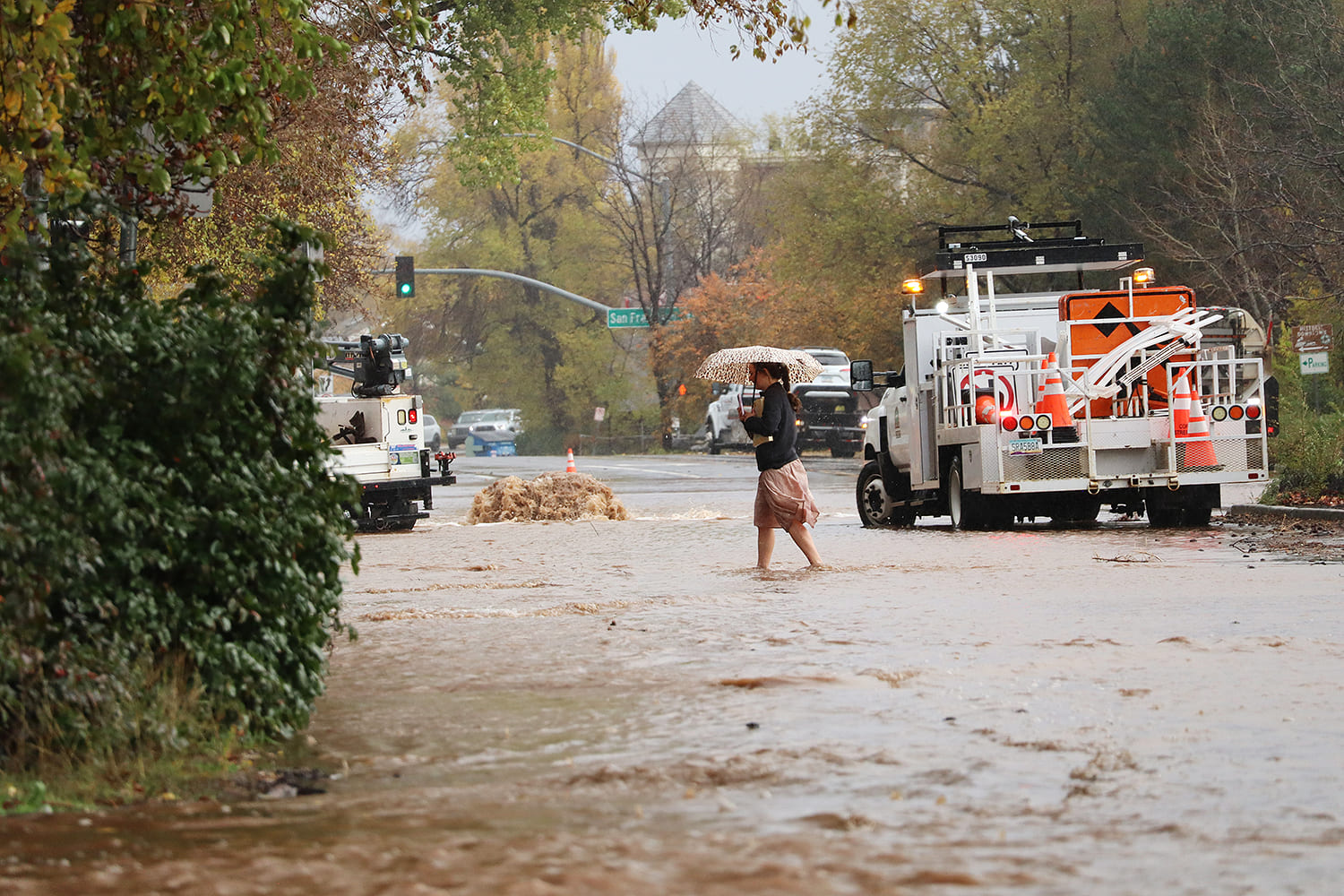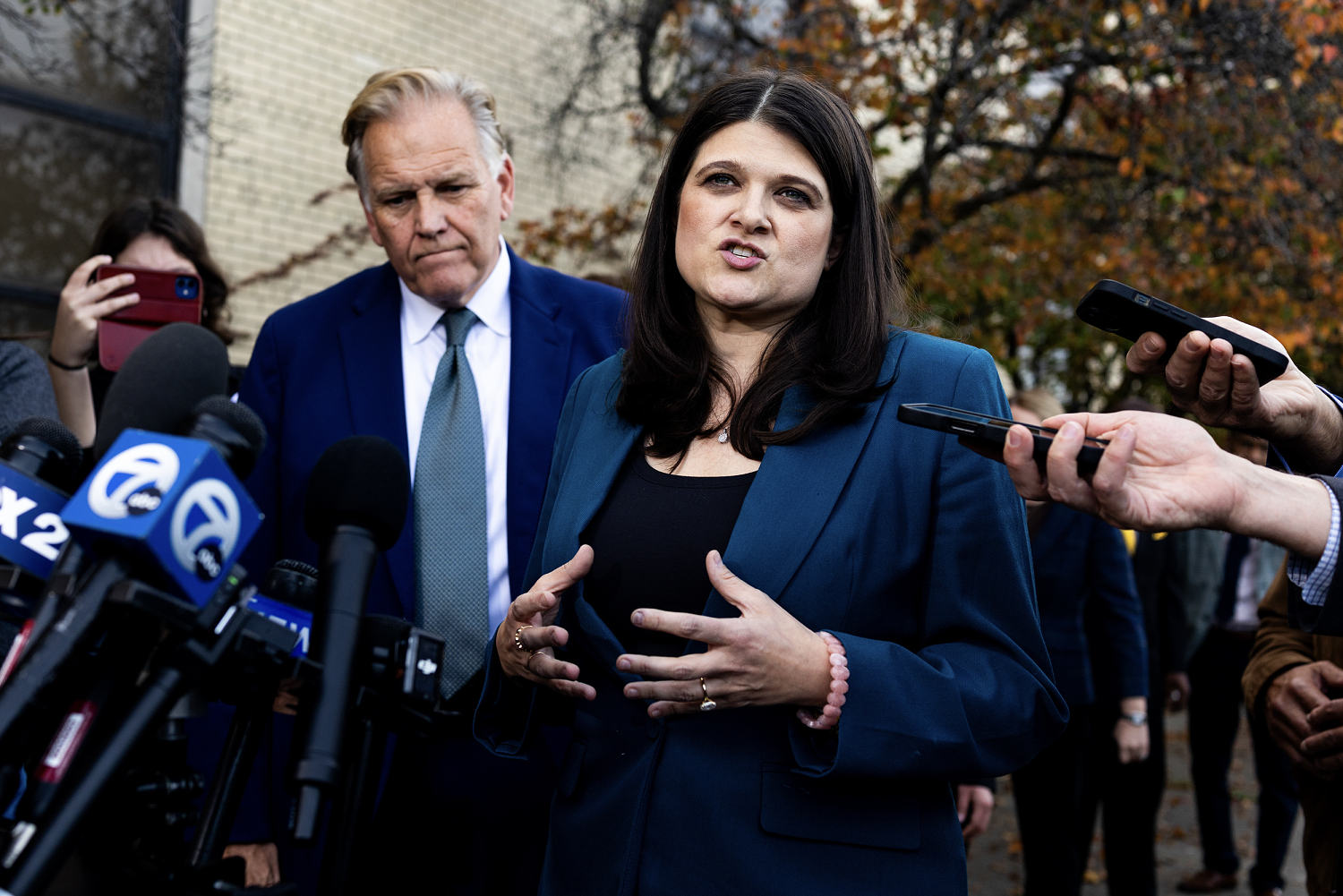
The wind off Lake Superior does not care about polling averages. Neither does the freezing mist rolling through Cook Inlet at four in the afternoon.
Yet if you want to understand who will control the United States Senate, and by extension, what kind of country we are going to wake up to over the next decade, you have to stand in both places at once. You have to smell the diesel exhaust of a freighter locking through Sault Ste. Marie while listening to the crunch of gravel boots on an Anchorage tarmac. Political pundits sitting in climate-controlled studios in Washington like to treat the Senate map like a spreadsheet. They color states red or blue. They talk about "fundamentals" and "historical headwinds" as if elections were chemical reactions happening inside a sealed beaker.
They are wrong. Elections are messy, loud, deeply personal arguments between neighbors who share the same grocery store aisles and very different fears about tomorrow.
Right now, the entire weight of the national Senate battle rests on two states that could not look more different on a postcard. Michigan, the industrial heartland defined by water, union halls, and suburban cul-de-sacs. And Alaska, a vast, untamed frontier where independence is not a talking point on a bumper sticker, it is a survival skill.
To understand why the dramas unfolding in Lansing and Juneau matter to a teacher in Ohio or a small business owner in Arizona, we need to step away from the cable news chyrons. We need to look at the human friction driving these two races.
The Weight of the Open Chair in Michigan
Consider a hypothetical voter we will call Elena, a forty-two-year-old physical therapist living in Oakland County, Michigan. Twenty years ago, Oakland County was reliably Republican. Today, it is the beating heart of the state's suburban swing. Elena does not wake up thinking about parliamentary procedure in the Senate Judiciary Committee. She thinks about why her grocery bill jumped thirty percent in three years, why her aging father's insulin costs still fluctuate, and whether the electric vehicle transition championed by Washington will save her brother-in-law's tool-and-die shop in Macomb County or shutter it for good.
Elena is the exact person both parties are spending tens of millions of dollars to terrify or inspire.
For decades, Michigan’s Senate seats were anchors of predictability. When longtime incumbents step aside, however, the vacuum creates a violent rush of air. An open Senate seat in a swing state is not just a job opening; it is an existential referendum. Without the comfortable armor of incumbency—the familiar face, the constituent service office that helped your uncle get his veterans' benefits—candidates are forced to run raw, exposed campaigns.
The drama in Michigan is a collision of two competing anxieties.
On one side, you have the economic populists arguing that the traditional working-class coalition has been abandoned by coastal elites. They point to the anxieties around manufacturing, inflation, and the rapid shift toward green energy mandates. Walk into a diner in Saginaw or Flint, and you will hear this argument made without a script. People feel like the rules of the game were changed while they were working the night shift.
On the other side, you have a coalition energized by personal freedom, reproductive rights, and institutional stability. In 2022, Michigan voters proved that when bodily autonomy is on the ballot, suburban turnout surges like a spring flood. Democrats in Michigan are betting that this energy is not a one-time spark, but a permanent realignment of how women and younger voters view the ballot box.
Watch how the primaries and general election maneuvering play out in Michigan, and you are watching a stress test of modern American politics. Can a candidate hold together the progressive activist in Ann Arbor, the Black churchgoer in Detroit, and the skeptical union machinist in Warren? Or does pulling one corner of that blanket inevitably leave another corner freezing in the dark?
I remember covering a town hall in western Michigan several cycles ago. The room was packed—standing room only, smelling of wet wool coats and cheap coffee. A retired autoworker stood up and asked a question that hung in the air long after the microphones were turned off. He didn't ask about tax brackets. He asked, "Who is actually going to fight for us when the cameras leave?" That skepticism is thick in Michigan today. Voters there have been promised a renaissance a dozen times. They have developed a finely tuned radar for political theater, and the candidate who wins Michigan will be the one who convinces Elena that they see her, not just her demographic profile.
The Frontier Exception
Now, fly four thousand miles northwest. Leave the Great Lakes behind and cross the Chugach Mountains into Alaska.
If Michigan is a game of chess played on a familiar board, Alaska is three-dimensional poker played in a snowstorm. Nothing in Lower 48 politics translates cleanly here.
Let us introduce another hypothetical voter to ground this reality: Marcus, a fifty-five-year-old commercial fisherman and part-time bush pilot operating out of Kenai. Marcus hates being told what to do by anyone, especially someone sitting in an office building three thousand miles away in D.C. He believes fiercely in resource development—oil, gas, mining—because those industries fund the state's infrastructure and put money in his neighbors' pockets. At the same time, Marcus watches the salmon runs shrink every summer. He sees the permafrost melting under roads he has driven his whole life. He wants his daughters to have access to healthcare without flying to Seattle, and he has zero patience for rigid party orthodoxy.
Alaska’s political drama is uniquely fascinating because the state rewrote the rules of engagement. By adopting nonpartisan open primaries and ranked-choice voting, Alaskans essentially broke the iron grip of the two national party machines.
To understand ranked-choice voting, think of it like ordering dinner for a group of friends who cannot agree. Instead of everyone screaming about their single favorite restaurant until someone storms out, everyone writes down their first, second, and third choices. If nobody gets a clear majority on the first round, the least popular option is dropped, and those votes shift to their second choice.
In theory, it rewards consensus. In practice, it turns every Senate race into a high-wire psychological thriller.
The drama in Alaska stems from a civil war within the conservative movement, complicated by a surprisingly resilient independent and Democratic coalition. For years, the central question in Alaska politics has been whether a pragmatic, deal-making conservative can survive in an era that rewards ideological purity.
When national political groups dump money into Alaska, they often misunderstand the local terrain. Attack ads designed in Washington fall flat in Juneau or Fairbanks if they feel like outsiders lecturing Alaskans on how to live. The candidate who wins in Alaska cannot just win the base; they have to win the second-choice votes of people who might disagree with them half the time. That requires a completely different political muscle—one built on personal trust, retail politics, and a willingness to break with party leadership when Alaska’s specific interests are on the line.
Consider what happens when a Senate seat hinges on those second-choice ballots. A candidate cannot afford to alienate the moderate independent in Anchorage while chasing votes in the Mat-Su Valley. Every word is weighed. Every endorsement is a double-edged sword.
The Invisible Thread Connecting Lansing and Juneau
Why does a stalemate in an Anchorage community center matter to someone sitting in traffic on I-75 outside Detroit?
Because the United States Senate is a binary institution disguised as a deliberative body. When the gavel falls on the first day of a new Congress, there is no "kind of" in charge. Fifty-one seats gives you the power to confirm federal judges who will serve for forty years. It gives you the gavel in every committee, deciding which bills live, which die in a drawer, and which cabinet secretaries get confirmed. Fifty seats, minus a tie-breaking Vice President, leaves you wandering the wilderness of the minority, reduced to giving speeches to an empty chamber.
Michigan and Alaska represent the two distinct paths to that fifty-first seat.
Michigan is the battleground of turnout and coalition maintenance. It is a test of whether traditional party infrastructure, massive fundraising, and sharp ideological contrasts can mobilize enough voters in key metropolitan counties to outweigh rural enthusiasm. If the Senate map tips through Michigan, it will be because one side successfully nationalized the race, turning a local election into a referendum on the White House and the direction of the entire country.
Alaska is the battleground of persuasion and structural disruption. It is a test of whether individual brand, regional loyalty, and moderate appeal can survive the gravitational pull of national polarization. If the Senate tips through Alaska, it will be a signal that voters are actively rejecting the binary choices forced upon them by Washington, using systemic reforms to carve out a middle path.
We often talk about American politics as if it is a single, monolithic conversation. It isn't. It is fifty separate conversations happening simultaneously, all feeding into one narrow funnel in Washington.
I will admit, watching these two races unfold can feel exhausting, even for someone who has spent years studying the mechanics of power. There are moments when the sheer volume of money—hundreds of millions of dollars spent on thirty-second television spots that evaporate the morning after Election Day—makes the whole enterprise feel cynical. You wonder if the noise has completely drowned out the signal.
Then you look closer at the numbers, and you realize how razor-thin the margins actually are.
In recent cycles, control of the Senate has come down to a few tens of thousands of votes spread across a handful of states. Think about that. In a nation of over three hundred and thirty million people, the trajectory of Supreme Court nominations, climate policy, tax codes, and foreign aid often rests on the decisions of fewer people than it takes to fill a single college football stadium.
The Anatomy of a Modern Political Drama
To truly grasp how these two states shape the fight, look at the three invisible forces operating beneath the surface of both campaigns:
1. The Geography of Grievance
In both Michigan and Alaska, there is a profound divide between urban centers and rural expanses, though it manifests differently. In Michigan, it is the tension between the sprawling suburbs of Detroit, Grand Rapids, and Lansing versus the small towns of the northern Lower Peninsula and the Upper Peninsula. In Alaska, it is the "Railbelt" (Anchorage, Fairbanks, and the Mat-Su Valley) versus the vast, off-road Bush communities where supplies arrive by barge or small plane. Candidates in both states face the same impossible math: how do you speak the language of the city without sounding like you look down on the country?
2. The Death of Straight-Ticket Predictability
Not long ago, you could look at a state's presidential vote and accurately predict its Senate race ninety percent of the time. Ticket-splitting—voting for one party for President and another for Senate—was declared dead by almost every major political scientist. Yet Alaska has repeatedly defied that rule, electing conservative presidents while sending independents or moderates to Congress. Michigan, meanwhile, has shown a fierce willingness to reward individual candidates who build personal credibility, even when national headwinds blow against their party. Both states remind us that voters are not algorithms. They are stubborn, complex human beings who reserve the right to surprise the experts.
3. The Outsider Paradox
Every candidate in Michigan and Alaska runs against Washington, even the ones who have worked there for twenty years. In Michigan, running as an outsider means promising to bring supply chains home and protect local jobs from federal overreach or foreign competition. In Alaska, running as an outsider is practically a constitutional requirement; you must prove you will fight the federal government over land use, drilling rights, and environmental regulations, regardless of which party occupies the Oval Office.
What Happens When the Dust Settles
Imagine the morning after the election.
The yard signs are already being pulled out of the frozen ground in Fairbanks and stacked in garages in Ann Arbor. The consultants have packed their bags and flown back to Virginia. The television networks have taken down their elaborate digital maps.
What remains?
If Michigan breaks one way and Alaska breaks the other, the Senate remains balanced on a knife's edge, forcing every major piece of legislation through the needle's eye of compromise—or grinding the entire legislative machinery to a halt. Every single senator becomes a kingmaker. A single moderate from Alaska or a cautious pragmatist from Michigan suddenly holds veto power over a president's entire agenda.
Conversely, if one party manages to sweep both—capturing the industrial heartland of Michigan while conquering the frontier math of Alaska—the mandate is unmistakable. The floodgates open. Judges are confirmed at record speed. Regulatory agencies are reshaped from the ground up. The political gravity of the entire country shifts overnight.
This is why the dramas in these two states feel so heavy. They are not merely local squabbles over personalities or gaffes on the debate stage. They are the two hinges on which the door of American governance swings.
Back in Oakland County, Elena will eventually walk into her local precinct on a crisp Tuesday morning, grab a privacy folder, and fill in a small oval with a black felt-tip pen. Four hours later, as the sun sets behind the mountains in Kenai, Marcus will step into a booth, rank his choices from one to four, and drop his ballot into the scanner.
Neither of them will hear the roar of the cable news panels or see the frantic spreadsheets updating in real time inside campaign headquarters. They will simply step back out into the cold air, get into their trucks, and drive home, leaving the rest of the country to live inside the world they just chose.