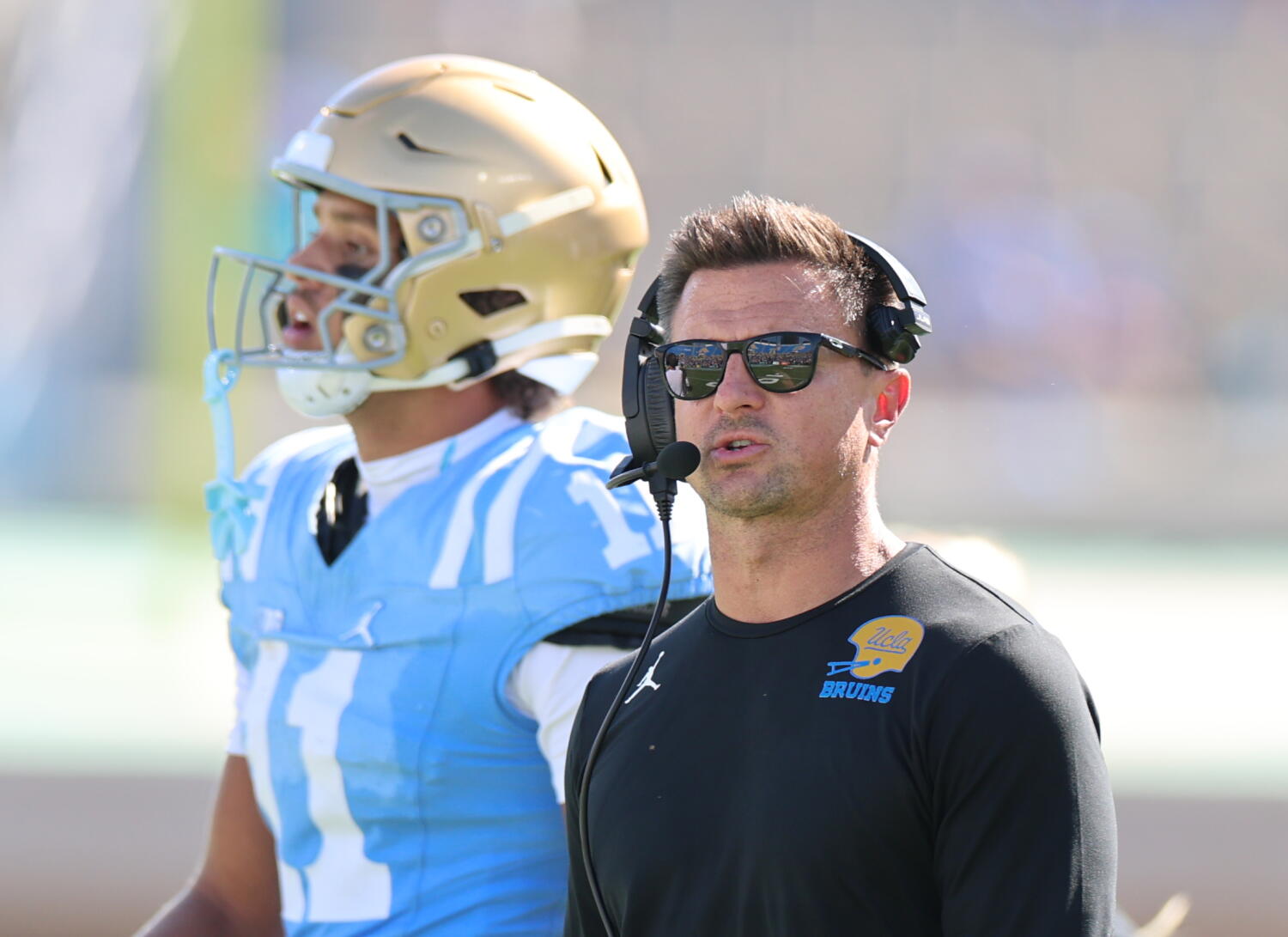
Seven wins. Zero losses. Nobody in Westwood expected this kind of immediate turnaround when UCLA handed the keys to Bob Chesney, yet here the Bruins sit undefeated deep into the 2026 season.
Hold the Rose Bowl parade for a second.
If you actually watch the tape instead of just checking the Big Ten standings on Sunday morning, a glaring flaw jumps off the screen every single week. UCLA is surviving on late-game grit, chaotic bounces, and sheer coaching willpower, masking a foundational weakness that will get them run off the field against top-tier conference heavyweights. And with November's brutal stretch bearing down on Pasadena, Chesney is running out of runway to patch it up.
Why UCLA's Undefeated Record Feels So Fragile
Winning ugly is a skill. Chesney proved that at Holy Cross and James Madison before bringing his blueprint to Los Angeles, building programs that refuse to blink when things get messy in the fourth quarter.
You can't fake a 7-0 start in modern college football. The roster bought in faster than anyone predicted, turning a transitional year into legitimate playoff chatter. Yet there's a massive difference between surviving early-season traps and surviving a four-quarter brawl against elite Big Ten rosters built on five-star depth.
Right now, UCLA is playing with fire. They're consistently falling behind the chains, relying on low-percentage third-down conversions, and asking their defense to bail them out after short possessions. Against mid-tier opponents, superior coaching and late-game discipline cover up those cracks. Against physical, disciplined teams that punish every missed assignment, those same cracks turn into three-touchdown deficits before halftime.
The Trap of Box Score Scouting
Look at the final scores and everything looks rosy. Look at the drive charts and you'll start sweating.
Too many of UCLA's wins have required heroic fourth-quarter sequences just to escape teams they should have put away by the third quarter. When you constantly live on the razor's edge of one-score games, regression eventually comes to collect its debt.
Football analytics folks talk endlessly about success rate versus explosiveness, and UCLA's profile screams warning signs. Big plays have saved drives that were dead in the water. You can't scheme up a miraculous 45-yard scramble or a blown coverage every time you face third-and-eleven.
The Glaring Flaw Holding the Bruins Back
So what is the actual issue? It comes down to consistent, repeatable execution when the margin for error shrinks—specifically, trench control and self-inflicted wounds that stall momentum before drives even breathe.
Watch the offensive line on obvious passing downs. Watch how frequently a false start, a missed blitz pickup, or a stuffed first-down run turns a manageable series into a punt situation.
Chesney's whole identity relies on dictating tempo, winning the physical battle, and forcing opponents to play left-handed. Instead, UCLA has spent way too many Saturdays digging itself out of self-made holes.
Penalties and Situational Sloppiness
Nothing kills an underdog's upset bid—or a favorite's blowout—faster than pre-snap penalties and busted assignments in the red zone.
UCLA has survived these mistakes so far because their opponents made worse ones. Maybe a rival missed a chip-shot field goal, or a quarterback threw a careless interception into double coverage late in the fourth quarter. That kind of luck has an expiration date.
When you play teams that don't beat themselves, every wasted timeout and every five-yard procedural penalty becomes fatal. You end up kicking field goals from the 12-yard line while the other sideline trades them for touchdowns.
Depth Issues in the Trenches
This isn't just about focus; it's about personnel reality. Taking over a program in the modern transfer portal era means inheriting an uneven roster, no matter how hard the staff works during spring and fall camp.
UCLA's starting unit can hang with almost anybody for thirty minutes. By the fourth quarter, though, the rotation wears thin. Defensive linemen start getting washed out of run gaps, and pass rushers lose that extra half-step around the edge.
Chesney can scheme around a lot of things. He can hide a shaky cornerback with zone coverage, and he can manufacture touches for his best playmakers in space. What no coach on earth can scheme around is getting pushed backward three yards on every snap when both teams know a run is coming.
How Bob Chesney Usually Solves This Problem
If there's a reason for Bruins fans not to panic completely, it's the guy wearing the headset. Bob Chesney didn't climb from Division III to a Big Ten powerhouse by accident.
Throughout his career, his teams have peaked in November. His whole coaching philosophy centers on incremental weekly corrections—ruthlessly cutting out what doesn't work, simplifying reads for his players, and leaning heavily into situational football drills during Tuesday and Wednesday practices.
At James Madison, Chesney faced similar roster transition headaches and still turned out a machine that suffocated opponents down the stretch. He doesn't ego-trip with his playbook. If a concept isn't working against Big Ten athletes, he'll scrap it overnight and build the game plan around three plays his guys can run in their sleep.
Shortening the Game and Protecting the Line
Expect to see Chesney adjust the pacing over the next few weeks. If the front five can't hold up for three full seconds against elite pass rushes, the ball has to come out in under two.
That means more quick-game concepts, more motion to diagnose coverages pre-snap, and a heavier reliance on misdirection to freeze aggressive linebackers. You neutralize a superior defensive line by making them run sideways instead of straight upfield.
It also means demanding absolute discipline on special teams and early downs. Turning third-and-nine into third-and-three changes the entire geometry of the field for a play-caller.
Why November Leaves Zero Room for Error
The calendar doesn't care about rebuilding timelines or moral victories. Once November hits in the Big Ten, the schedule turns into a weekly car crash.
The teams waiting on the back half of UCLA's slate won't hand over free possessions. They have the defensive speed to erase perimeter screens and the offensive balance to bleed eight minutes off the clock in the fourth quarter while nursing a ten-point lead.
If UCLA shows up to those games with the same sluggish first-half execution and situational sloppiness we've seen during this 7-0 run, the undefeated dream will evaporate in a hurry. Worse, one ugly loss against a physical contender can snowball into two or three if a thin roster gets battered physically.
The Playoff Reality Check
Being 7-0 puts UCLA squarely in the national conversation, whether the program was ready for the spotlight or not. Every week from here on out carries massive stakes for conference title positioning and College Football Playoff seeding.
That spotlight brings immense pressure. Opposing defensive coordinators now have seven games of tape on Chesney's Big Ten tendencies. They know which protections break down under pressure, and they know exactly how to bait UCLA into burning timeouts early.
What Bruins Fans Should Watch Next Saturday
Forget the win-loss column for the first two quarters of UCLA's next kickoff. Watch the small stuff instead, because that's where you'll find out if this team is a legitimate contender or a great story about to hit a brick wall.
Pay attention to three specific markers right out of the tunnel:
- First-down efficiency: Are the Bruins gaining four or more yards on first down without needing a broken tackle, or are they immediately stuck in second-and-long?
- Pre-snap cleanliness: Count how many times the offense breaks the huddle late, burns a timeout to avoid a delay of game, or jumps early on a hard count.
- Fourth-quarter push: Watch the defensive interior with eight minutes left in the game to see if they're still resetting the line of scrimmage or getting leaned on.
Bob Chesney has already pulled off one of the best coaching jobs in college football this season just by getting UCLA to 7-0. Now comes the much harder part—fixing the plane while flying it straight into a hurricane.