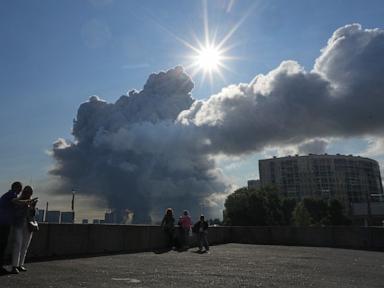
When a massive long-range drone slammed into the Wildberries logistics hub in Russia's central Tambov region, it wasn't just another localized explosion. It marked the complete destruction of a massive distribution center and signaled that Ukraine's targeted economic campaign has shifted firmly into Russia's booming e-commerce sector.
For months, the focus remained squarely on oil refineries, fuel depots, and military airfields. But as the conflict stretches deep into 2026, the strategy has evolved. Ukraine is systematically dismantling the supply chains that keep the Russian domestic economy functional and morale stable far from the front lines.
Inside the Campaign Against Russia's Retail Giant
Wildberries is often dubbed the Amazon of Russia. It dominates domestic online retail, handling billions of dollars in consumer goods and moving massive volumes of merchandise daily. However, its immense scale has also made it a prime target. Ukrainian military intelligence and leadership have openly stated that these massive fulfillment centers are far from innocent civilian warehouses.
Investigations and open-source intelligence show that the platform has hosted listings for dual-use technology, drone components, microcontrollers, body armor, and navigation equipment utilized by Russian armed forces. By hitting these distribution hubs, Kyiv aims to disrupt both the commercial retail ecosystem and the clandestine supply lines feeding the front lines.
The assault on the Tambov facility in Kotovsk vividly illustrates this shift. Having already absorbed a devastating strike on July 18 that resulted in casualties, the complex was targeted again, triggering a massive inferno that engulfed over 100,000 square meters and burned the logistics center entirely to the ground. Local authorities confirmed that the site is a complete loss, leaving thousands of local orders vaporized and crippling regional distribution.
The Domino Effect on the Russian Economy
The destruction of these depots goes well beyond a few burned boxes. Across Russia, roughly 10% of Wildberries' entire logistics infrastructure has been impacted or temporarily paralyzed by waves of drone strikes stretching from St. Petersburg down to Krasnodar.
This campaign creates a cascading financial crisis for everyday Russian merchants:
- Uninsured Inventory: Industry estimates show that roughly 80% of warehouse buildings and stored merchant inventory lack proper coverage against drone strikes.
- Retroactive Liability Shifts: Wildberries updated its terms and conditions just days before the peak wave of July strikes, classifying drone attacks under force majeure. This shift stripped thousands of third-party sellers of their right to full compensation.
- Cash Flow Freezes: Merchants are left waiting indefinitely for minor voluntary payouts while facing massive debt loads for inventory they already purchased and shipped to these hubs.
Moscow is scrambling to respond. President Vladimir Putin recently issued a decree allowing the state to temporarily seize control of critical infrastructure facilities if private owners fail to protect them from aerial attacks or neglect to rebuild them. Yet, forcing corporations to self-fund air defense systems or absorb billions in reconstruction costs does little to solve the underlying vulnerability.
What Happens When the Supply Chain Breaks
The psychological impact on the Russian public is just as severe as the financial toll. For a long time, the population living hundreds of kilometers from Ukraine could pretend the conflict was happening on a distant television screen. Now, waking up to massive pillars of black smoke over regional shopping hubs brings the reality of the war directly to their doorsteps.
Rebuilding these high-tech fulfillment centers is no small feat. Industry experts estimate that reconstructing just a couple of the major damaged hubs could take up to a year and a half, given current supply chain bottlenecks and regulatory hurdles. As long as the conflict persists, retail infrastructure inside Russia remains an open target.