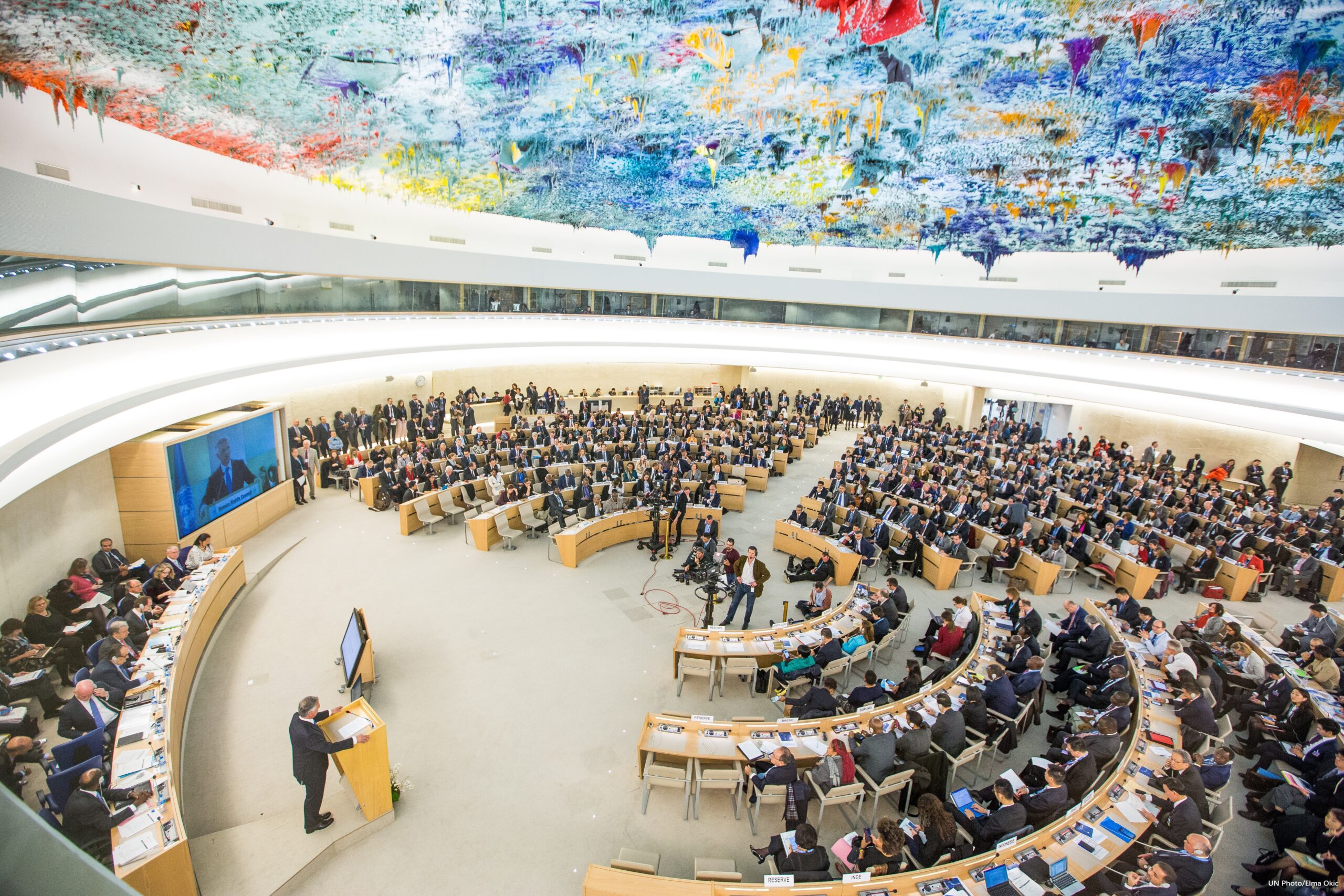
The international community loves a good victim narrative. It’s easy to package, simple to tweet, and allows high-level bureaucrats in Geneva to feel like they are "holding power to account" without ever leaving their climate-controlled offices. The recent UN findings regarding state repression in Pakistan are being hailed by the Baloch Yakjehti Committee (BYC) as a watershed moment of global scrutiny.
They are wrong.
This isn't a breakthrough; it's a distraction. By hyper-focusing on the "moral victory" of a UN report, activists and observers are falling into the same trap that has neutralized grassroots movements for decades. The belief that a document signed in Switzerland can fundamentally alter the iron-fisted security calculus of a nuclear-armed state is not just naive—it’s dangerous.
The Paper Tiger of International Scrutiny
Let’s be blunt about the UN’s actual track record. From Myanmar to Gaza, the UN’s ability to stop state-led repression is effectively zero. In the context of Pakistan and the Balochistan conflict, "global scrutiny" is a euphemism for "sternly worded letters."
Islamabad has spent seventy years perfecting the art of the diplomatic shrug. They know that as long as they remain a vital geography for regional stability—or a necessary headache for the West and China alike—the UN’s findings will never move from paper to policy. The BYC is celebrating a scoreboard that doesn’t actually reflect the score of the game.
The "lazy consensus" here is that visibility equals progress. It doesn’t. In many cases, visibility without leverage only accelerates the crackdown. When a state feels it is losing the PR war, it doesn't usually soften its stance; it intensifies the "disappearances" and the suppression of the very activists who brought the UN to the door.
The Sovereignty Shield
International law is a gentleman’s agreement in a neighborhood full of brawlers. Article 2(7) of the UN Charter—the principle of non-intervention in domestic affairs—is the shield Pakistan uses every single time.
If you think a report on "enforced disappearances" will trigger a change in military strategy, you haven't been paying attention. I’ve watched this cycle repeat in dozens of conflict zones. The pattern is always the same:
- Local activists document abuses.
- A UN rapporteur visits (or tries to).
- A report is published.
- The state issues a "rejection of baseless allegations."
- Business continues as usual.
The BYC’s reliance on this mechanism is an outsourcing of their agency to an institution that lacks the teeth to enforce its own mandates.
The Economic Reality No One Mentions
The Balochistan issue is framed by the media as a human rights crisis. It isn't. It is a resource-extraction conflict disguised as a security operation.
Until you talk about the China-Pakistan Economic Corridor (CPEC) and the $62 billion at stake, you aren't talking about the reality of the repression. The state isn't repressing the BYC because it hates dissent in the abstract; it’s doing so because any instability in Balochistan threatens the financial lifeline of the country.
The UN doesn’t have a plan for CPEC. It doesn’t have a counter-offer for the deep-water port at Gwadar. Therefore, its "scrutiny" is a nuisance, not a threat. If you want to change the behavior of the Pakistani state, you don't talk to the Human Rights Council. You talk to the lenders. You talk to the infrastructure partners.
The Flawed Logic of the BYC
The BYC has done a remarkable job of mobilizing the masses. Dr. Mahrang Baloch has become a symbol of resistance that the state clearly fears. But their strategy of "internationalization" assumes that the world cares about human rights more than it cares about regional stability.
Imagine a scenario where the UN actually tried to impose sanctions based on these findings. China would veto it in a heartbeat. The United States, wary of pushing Pakistan further into the arms of Beijing, would offer a lukewarm "concern" and nothing more. The BYC is playing a game of chess against a player who is willing to flip the table.
The High Cost of Moral Victories
What happens when the "global scrutiny" fades? Because it always does. The news cycle will move to the next tragedy. The UN will move to the next "fact-finding mission."
When the cameras leave, the people who were emboldened by the international attention are left exposed. By framing the struggle through the lens of UN appeals, the movement risks becoming performative. It starts speaking to a Western audience in Geneva rather than the power brokers in Rawalpindi.
This is the "victimhood trap." It convinces a movement that if they can just prove they are being hurt badly enough, someone will come to save them. No one is coming.
Why the "Rights" Framework Fails
The language of "human rights" is a liberal construct that assumes the state is a rational actor seeking legitimacy. But what if the state views its survival as entirely decoupled from its human rights record?
In Pakistan’s case, legitimacy is derived from two places:
- The Military's internal cohesion.
- The ability to manage debt via external patrons.
Neither of these pillars is affected by a UN report. To be effective, the BYC needs to stop asking for "rights" and start demanding "power." Rights are granted; power is taken. By begging for scrutiny, you are admitting you have no leverage of your own.
The Path Forward: Disrupting the Script
If the BYC wants to move beyond the cycle of repression and reportage, they have to break the current script.
- Stop valuing the UN's validation. Use the reports as internal fuel if you must, but stop treating them as external milestones. They aren't.
- Economic leverage over moral appeals. Instead of protesting for rights, movements in Balochistan need to understand how to legally and systematically disrupt the economic projects that fund the repression. If the cost of the project exceeds the benefit of the extraction, the state’s calculus changes.
- Internal Solidarity, Not External Pity. The movement must broaden its base within Pakistan, finding common cause with other marginalized groups who are also tired of the security state. A report from Geneva doesn't build a coalition; shared grievance does.
The Harsh Truth
The competitor’s article suggests that the UN findings are a victory. They aren't. They are a eulogy for a system that doesn't work. The BYC is celebrating the arrival of a witness while the house is still on fire.
If you want to understand why Balochistan remains in a state of perpetual conflict, look at the organizations claiming to help. They provide the illusion of progress while the status quo remains untouched. The "global scrutiny" being hailed today will be a footnote by next month.
Stop looking at Geneva. Start looking at the balance sheets of the companies building the roads and mining the copper. That is where the war is being won and lost. Everything else is just noise.
The state doesn't fear the UN. It fears a movement that realizes the UN is irrelevant. Until the BYC stops chasing the ghost of international intervention and starts building a strategy based on domestic economic disruption, the repression will continue, reports be damned.
The UN didn't "expose" state repression. Everyone already knew it was happening. The only thing the UN exposed is its own inability to do anything about it.