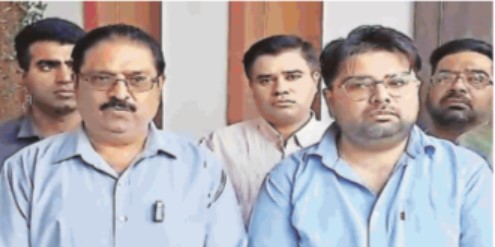
When an Indian-origin doctor from Phagwara died in a house fire in the United Kingdom, initial dispatches framed the tragedy as a sudden, devastating domestic accident. Yet the victim's family in Punjab immediately rejected that narrative, alleging foul play and pointing to troubling inconsistencies in the timeline, financial records, and communication leading up to the blaze. A routine fire fatality quickly transformed into an international dispute spanning two legal jurisdictions, exposing the deep friction between UK coronial protocols and the urgent demand for answers from grieving relatives thousands of miles away.
Fire investigations are notoriously slow. Flames destroy physical evidence, warp structural integrity, and erase the microscopic traces that homicide detectives rely upon in standard crime scenes. When a death occurs overseas, that investigative lag creates an information vacuum. Families sitting in cities like Phagwara are left waiting months for toxicology reports and fire brigade forensics while rumors and suspicions harden into certainty.
The Anatomy of a Cross-Border Investigation
Understanding why this case has triggered intense suspicion requires looking at how the British justice system handles sudden, unexplained deaths. Unlike the immediate, police-led criminal inquiries families in India often expect when foul play is alleged, the UK relies heavily on the Coroner's Court system.
In England and Wales, when a body is found after a fire, the local police and fire service secure the scene to determine the cause and origin of the blaze. Unless fire investigators immediately uncover undeniable proof of arson—such as multiple points of origin, tampered gas lines, or obvious accelerant pour patterns—the case is treated primarily as a coronial inquiry rather than a homicide investigation.
This procedural distinction is where friction begins. To a grieving family in Punjab, a lack of immediate arrests or public police briefings looks like negligence or a cover-up. To British authorities, withholding details is standard protocol designed to protect the integrity of an ongoing inquest and avoid prejudicing potential future court proceedings.
The gap between these two systems breeds profound distrust. Relatives in Phagwara have raised pointed questions about the circumstances surrounding the doctor's final hours, questioning how a healthy, capable medical professional failed to escape a residential property. In fire fatalities involving alert adults, investigators routinely examine three primary factors:
- Incapacitation prior to the fire: Whether smoke inhalation occurred while the victim was asleep, or if medical events, alcohol, or external substances prevented an escape.
- Structural entrapment: Whether doors were locked from the outside, windows were painted or nailed shut, or escape routes were blocked by hoarding or deliberate obstruction.
- Electrical or appliance failure: Whether an aging heating system, faulty lithium-ion battery, or compromised wiring sparked a flashover too rapid for human reaction.
Without access to the preliminary post-mortem results, the family in Phagwara is forced to rely on fragmented updates from acquaintances in the UK, local community leaders, and consular officials. Every delayed phone call or unanswered message from overseas adds weight to their suspicion that critical evidence is being overlooked.
Why House Fires Complicate Foul Play Allegations
Arson is one of the hardest crimes to prove, and staged accidental fires are harder still. For decades, fire investigators relied on visual cues—such as alligatoring on charred wood or crazed glass—that modern fire science has proven unreliable. Today, forensic fire engineers use fluid dynamics, arc mapping, and gas chromatography to reconstruct a blaze.
This scientific rigor takes time, and during that window, families often notice behavioral or circumstantial red flags that forensics alone cannot explain. In cases where relatives allege foul play following an overseas death, their suspicions usually center on domestic disputes, contested property, life insurance policies, or strained interpersonal relationships that local UK police might not initially know exist.
Consider a hypothetical scenario common in transnational disputes. Suppose an immigrant professional has been sending substantial remittances back to India while simultaneously managing marital or financial strain in the UK. Local British officers arriving at a burned-out terraced house see a tragic electrical fire. They do not see the WhatsApp voice notes sent to a brother in Punjab three days earlier expressing fear for their safety, nor do they see recent changes to beneficiary paperwork.
Bridge-building between the family's knowledge and the investigators' physical evidence is critical. Yet language barriers, time zones, and the sheer cost of hiring independent UK legal representation prevent many Indian families from effectively submitting their evidence to the local constabulary.
The Diplomatic and Legal Bottleneck
When a citizen or person of Indian origin dies under suspicious circumstances abroad, the Indian High Commission in London or the relevant consulate serves as the primary intermediary. However, consular officers are not criminal investigators. They cannot compel British police to open a murder inquiry, nor can they bypass the strict privacy laws governed by the UK's General Data Protection Regulation.
Families in Punjab frequently appeal to state ministers, members of parliament, and the Ministry of External Affairs in New Delhi, hoping political pressure will accelerate the UK inquiry. While diplomatic intervention can speed up the repatriation of mortal remains and secure compassionate visas for relatives to travel to Britain, it rarely alters the pace of a British forensic investigation.
The repatriation process itself becomes a flashpoint. When a body is returned to India after an overseas fire, the family often demands a second autopsy at a local government hospital. While a second post-mortem can sometimes reveal overlooked physical trauma, fire damage severely limits what a secondary examination can achieve. Soft tissue is compromised, airways are scorched, and crucial toxicological samples—like blood carboxyhemoglobin levels, which prove whether a victim was alive and breathing when the fire started—have already been drawn and preserved in the UK.
If the UK coroner does not release the original tissue samples and toxicology logs, a second autopsy in Punjab yields little beyond confirming the extent of thermal injuries. This leaves the family caught in an agonizing limbo, holding a body that can no longer speak and waiting on paperwork from a foreign court.
Financial Stakes and Domestic Pressures
Beneath the public demands for justice, cross-border death investigations almost always involve complex financial realities. Indian doctors working in the UK—whether within the National Health Service or in private practice—typically hold significant assets, pension pots, and death-in-service benefits.
When a tragedy strikes, questions surrounding estate administration emerge almost immediately. Under UK intestacy and probate laws, next-of-kin hierarchy is strictly defined, heavily favoring a legal spouse or civil partner over parents and siblings living in India. If the family in Phagwara suspects domestic foul play, they are not merely fighting for criminal accountability; they are often fighting to prevent an alleged perpetrator from inheriting the victim's estate or collecting life insurance payouts.
British law includes the Forfeiture Rule, a legal principle preventing a person who has unlawfully killed another from inheriting from the deceased. However, invoking this rule requires either a criminal conviction or a high-threshold civil court ruling. Until the fire investigation concludes and the coroner issues a formal verdict—such as accidental death, narrative verdict, or unlawful killing—estates remain frozen or bitterly contested.
What Families Must Do to Force Accountability
Waiting passively for foreign authorities to connect the dots rarely works in complex cross-border cases. When relatives suspect foul play in an overseas fire fatality, specific, documented actions are required to ensure local investigators look beyond the ashes.
First, every digital trace held by the family in India must be preserved in its original metadata format. Screenshots of text messages are easily dismissed in court; native chat exports, call logs, bank transfer records, and audio recordings must be compiled chronologically and submitted formally to the UK police force's Major Incident Team, not just a local beat officer.
Second, families must petition the UK Coroner for Interested Person status. Under the Coroners and Justice Act 2009, close relatives have the legal right to be designated as Interested Persons. This status grants them the right to receive disclosure of key evidence—including the post-mortem report and fire brigade origin-and-cause findings—before the formal inquest begins, as well as the right to question witnesses during the hearing.
Third, engaging a UK-based inquest solicitor is far more effective than relying solely on diplomatic channels. A specialized solicitor can formally request that the coroner preserve specific biological samples and demand that police examine mobile phone tower data, smart home device logs, and neighborhood CCTV footage before automatic deletion cycles wipe them clean.
Modern homes are saturated with digital witnesses. Smart thermostats record sudden temperature spikes, Wi-Fi routers log when specific devices disconnect or leave the premises, and doorbell cameras capture who entered or exited in the hours before smoke appeared. If police initially treat a fire as a routine accident, they may fail to serve preservation notices on tech companies within the critical 30-to-90-day data retention window.
The Long Road to an Inquest Verdict
The tragedy involving the Phagwara doctor highlights a recurring vulnerability for diaspora families. Distance strips away the informal networks, community pressure, and immediate physical presence that families rely on to demand answers at home. In the UK, the wheels of coronial justice turn with methodical, indifferent precision, often taking twelve to eighteen months to reach a final inquest hearing.
During those months, the burden of keeping the investigation alive falls squarely on the persistence of the victim's relatives. Physical fire debris eventually gets cleared, insurance claims get assessed, and local headlines move on to the next crisis. Only sustained legal pressure, preserved digital evidence, and formal scrutiny inside the coroner's court can force the truth out of the ash.