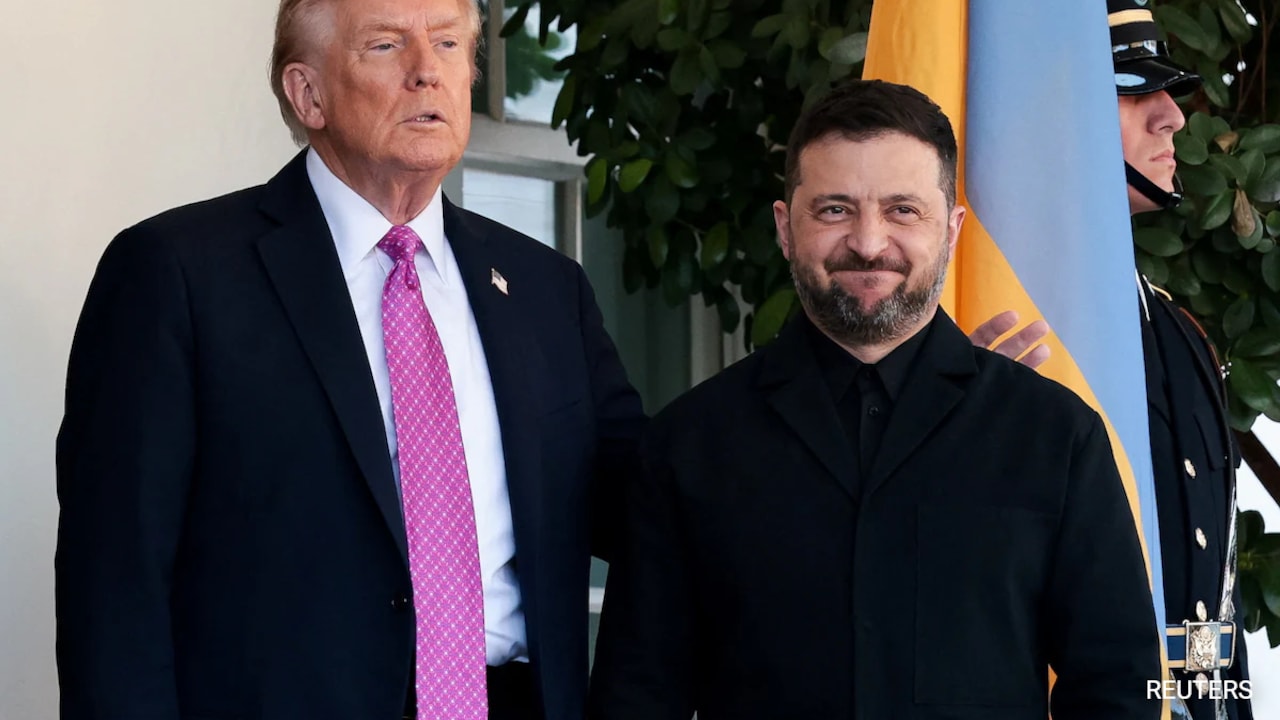
The heavy glass doors of the summit hall muffles the sound of the Bosphorus tide, but it cannot quiet the tension vibrating through the polished marble floors. Inside, the air smells faintly of expensive coffee and old paper. It is the scent of global diplomacy, a world where the stroke of a fountain pen can alter the fates of millions living thousands of miles away.
This week, the eyes of the world are fixed on Turkey. A NATO summit is underway, but the traditional choreography of flags and handshakes has been completely upended. The seating arrangements tell a story of an unpredictable new era. Donald Trump, Volodymyr Zelensky, and the Syrian president are all occupying the same diplomatic space. It is a gathering that few would have predicted even a year ago, a collision of starkly different realities brought together by the shifting tides of international power. Also making waves lately: The Political Theater of South Asian Outrage Why Diplomatic Spats Are Just Kabuki Theater for Domestic Audiences.
To understand what is happening behind these closed doors, one has to look past the official press releases and focus on the human friction.
The Weight of the Rooms
Imagine standing outside the briefing room. On one side, you have a Ukrainian delegation that has spent years fighting a grueling war of survival. Their faces carry the unmistakable exhaustion of leaders who measure time not in fiscal quarters, but in frontline casualties. For Zelensky, every meeting with an American president is a high-stakes negotiation for his nation's continued existence. The calculations are cold, precise, and deeply personal. Further insights on this are covered by Al Jazeera.
A few hallways over, the Syrian delegation moves through the corridors. For over a decade, Syria has been a fractured chessboard, a place where global powers fought proxy battles while its cities turned to rubble. The presence of the Syrian leader at a NATO-hosted event marks a jarring shift in the geopolitical consensus. It signals a reluctant recognition of survival, an acknowledgment that the old maps have been redrawn.
Then there is Trump. His approach to international relations has always broken the traditional mold. He views global politics through the lens of direct deals, personal relationships, and unpredictable maneuvers. For him, a room containing both Zelensky and the Syrian president isn't a diplomatic minefield. It is an opportunity to rewrite the rules on his own terms.
The contrast is sharp. One leader is fighting to preserve his country's borders. Another is trying to solidify his grip after years of isolation. The third believes he can solve both crises with a handshake and a handshake alone.
The Mechanics of the Deal
Diplomacy at this level rarely happens during the public photo opportunities. The real movement occurs in the quiet moments between the scheduled events, where aides whisper in corners and drafts of statements are frantically edited on secure tablets.
Consider how these three distinct agendas interact. Zelensky requires unwavering support and a clear path toward long-term security. The Syrian government wants an exit from economic isolation and a normalization of its status on the world stage. Trump wants a swift resolution to foreign entanglements, a way to show the American public that his transactional style of leadership can deliver peace where conventional diplomacy failed.
But the real problem lies elsewhere. The danger of treating complex, decades-long conflicts as simple business transactions is that the human cost gets lost in the math. A concession made to stabilize one region can easily destabilize another.
The atmosphere inside the summit is thick with this realization. European diplomats move through the halls with tight smiles, visibly anxious about what might be agreed upon behind closed doors. They know that a sudden shift in American policy could leave the rest of the alliance holding the pieces of a fragmented security strategy.
The Invisible Witnesses
Outside the heavily guarded perimeter of the summit, the world continues to turn. In Kyiv, families check their phones for air-raid alerts while trying to decipher the cryptic updates coming out of Turkey. In Damascus, citizens navigate the ruins of an economy shattered by years of conflict, wondering if a meeting in a luxury hotel will mean more food on the table or simply another change in military occupation.
These are the invisible witnesses to the summit. They do not have seats at the mahogany tables. They do not get to speak into the silver microphones. Yet, they are the ones who will live with the consequences of whatever bargains are struck.
The tragedy of modern geopolitics is how easily the individual human experience is swallowed by the grand narrative of states and empires. We talk about spheres of influence, strategic patience, and regional stability. We forget that these abstract concepts are actually made of flesh and blood. They are the stories of soldiers in muddy trenches, children studying by candlelight, and refugees looking across borders they can no longer cross.
A sudden hush falls over the press center as the doors to the main conference hall open. The leaders emerge, walking shoulder to shoulder toward the podiums. The cameras flash in a blinding, synchronized rhythm, capturing the images that will dominate the front pages tomorrow.
The handshakes are firm. The expressions are practiced and unreadable. But as the leaders take their places, the unresolved questions of a fractured world remain hanging in the air, waiting for the ink to dry on promises that have yet to be tested by reality.