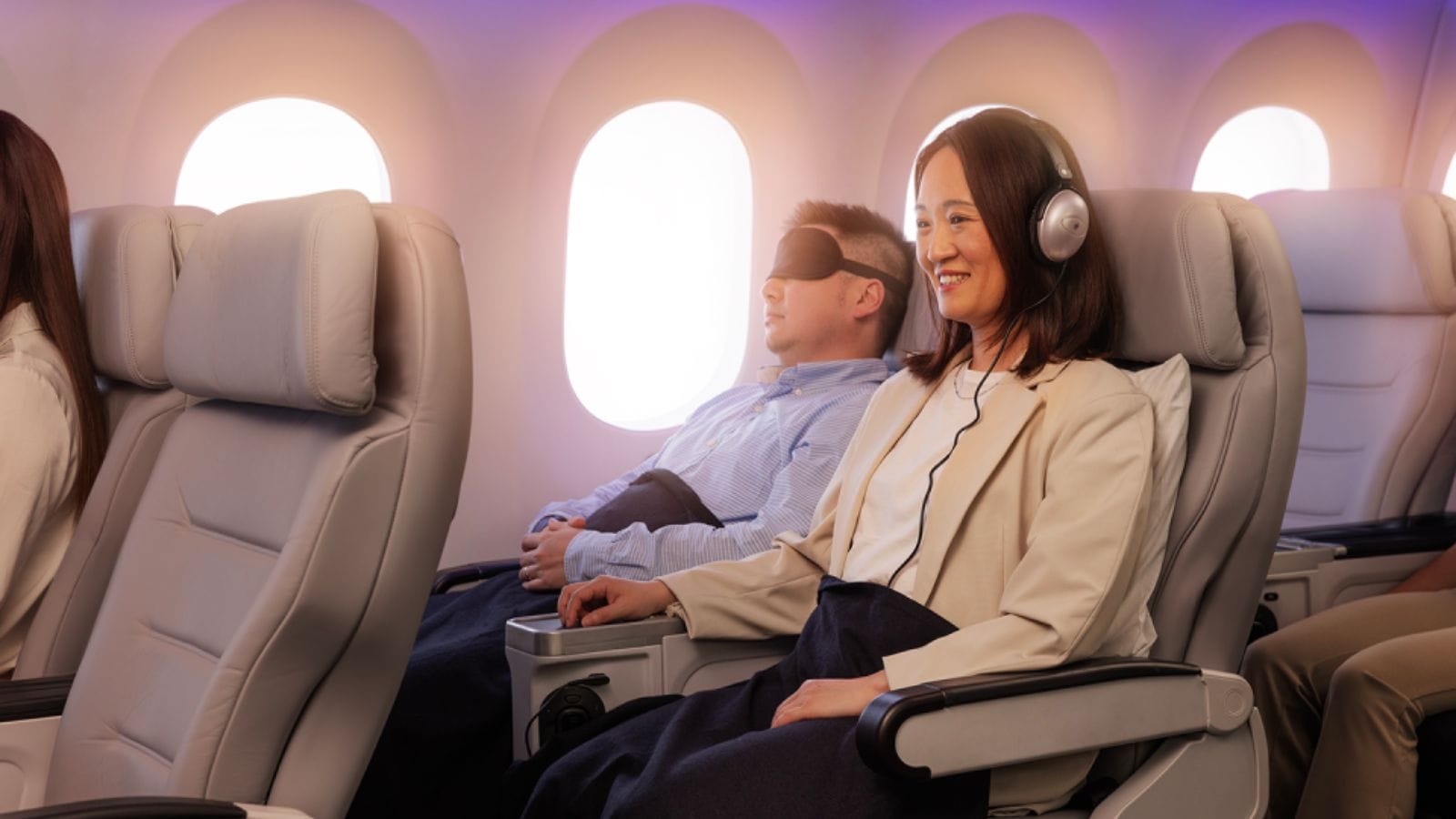
Air New Zealand’s introduction of the Skynest—a six-pod sleep zone available to economy passengers—represents a fundamental pivot from selling volume to selling time-sliced utility. By decoupling the seat from the sleeping surface, the airline is testing the limits of secondary revenue streams within the rigid constraints of a Boeing 787-9 Dreamliner’s weight and balance envelope. This strategy does not merely offer comfort; it addresses the physical degradation of the passenger on ultra-long-haul routes, such as the 17-hour transit between Auckland and New York.
The Spatial Arbitrage of the Skynest
The traditional airline business model relies on fixed-seat density. In this paradigm, revenue is a function of the number of seats multiplied by the load factor and the average ticket price. The Skynest breaks this by implementing a Time-Shared Verticality Framework.
Instead of assigning a lie-flat bed to a single high-net-worth individual for the duration of a flight (as seen in Business Class), Air New Zealand is extracting multiple revenue events from the same square footage. A single Skynest pod can be sold to four or five different passengers over a 17-hour flight in four-hour blocks. This creates a spatial arbitrage where the revenue per square foot of the Skynest area can potentially exceed that of a standard Premium Economy seat, provided the turnover and cleaning cycles are optimized.
The Four-Hour Physiological Threshold
The decision to cap sessions at four hours is not arbitrary. It is rooted in the architecture of the human sleep cycle. A single complete sleep cycle typically lasts 90 minutes. Two cycles (180 minutes) allow a passenger to move through the critical stages of REM and deep sleep, leaving a 60-minute buffer for entry, exit, and the standardized transition protocols (the "changeover").
By providing four hours, the airline offers enough duration for significant physiological recovery while preventing the passenger from entering the "diminishing returns" phase of rest where the incremental value of the fifth or sixth hour does not justify the lost revenue from a second passenger.
Operational Constraints and the Cost of Hygiene
The primary threat to the Skynest’s profitability is the Transition Friction Coefficient. Unlike a seat, which requires a simple wipe-down, a sleep pod requires a full linen change—pillows, sheets, and blankets—within a confined fuselage space.
- Weight Penalties: Every set of fresh linen adds mass. On an ultra-long-haul flight, weight is the ultimate enemy of fuel efficiency. The airline must balance the weight of 30+ sets of bedding against the revenue generated by those sessions.
- Crew Workload: The cabin crew’s primary function is safety. Tasking them with "hotel-style" turnover of six pods every four hours creates a labor bottleneck. If the transition takes 30 minutes, the "blackout" period represents a 12.5% loss in potential revenue time.
- The Snoring Variable: High-density sleeping quarters introduce acoustic interference. While Air New Zealand permits "snoring" as a natural byproduct of the service, it creates a negative externality for the other five occupants of the nest. The absence of "cuddling" or co-sleeping is not a moral stance but a strict weight-limit and safety regulation (TSO) compliance measure.
The Psychology of Product Cannibalization
A critical risk in this strategy is the potential cannibalization of Premium Economy and Business Class sales. If an Economy passenger can purchase a $500 add-on for a four-hour sleep, they may decide that the $2,000 premium for a Business Class seat is no longer justifiable.
Air New Zealand mitigates this through Fragmented Utility. The Skynest is a "dark" product—no IFE screens, no meal service, and no dedicated storage. It is purely a recovery tool. By making the experience functional rather than luxurious, the airline ensures that the Business Class "halo" remains intact for those who require continuous privacy, high-end dining, and the ability to work while reclining.
Structural Logic of the Ruleset
The specific "dos and don'ts" of the Skynest are dictated by the physical limitations of the 787-9 and international aviation safety standards.
- One Person Per Pod: This is a direct response to Oxygen Mask (PSU) allocation. Every "location" in an aircraft must have a dedicated oxygen supply. Adding a second person to a pod would require a redundant oxygen system, adding cost and weight.
- Seatbelt Requirements: Passengers must return to their assigned economy seats during turbulence. Because the Skynest is not a "certified take-off and landing" seat, it cannot be occupied during taxi, take-off, landing, or weather events. This reduces the total "uptime" of the pods.
- The Snoring Policy: By acknowledging snoring but prohibiting "cuddling," the airline sets clear social expectations for a communal space. It is a transition from the "private" expectation of a Business Class suite to the "hostel" expectation of the Skynest.
The Pricing Elasticity of Fatigue
The Skynest represents a play for the Desperation Premium. On a 17-hour flight, the value of a flat surface is not linear; it increases exponentially as the flight progresses and physical discomfort peaks.
However, Air New Zealand must maintain a fixed price point to avoid the perception of "price gouging" mid-flight. The current strategy involves pre-booking, which allows the airline to secure revenue before the flight even departs, shifting the risk of an unsold pod from the airline to the consumer.
Competitive Pressure and the Long-Haul Arms Race
Other carriers are watching this experiment through the lens of Direct Operating Cost (DOC) per Passenger. If the Skynest proves successful, it will force a redesign of the "back of the bus" across the industry.
- Qantas (Project Sunrise): Qantas has opted for a "Wellbeing Zone" which focuses on movement and hydration rather than horizontal sleep for economy passengers.
- Lufthansa (Allegris): Lufthansa is testing "Sleeper's Row," which allows passengers to buy an entire row of three seats.
The Skynest is superior to the "Sleeper's Row" because it utilizes vertical space that would otherwise be dead air or overhead bin storage, whereas a Sleeper's Row removes three potential ticket sales from the inventory. Air New Zealand is essentially adding "floors" to the aircraft.
The Strategic Recommendation for Long-Haul Operators
The Skynest's success depends entirely on the Dynamic Turnaround Protocol. To maximize the ROI of these pods, airlines must treat them like a high-frequency surgical suite.
- Automated Cleaning Systems: Future iterations should include UV-C light sanitization built into the pod walls to reduce the manual labor required for hygiene.
- Tiered Time Slots: The middle-of-the-flight slots (Hours 6–10 and 10–14) are higher value than the first or last slots. Airlines should implement "Peak Fatigue Pricing" where the prime sleeping hours cost 20–30% more than the "early-bird" slots.
- Bundled Recovery Packs: Instead of just a bed, the airline should sell "Circadian Management" packages that include specific melatonin-friendly meals, light-blocking kits, and targeted wake-up beverages to integrate the Skynest session into a broader jet-lag mitigation strategy.
The Skynest is not a luxury upgrade; it is a high-density sleep utility. Its success will be measured by whether the revenue from 4–5 sessions per pod exceeds the lost revenue from the 3–4 economy seats that were removed to make room for the structure. If the math holds, the "seat" as we know it will become merely a docking station between periods of high-density vertical rest.