Every time an airline grounds its fleet, the amateur pundits crawl out of the woodwork to scream about legacy mainframes, COBOL code, and penny-pinching executives who refuse to buy shiny new cloud servers.
They are wrong. Completely, catastrophically wrong.
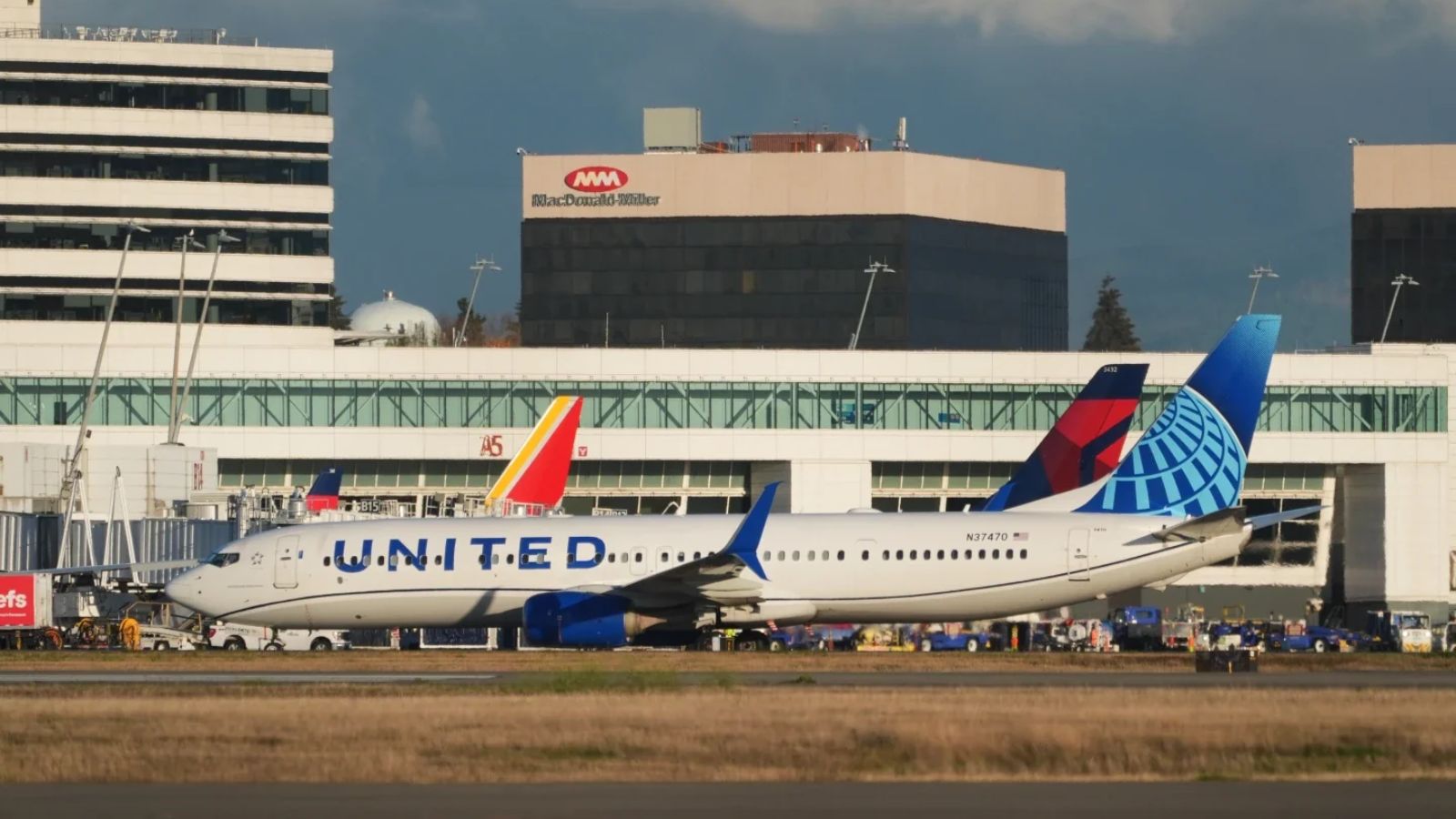
When a United Airlines system outage delayed hundreds of flights for roughly 100 minutes—coming just days after an FAA ground stop—the lazy consensus immediately formed. The narrative is predictable: airlines are greedy dinosaurs running mission-critical infrastructure on duct tape and prayers, and if they just modernized their software, your flight to Denver would leave on time.
If you believe that, you do not understand how commercial aviation works, and you certainly do not understand distributed enterprise systems.
That 100-minute ground stop was not a failure of technology. It was a triumph of safety architecture colliding with an industry business model designed to operate at 99% capacity with zero margin for error. Calling it an "IT glitch" is like blaming a circuit breaker when your house catches fire because you plugged forty space heaters into a single wall outlet.
The Lie of the "Simple Software Fix"
Let us strip away the romanticism of Silicon Valley buzzwords. Whenever an airline suffers a weight-and-balance calculation failure, a crew-scheduling meltdown, or a dispatch communication drop, tech bloggers inevitably ask why airlines do not just "migrate to the cloud" like a fintech startup.
I have sat in war rooms where enterprise architects burned tens of millions of dollars trying to rip and replace core operational systems. Here is the reality those bloggers ignore: a fintech app can fail gracefully. If your banking app throws a 500 error, you refresh the screen ten minutes later and check your balance. Nobody dies.
Aviation does not have the luxury of eventual consistency.
In airline operations, the central nervous system is not a booking website. It is a tightly coupled web of deterministic systems: Flight Operations, Crew Management, Maintenance Tracking, Air Traffic Control interfaces, and Weight and Balance engines. Under Federal Aviation Administration regulations—specifically 14 CFR Part 121—an aircraft cannot legally push back from the gate without a verified dispatch release signed off by both the captain and a licensed aircraft dispatcher. That release requires real-time telemetry, exact fuel burn calculations, weather routing, and precise passenger and cargo weight distribution.
When United’s internal technology hit a wall, the systems did not fail silently and let planes take off with bad math. The fail-safes tripped. The ground stop happened because the safety architecture worked. The software refused to guess.
Why Modernizing Aviation Tech Actually Makes Outages Worse
Here is the counter-intuitive truth that enterprise software vendors will never admit in a sales pitch: the push toward cloud-native microservices and interconnected APIs has made airline outages more frequent and harder to recover from, not less.
Thirty years ago, airline mainframes were monolithic, ugly, and brutally reliable. They operated in isolated silos. If the baggage routing system went down, planes still flew because the flight dispatch system did not care what the baggage system was doing.
Over the last fifteen years, airlines embarked on massive digital transformation initiatives. They connected everything to everything else in the name of efficiency. Your seat assignment on a mobile app now talks to the catering manifest, which talks to the weight-and-balance calculator, which talks to the fuel optimization algorithm, which talks to the FAA's Traffic Flow Management System.
We traded isolated durability for hyper-connected fragility.
In systems engineering, this is known as normal accident theory, a concept pioneered by Yale sociologist Charles Perrow. When a system becomes both interactively complex and tightly coupled, catastrophic cascading failures are not an anomaly—they are an inevitable mathematical certainty. A minor latency spike in an authentication server or a corrupted data packet in a third-party vendor’s API no longer causes a localized hiccup. It triggers a domino effect that freezes the entire network within minutes.
Imagine a scenario where a minor database lock occurs in a crew-tracking microservice during a thunderstorm in Newark. Because the dispatch software requires real-time verification that the pilots have not timed out under FAA Part 117 duty limits, the dispatch engine halts. Because dispatch halts, gate agents cannot print boarding passes. Because boarding passes stop printing, turnaround times slip, locking up gate space for incoming flights. Within forty-five minutes, a localized database hiccup in New Jersey has grounded planes in San Francisco.
That is not a legacy code problem. That is a complexity problem.
The Real Villain Is the Hub-and-Spoke Banking Model
If you want to know why a 100-minute outage turned into a multi-day operational nightmare for thousands of passengers, stop looking at the server room and start looking at the schedule map.
United, alongside Delta and American, operates a fiercely optimized hub-and-spoke network. To maximize connectivity and profit margins, airlines schedule flights in tight "banks"—massive waves of arrivals and departures compressed into 60-to-90-minute windows at fortress hubs like Chicago O'Hare, Newark, Houston, and Denver.
This banking model is an economic masterpiece when the sky is clear and the servers are humming. It allows an airline to offer thousands of city-pair connections without flying half-empty planes point-to-point.
It is also an operational glass cannon.
There is zero slack in the system. Aircraft turnarounds are scheduled down to the minute. Flight crews are scheduled to jump from an incoming flight directly onto an outgoing flight across the terminal. Gate utilization is pushed to the absolute physical limit.
When you run a physical logistics network at 98% utilization, you do not need a hurricane or a cyberattack to break it. A 100-minute pause is all it takes. By the time the IT engineers resolve the software bottleneck and lift the ground stop, the damage is irreversible:
- Crew timeouts: Pilots and flight attendants hit their federally mandated maximum duty hours while sitting on the tarmac, instantly rendering dozens of fully fueled, mechanically sound airplanes useless.
- Gate gridlock: Outbound planes stuck at the gate block inbound planes from parking, forcing arriving flights to sit on taxiways until their crews also time out.
- Airspace congestion: The FAA cannot suddenly absorb three hours' worth of delayed departures into crowded Northeast or Midwest airspace all at once, forcing secondary Air Traffic Control flow programs that compound the initial delay.
The outage lasted 100 minutes. The recovery took days because the business model has no shock absorbers.
Answering the Questions Travelers Are Actually Asking
When travelers get stranded on a terminal floor, they immediately flood search engines with predictable questions born out of frustration. The standard travel-blog answers are polite, unhelpful lies. Let us dismantle the premises directly.
Why don't airlines have backup systems for when their computers crash?
They do. Every major carrier runs redundant data centers, failover servers, and multi-region cloud backups. The misconception here is assuming that a backup system is a magic reset button.
In high-transaction environments, if a corrupted state or a bad configuration update gets replicated across the primary database, the backup system dutifully mirrors that exact same corrupted state in milliseconds. Furthermore, failing over an entire airline's operational network is not like switching from Wi-Fi to cellular data on your phone. Re-synchronizing thousands of in-flight telemetry feeds, crew schedules, and FAA flight plans across a cold backup environment takes time—often 60 to 120 minutes. That 100-minute ground stop was the backup and recovery process in action.
Should the Department of Transportation fine airlines for IT outages?
The knee-jerk political response to every airline meltdown is to demand massive federal fines and stricter passenger compensation laws, mirroring Europe’s EU261 regulations.
Be careful what you wish for. Airlines do not absorb regulatory fines out of executive bonuses; they price them directly into base fares. More importantly, punitive financial penalties for operational pauses create a terrifying perverse incentive. In aviation safety, the sacred rule is that dispatchers, mechanics, and pilots must never feel financial pressure to rush a safety check or bypass a system warning to avoid a fine. If you slap a $50 million penalty on an airline every time it triggers a precautionary ground stop to verify data integrity, you are subtly pressuring management to gamble with operational margins. You never want an airline guessing when it comes to weight, balance, and fuel.
How can I protect myself from the next inevitable airline meltdown?
Stop booking the last flight of the day, stop booking tight connections through major hubs, and stop trusting airline mobile apps to tell you the truth during a disruption.
When a network-wide ground stop hits, the airline's automated rebooking algorithms will systematically screw you over. They are programmed to protect high-tier frequent flyers and high-fare corporate tickets first, while dumping basic economy passengers onto flights three days later.
The Contrarian Playbook for Surviving Aviation Fragility
Since neither the airlines nor the FAA are going to abandon the hub-and-spoke model anytime soon—doing so would double ticket prices and eliminate routes to mid-sized cities—you have to navigate the system as it actually exists, not as you wish it were.
- Weaponize the First Bank of the Day: Always book flights departing before 8:00 AM. At that hour, the aircraft is already sitting at the gate overnight, the crew is fresh off mandatory rest, and the cascading delays of the day have not yet accumulated. Even if an IT outage hits at 6:00 AM, you are at the front of the queue when the ground stop lifts.
- Bypass the Fortress Hubs: If you are flying coast-to-coast, avoid connecting through Newark, Chicago, or Denver during peak afternoon hours. Pay the extra $60 for a nonstop flight, or connect through a secondary, lower-density airport where gate gridlock does not paralyze the entire ramp.
- Never Rely on the Gate Agent Queue: The moment a ground stop is announced, do not stand in a 200-person line at the podium. The gate agent is fighting the exact same frozen terminal screen you are complaining about. Immediately call the airline's international support line—Canadian, UK, or Australian call centers route to agents with the exact same booking authority and a fraction of the hold times—while simultaneously pulling up a flight-tracking app like FlightAware to see where your incoming aircraft actually is.
- Understand the Difference Between an Airline Stop and an FAA Stop: Notice how this outage occurred just days after an FAA ground stop. The FAA is currently operating with severe air traffic controller shortages across critical centers like New York TRACON and Jacksonville, while running its own aging National Airspace System infrastructure. When the FAA stops traffic, the airline owes you nothing because it is classified as an external airspace issue. When the airline’s internal tech stops traffic, it is a controllable delay, entitling you to meal vouchers and hotel accommodations—provided you explicitly demand them under the airline's Contract of Carriage.
The Uncomfortable Trade-Off Nobody Wants to Admit
There is an obvious downside to defending the underlying safety architecture of these systems: it forces us to accept that travel will remain frustratingly brittle.
You cannot have ultra-cheap airfare, endless flight frequencies, instant mobile app rebooking, and bulletproof, zero-downtime operational resilience all at the same time. Those goals are mathematically at war with one another. Every layer of software convenience we demand on our smartphones adds another fragile dependency to the backend. Every dollar of cost efficiency the airlines squeeze out of their fleet utilization removes another buffer against a bad afternoon.
United’s 100-minute outage was not a sign that the airline industry is broken. It was a reminder of what happens when a hyper-efficient, razor-thin logistics machine hits the brakes to keep everyone safe. The next time your plane sits parked at the gate because a server in Chicago refused to talk to a terminal in Houston, take a breath.
In an industry moving thousands of aluminum tubes through the sky at 500 miles per hour, a system that stops cold when it loses visibility is not a bug—it is the only reason you get there alive.