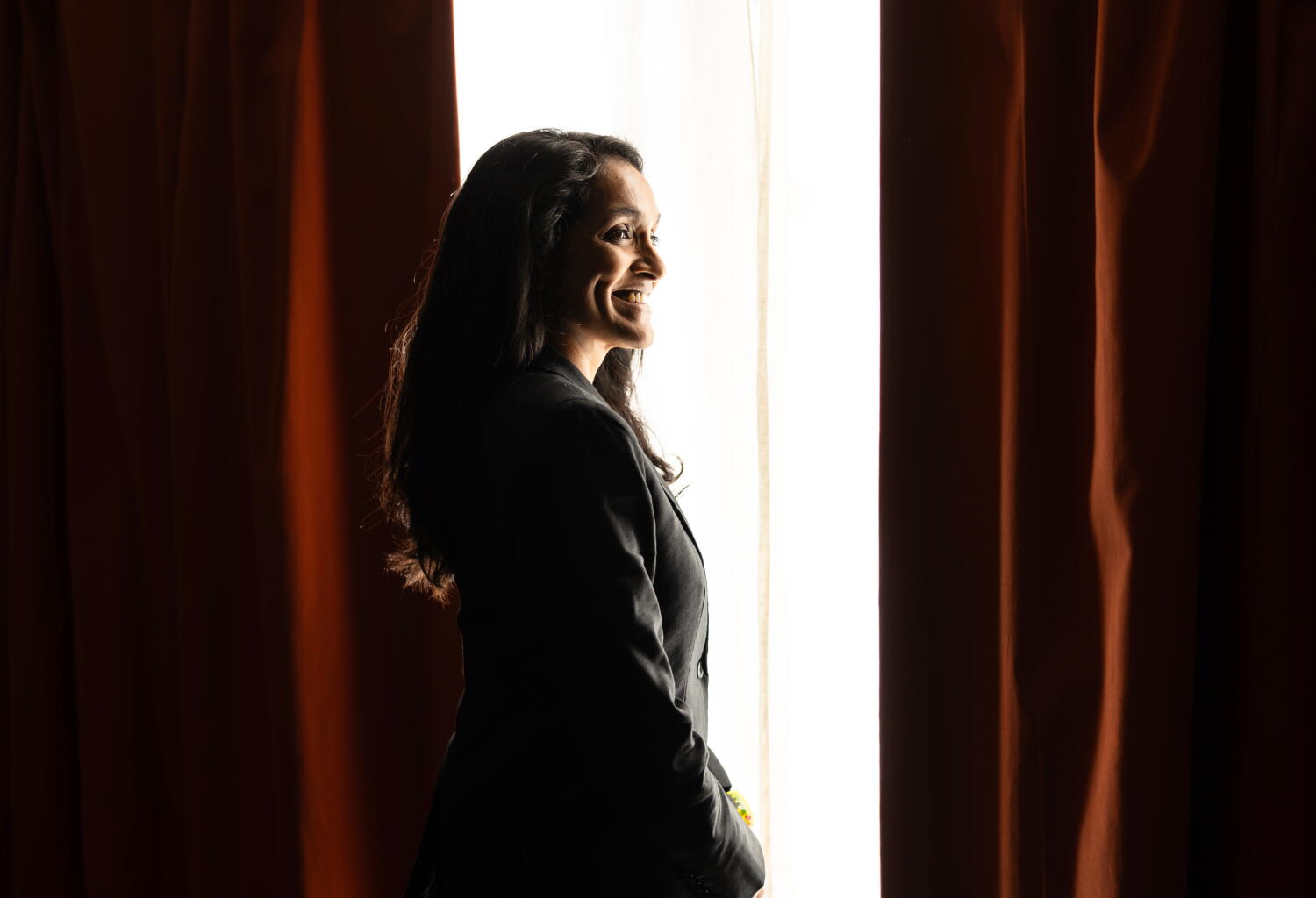
At 5:45 on a Tuesday morning, the pavement along Ventura Boulevard still holds the chill of the valley night, smelling faintly of diesel exhaust, wet asphalt, and blooming jasmine. Inside a cramped bakery two blocks off the main drag, Elena—a hypothetical composite of dozens of independent shop owners across the San Fernando Valley—is already three hours into her shift. She isn't just kneading sourdough. She is doing the quiet, exhausting math that keeps small business owners awake at three in the morning.
Flour costs are up eighteen percent over the last two years. Commercial insurance has doubled. Outside her front window, a sprawling encampment has taken root on the sidewalk, shrinking foot traffic to a trickle and leaving her delivery drivers scrambling for safe places to park. Elena wants to pay her staff a living wage. She wants the city to be compassionate. She also wants to make payroll on Friday. Also making waves recently: The Golden Handcuff Trap Behind America’s Frozen Housing Market.
For years, Los Angeles politics has treated Elena’s survival and the city’s progressive ideals as mortal enemies. You pick a side. You wear the badge of the activist who views every boardroom as a den of thieves, or you wear the uniform of the corporate lobbyist who treats every tenant protection as an existential threat to free enterprise.
That trench warfare is broken. Worse, it is bankrupting the city—both financially and morally. Further information on this are covered by CNBC.
Which brings us to Nithya Raman, the Los Angeles City Councilmember representing District 4, and the growing realization among civic observers that her real test isn't whether she can pass bold legislation. Anyone with a majority vote and a megaphone can draft an ordinance. The real test is whether a self-described democratic socialist, forged in the fires of grassroots tenant organizing and urban planning, can walk into the glass-walled offices of Los Angeles’s business leaders and ask them to build the city alongside her.
The Ghost of the 1932 Handshake
To understand why this feels so radical—and why it is so desperately necessary—you have to look backward. Civic memory in Southern California is notoriously short, washed away every few years by another election cycle or wildfire season, yet the DNA of modern Los Angeles was written in moments when ideology took a backseat to sheer survival.
Consider the Great Depression. In 1932, Los Angeles was scheduled to host the Summer Olympics. The global economy was in freefall. Breadlines stretched down Broadway, municipal tax revenues had evaporated, and canceling the Games seemed like the only rational choice. Instead, a coalition of fiercely competing newspaper publishers, downtown bankers, real estate developers, and municipal officials sat in the same rooms and pooled their credit, their political capital, and their organizational muscle. They built the Olympic Village, housed the athletes, and pulled off an event that didn't just turn a profit—it put Los Angeles on the global map as an economic powerhouse.
They didn't agree on labor unions. They certainly didn't agree on tax policy. They agreed that if the city failed, everyone inside it went down with the ship.
Fast forward nearly a century, and that muscle memory has atrophied. When Nithya Raman first ran for City Council in 2020, defeating an entrenched incumbent in a seismic upset, she became an instant lightning rod. To her supporters, she was the long-overdue voice of renters, unhoused neighbors, and working families priced out of the neighborhoods they kept running. To the downtown business establishment and Valley chambers of commerce, she was an unknown variable—an MIT-trained urban planner who co-founded the SELAH Neighborhood Homeless Coalition, viewed by many executives with deep skepticism.
I have sat in enough community meetings from Silver Lake to Sherman Oaks to know the exact temperature of those rooms. When city officials talk about housing equity, business owners hear "more red tape and higher taxes." When executives talk about economic vitality, activists hear "displacement and corporate greed." Both sides speak different languages, separated by a wall of mutual suspicion that grows thicker every fiscal quarter.
Anatomy of a Fiscal Squeeze
Strip away the cable-news caricatures, and the math facing Los Angeles is unforgiving. The city has stared down massive budget deficits, driven by soaring liability payouts, rising municipal labor costs, and sluggish tax receipts. When a city runs out of money, grand ideological visions turn into paper airplanes. You cannot fund mental health outreach teams with good intentions. You cannot clear permitting backlogs with slogans.
This is where the mechanics of municipal governance collide with the reality of the private sector. Think of a city’s economy like a cardiovascular system. The public sector—schools, transit, sanitation, housing subsidies—is the nervous system, directing resources where the body needs care and protection. The private sector—from a four-person graphic design studio in Los Feliz to a major entertainment conglomerate in Burbank—is the heart pumping the blood. If the nervous system attacks the heart, the whole body goes into shock.
Many people ask whether a progressive leader can genuinely collaborate with corporate executives without abandoning her core principles. The assumption baked into that question is that business leaders only care about deregulation and tax cuts. Anyone who has actually listened to chief executives in Los Angeles over the last five years knows that is flatly untrue.
Talk to the general manager of a major hotel near Hollywood Boulevard, or the founder of a mid-sized logistics firm in the Valley. Their number one complaint isn't the minimum wage. It is predictability.
Right now, opening a mid-sized business or building a mixed-income apartment complex in Los Angeles feels less like executing a business plan and more like playing blindfolded darts in a windstorm. Permitting timelines stretch into years. Utility hookups stall for months without explanation. Commercial corridors suffer from visible, untreated street crises that drive away customers and force retailers to spend tens of thousands of dollars on private security just to keep their doors unlocked.
Business leaders don't want a free-for-all. They want a functioning city. They want clean sidewalks, reliable transit for their workers, and a permitting department that answers the phone. And crucially, they possess the exact things City Hall lacks: operational speed, supply-chain expertise, capital, and the ability to scale solutions without waiting eighteen months for an environmental impact review on a feasibility study.
The Bridge Builder’s Dilemma
Let’s return to Elena’s bakery on Ventura Boulevard, because her fate is tied directly to what happens inside City Hall over the next few years.
Suppose Councilmember Raman decides to govern exclusively from her ideological comfort zone. She rallies her base, champions strict tenant protections, pushes for aggressive climate mandates, and keeps the business community at arm's length, treating chambers of commerce as adversaries to be managed rather than partners to be recruited. What happens?
The business community retreats into defensive crouch. Capital quietly migrates to Burbank, Culver City, or out of state altogether. Commercial vacancies along major boulevards climb, eroding the exact property and sales tax revenues the city needs to fund permanent supportive housing. Elena closes her bakery, laying off seven people, and another storefront gets boarded up with plywood. Nobody wins. The city becomes poorer, angrier, and more divided.
Now flip the script. Imagine Raman leans into the exact qualities that made her an effective grassroots organizer in the first place—listening, coalition-building, and diagnosing root causes—and applies them to the private sector.
In many ways, she has already shown flashes of this pragmatism. Serving on committees overseeing housing, homelessness, and transportation forces a politician to confront the cold mechanics of how things actually get built. You quickly learn that the city owns the land, perhaps, and controls the zoning, yet private developers, contractors, bankers, and employers hold the keys to execution.
Calling on business leaders to contribute does not mean handing them a blank check or letting corporate lobbyists write the municipal code. It means issuing a clear, unapologetic civic challenge.
If major entertainment studios, tech companies, healthcare networks, and real estate firms want a vibrant, safe, world-class Los Angeles ahead of the 2026 World Cup and the 2028 Olympic Games, they cannot sit on the sidelines complaining about City Hall. They have to put skin in the game.
What does that actually look like in practice? It looks like targeted, high-trust partnerships where both sides give something up to get something bigger:
- Workforce pipelines tied directly to housing stability. Major employers in healthcare and hospitality face chronic staffing shortages while thousands of Angelenos sit one paycheck away from eviction. A coordinated effort—backed by city seed funding and corporate training dollars—can move residents directly from transitional housing into union-wage careers.
- Streamlined permitting in exchange for community commitments. If a developer agrees to dedicate a meaningful percentage of units to low-income families or fund streetscape improvements, the city guarantees a ninety-day permitting turnaround. No endless hearings. No bureaucratic limbo.
- Private-sector operational audits for public bottlenecks. Los Angeles has struggled for years to spend the billions of dollars voters approved for homelessness and infrastructure because internal procurement rules move at a glacial pace. Bringing in top logistics and operations executives on loan—pro bono—to untangle City Hall’s supply chain and contracting bottlenecks could save millions without cutting a single social program.
The Vulnerability of Crossing the Aisle
I won't pretend this is easy. In fact, for a politician with Raman’s profile, extending an olive branch to business leaders carries severe political risk.
In today’s hyper-polarized media ecosystem, nuance is treated like treason. The moment a progressive councilmember sits down with a real estate association or a downtown business improvement district, social media erupts with accusations of selling out. Conversely, executives who publicly praise a democratic socialist risk alienating conservative board members and donors who view politics as a zero-sum blood sport.
It is scary to step out of your foxhole. You leave your flank exposed to your loudest critics while reaching out to people who might still distrust your motives.
Yet history rarely remembers the politicians who played it safe inside their echo chambers. Look at the mayors and councilmembers who genuinely reshaped American cities—leaders who navigated fiscal collapses, industrial transitions, and social upheaval. Without exception, their defining skill was the ability to hold two opposing truths in their heads at the exact same time: that a city must fiercely protect its most vulnerable residents, and that a city cannot survive without a thriving, confident business community generating the wealth that pays for those protections.
Los Angeles is standing at a crossroads that every major American metropolis eventually faces. We have spent the last decade perfecting the art of diagnosing our problems. We have white papers, task forces, blue-ribbon commissions, and endless public comment periods dissecting every crack in the sidewalk. What we lack is a shared sense of ownership.
The Light Through the Blinds
Walk down any commercial street in District 4—from the bustling cafés of Los Feliz to the quiet hardware stores of Toluca Lake—and you can feel the tension humming beneath the surface. People love this city with a fierce, almost stubborn devotion. They stay through the traffic, the soaring rents, the earthquakes, and the politics because nowhere else offers the same intoxicating mix of ambition, creativity, and possibility.
Elena doesn't care about the ideological labels attached to her councilmember. She doesn't read political newsletters or track roll-call votes on procedural motions. She cares about whether the streetlights on her block work, whether the city clears the bureaucratic hurdles so she can put two tables on the sidewalk, and whether her neighborhood feels like a place where people want to linger over a cup of coffee.
If Nithya Raman wants to prove that progressive governance can deliver tangible, lasting results in America’s second-largest city, she has an extraordinary opportunity right in front of her. She can walk into the boardrooms of Los Angeles not as an adversary demanding concessions, nor as a supplicant begging for favors, but as a civic leader issuing an invitation: This is your city too. Bring your capital, bring your problem-solvers, and help us build something that works for everyone.
At 6:30 in the morning, the first batch of sourdough comes out of Elena’s oven, filling the tiny shop with the warm, nutty scent of toasted wheat. She unlocks the deadbolt, flips the sign on the glass door from Closed to Open, and steps back behind the counter, waiting to see who walks in.