Diplomacy is usually a cold machine. It moves with the glacial friction of official communiqués, vetted talking points, and stiff handshakes under the harsh glare of camera flashes. Bureaucrats measure relationships in trade deficits and defense procurement percentages. But every so often, the heavy curtains of international relations part to reveal something far more erratic, unpredictable, and powerful.
Human chemistry.
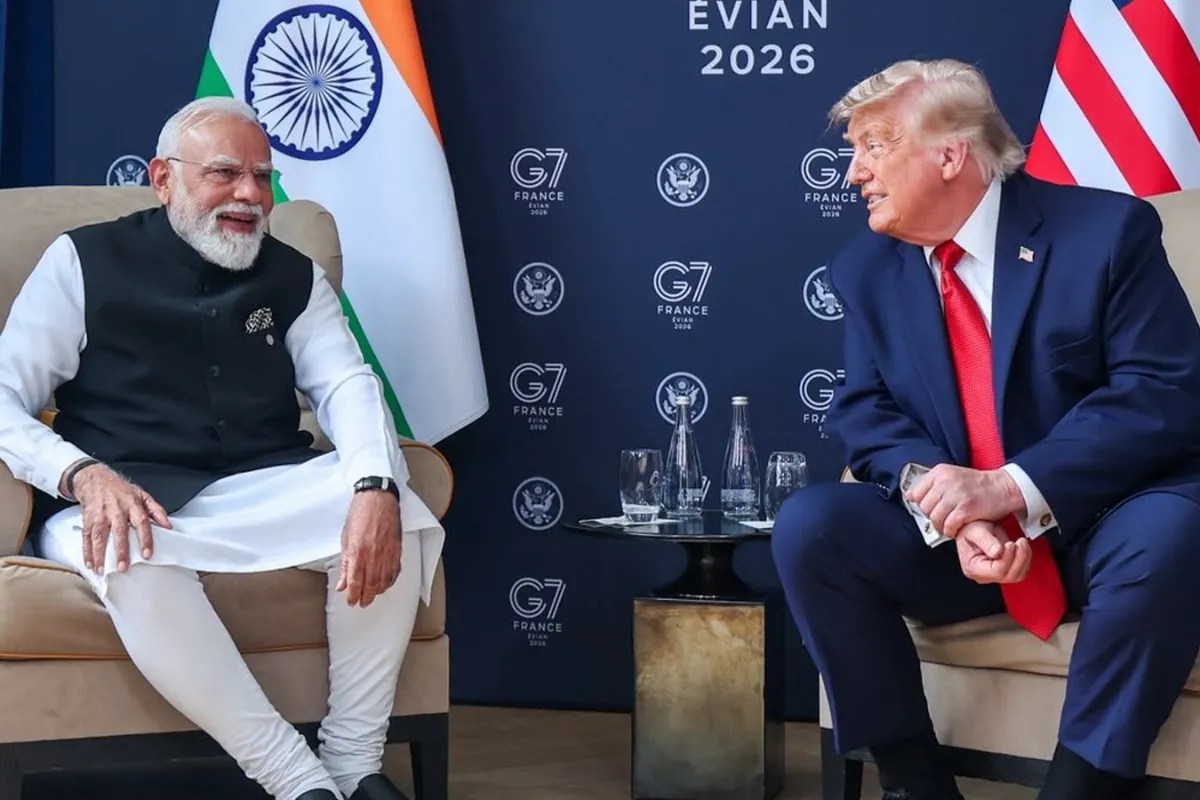
When Sergio Gor, a key figure intimately tied to the incoming American administration's inner circle, spoke recently about the bond between Indian Prime Minister Narendra Modi and US President Donald Trump, he wasn't just reciting diplomatic pleasantries. He was pointing to a structural pillar of modern global politics that defies standard textbook analysis. Gor confirmed what many whispered behind closed doors: the personal rapport between these two leaders remains remarkably intact, drop-forged through years of public spectacles and quiet telephone calls. More than just a mutual admiration society, this connection is driving a massive logistical reality. The American President is already eyeing a monumental state visit to India next year.
To understand why this matters, step away from the grand geopolitical chessboard for a moment. Consider instead the sheer bizarre spectacle of Houston, Texas, in the autumn of 2019.
Picture a stadium packed with over fifty thousand screaming people. The air smells of popcorn and anticipation. On the massive stage, two men from completely different worlds hold hands and wave to a roaring crowd. One is a son of a tea seller from Gujarat, raised in the disciplined, austere world of grassroots Indian nationalism. The other is a flamboyant real estate mogul from Queens, a creature of Manhattan skyscrapers and prime-time television. By all laws of cultural gravity, they should have nothing in common. Their backgrounds are a study in total contrast.
Yet, they clicked.
That day at the "Howdy, Modi!" rally wasn't just a political stunt. It was a public demonstration of a specific kind of political alignment. Both leaders operate on an intuitive understanding of mass psychology. They know the power of spectacle. They understand what it means to project strength to an audience that feels ignored by traditional elites. When they embraced on that stage, it sent a ripple through the diplomatic corps in Washington and New Delhi that is still reverberating today.
Critics often dismiss personal chemistry as superficial fluff, preferring to focus on hard treaties and intelligence-sharing pacts. That is a mistake. In times of crisis, bureaucratic channels clog. Paperwork gets stuck in committee. When a sudden border skirmish erupts or an economic shockwaves hits global supply chains, the machinery of state freezes.
That is when a direct phone line matters.
During Trump's first term, the personal shorthand between Washington and New Delhi allowed both nations to bypass weeks of diplomatic throat-clearing. They could speak candidly, often cutting through the institutional hesitation of their respective state departments. Sergio Gor’s recent praise of this "good friendship" isn't nostalgia; it is a preview of the operational playbook for the coming years.
But a friendship between leaders is never just an isolated emotional reality. It carries an immense burden of invisible stakes.
Behind the smiles and upcoming travel plans lies a brutal geographic truth. India sits in a treacherous neighborhood. To its north and east, an increasingly assertive superpower is redrawing maps and building naval outposts across the Indian Ocean. To its west, historic instability simmers. For New Delhi, a reliable, predictable relationship with Washington isn't a luxury. It is a survival mechanism.
Conversely, Washington looks at the Indo-Pacific and sees a vast, vital ocean where it can no longer police the waters alone. It needs an anchor. It needs a massive, economically vibrant democracy capable of balancing the scales of global power. India is that anchor. The personal tie between the leaders acts as the grease in the gears of this massive geopolitical machine.
Consider what happens next when a state visit is announced. It isn't just about a red carpet at the airport or a ceremonial dinner at Rashtrapati Bhavan. A presidential visit is a massive bureaucratic accelerator.
For six months leading up to the trip, hundreds of quiet officials in dark suits will lock themselves in briefing rooms across both capitals. Deadlocked trade negotiations over agricultural tariffs will suddenly find compromises. Stalled defense deals for high-tech jet engines or maritime surveillance drones will mysteriously clear regulatory hurdles. Why? Because nobody wants a presidential visit to end without a historic announcement. The looming deadline of a handshake forces the hand of the most stubborn bureaucrat.
Gor's revelation that the American President is planning a trip to India next year means this hidden machinery has already been kicked into gear. The wheels are turning. The agendas are being drafted.
This relationship will face immediate, messy tests. Friendship doesn't magically erase conflicting national interests. Washington still watches India’s independent foreign policy choices, particularly its historic energy ties and multi-alignment strategy, with deep anxiety. New Delhi, meanwhile, remembers the unpredictable swings of American trade policy, where tariffs can change with a single morning broadcast.
These are real, jagged edges. They cannot be smoothed over by a nice dinner or a warm press release.
Yet, history shows that when the institutional friction between these two giants threatens to stall progress, the personal intervention of the two men at the top has acted as a pressure valve. They possess a rare ability to look past the dense stacks of policy disagreements and say, "We see the bigger picture."
The upcoming visit will not be a simple victory lap. It will be a high-stakes working session wrapped in the theater of global diplomacy. As the world watches the public handshakes and listens to the grand speeches about shared democratic values next year, the true narrative will be unfolding away from the microphones. It will be written in the quiet, unscripted moments between two leaders who realize that despite their vastly different origins, their political destinies, and the security of their nations, are now deeply intertwined.