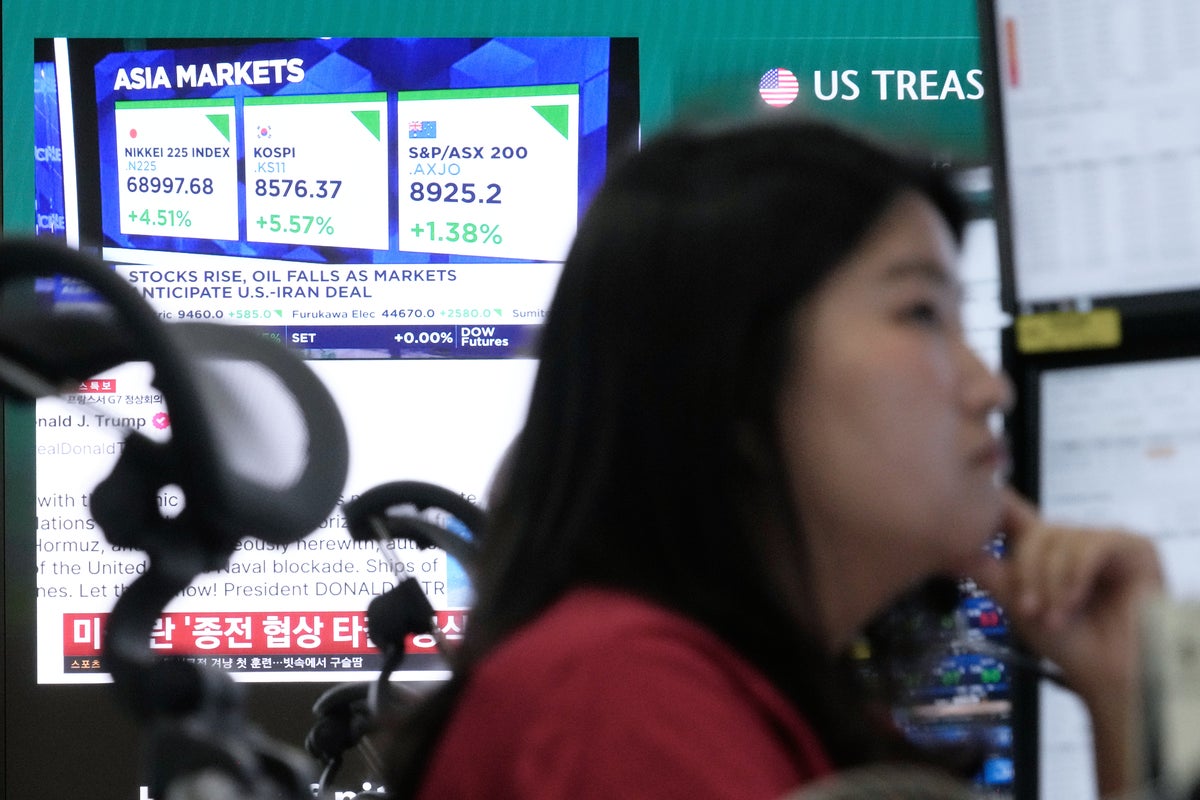
Mainstream financial commentators are celebrating a mirage. Headlines are screaming that a looming diplomatic breakthrough between Washington and Tehran will permanently cool the Middle East, stabilize global energy supply, and spark a secular bull market in Asian equities.
They are wrong. They are misreading the plumbing of the global oil market and ignoring how geopolitical risk actually prices into equities.
The lazy consensus says tension equals high oil prices, and peace equals cheap oil and booming stock markets. This is a surface-level misunderstanding of commodities trading. Having spent fifteen years analyzing energy flows and advising hedge funds on macroeconomic risk, I can tell you that the market's initial euphoric reaction to diplomatic handshakes is almost always the wrong trade.
The reality is far more volatile. A deal does not guarantee a flood of cheap crude, nor does it guarantee smooth sailing for Asian manufacturing hubs. It merely shifts the risk from a known geopolitical premium to an unknown, highly unpredictable structural supply dynamic. Investors buying the "peace dividend" narrative right now are walking straight into a value trap.
The Myth of the Iranian Supply Flood
The core argument for the sudden drop in crude prices is simple on paper: sanctions lift, Iranian oil floods the global market, supply increases, and prices plummet.
It sounds logical. But it ignores how oil actually moves around the world right now.
Iran is not starting from zero. Despite heavy US sanctions, Iranian crude exports have already hit multi-year highs over the past eighteen months. Through dark fleets, ship-to-ship transfers in the South China Sea, and creative rebranding, millions of barrels of Iranian crude have already been flowing steadily into global markets—mostly to independent refiners in China.
[Official Sanctions State] -> Theoretical Zero Exports
[Actual Operational Reality] -> ~1.5M+ Barrels/Day already flowing via shadow fleets
When an official deal is signed, you aren't suddenly introducing millions of new barrels to the world. You are simply legitimizing barrels that were already being bought and consumed.
What changes is the pricing power. Right now, Chinese buyers demand a steep discount on Iranian crude to compensate for the risk of violating US sanctions. Once those sanctions are officially lifted, Iran can sell its oil at standard market benchmarks like Brent or Shanghai crude. The discount disappears.
Imagine a scenario where official sanction relief actually drives up the effective price that independent Asian refiners have to pay for their raw inputs because they lose their illicit discount. The mainstream press expects a supply shock to lower costs; the reality could be a margin squeeze for the very Asian manufacturers whose stocks are supposedly surging.
Why Asian Shares Are Cheering the Wrong Catalyst
The sudden rally in Tokyo, Seoul, and Hong Kong is built on a flawed premise. The narrative claims that lower energy costs will instantly boost corporate margins across energy-importing Asian economies.
But look at what happens to global capital flows when a major geopolitical flashpoint allegedly resolves.
When macro funds price out Middle Eastern war risk, they don't just blindly buy Asian equities. They reposition across the entire yield curve. A deal that stabilizes the region removes a massive hedging utility for US Treasuries and safe-haven dollars. As capital flows out of defensive postures, it can cause sudden shifts in currency valuations.
For export-heavy economies like Japan or South Korea, a weakening US dollar or a rapidly fluctuating domestic currency can completely erase any minor cost savings gained from a two-dollar drop in a barrel of oil.
Furthermore, the structural problems plaguing major Asian economies—slowing domestic demand in China, real estate insolvency, and demographic shifts—do not vanish because diplomats signed a piece of paper in Geneva or New York. Buying a basket of cyclical Asian manufacturing stocks based purely on a headline about diplomatic progress is a fundamental misallocation of capital.
Dismantling the People Also Ask Premise
If you look at what market participants are actively searching for, the questions themselves reveal how deeply misunderstood this situation is.
Does peace in the Middle East always mean lower oil prices?
No. This is a classic correlation-causation error. Historically, some of the most sustained rallies in crude oil occurred during periods of relative stability in the Middle East. Why? Because economic growth drives oil prices, not just geopolitical anxiety.
If a diplomatic resolution reduces regional friction, it often opens the door for increased economic activity, infrastructure investment, and transport demand across the region. Increased demand pushes prices up. The temporary "fear premium" that leaves the market during a peace announcement is almost always replaced by a structural demand premium once economic normalization takes hold.
How do sanctions relief packages affect global inflation?
The consensus view is that lifting sanctions lowers commodity prices, which deflates global supply chains. This is short-term thinking.
When you lift sanctions on a major economy like Iran, you aren't just letting their oil out; you are letting global capital in. Billions of dollars in frozen assets are unfrozen, and foreign direct investment begins to flow into industrial infrastructure. This capital injection is inherently inflationary for industrial metals, machinery, and specialized labor. You might see a temporary dip in the price of gas at the pump, but the underlying inflationary pressures on global manufacturing inputs actually increase.
The Operational Risk Nobody is Pricing In
Let's look at the actual mechanics of the oil patch. OPEC+ has spent the last several quarters trying to manage global supply to maintain a price floor. They have instituted voluntary production cuts to balance out surging non-OPEC production from the Americas.
If an official US-Iran deal brings Iranian production back into the official OPEC quota system, the internal cohesion of the cartel will be tested to its absolute limit.
- Will Saudi Arabia willingly cut its own production further to accommodate official Iranian quotas?
- Will UAE and Iraq stand by and watch their market share erode to accommodate a newly compliant competitor?
The answer is almost certainly no. A deal does not create harmony; it creates an immediate fight for market share within OPEC+.
The last time OPEC members engaged in an all-out price war to defend market share was in early 2020. The result was a catastrophic collapse in energy infrastructure investment. If you push the cartel too far by forcing them to absorb legitimised Iranian volume, you risk triggering another structural price war that undercuts the viability of long-term drilling projects globally.
When you underinvest in drilling today because prices are artificially depressed by a political announcement, you guarantee a massive, systemic supply crunch three to five years down the road. Today's cheap oil is simply tomorrow's energy crisis in disguise.
The Strategy for Volatility
If you want to protect your portfolio, stop trading the front-page news. The smart money is not buying generic Asian index funds or shorting front-month crude futures today.
Instead, look at the spread between light sweet crude and heavy sour crude. Iran primarily produces heavier, sour grades. A normalization of their export channels will alter the refining margins (crack spreads) for specific complex refineries in Europe and Asia. That is where the real mispricing sits—not in the blunt-force direction of Brent crude, but in the structural spreads between different grades of oil.
Stop treating international diplomacy like a binary win-lose indicator for your portfolio. The "peace dividend" is a narrative invented by commentators who need to explain a daily chart movement. The real market moves are happening in the currency basis swaps, the dark fleet re-flagging logistics, and the internal quota disputes within OPEC.
Take the profits from your initial equity bounce, tighten your stops, and prepare for the return of volatility once the ink on the contract dries and reality sets in.