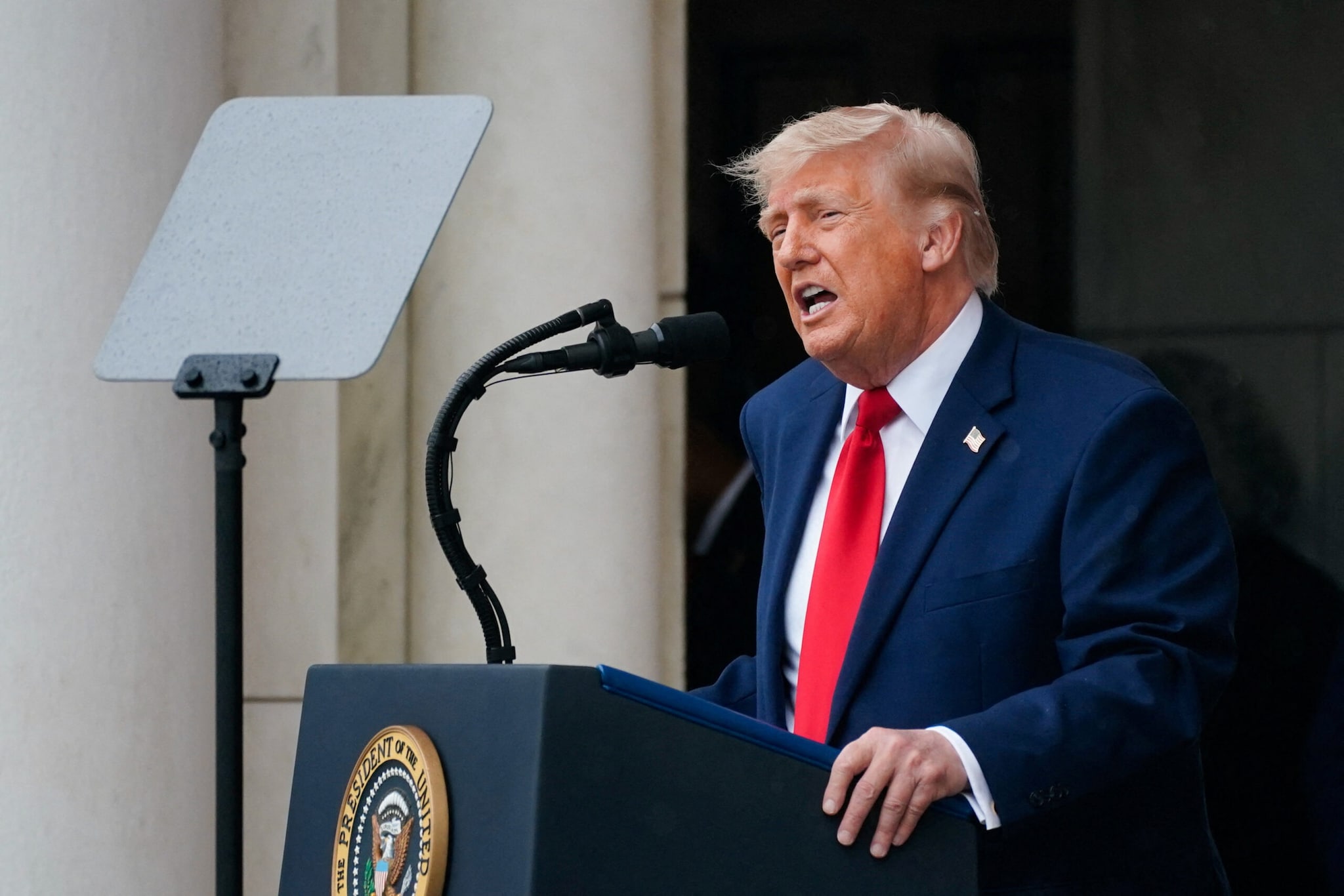
The mainstream media is having another collective panic attack because Donald Trump wants his acting director of national intelligence to slash the Office of the Director of National Intelligence (ODNI). The standard beltway narrative is already writing itself: cutting the ODNI is an assault on national security, a threat to democracy, and a gift to foreign adversaries.
This lazy consensus is entirely wrong.
The ODNI is a textbook example of bureaucratic bloat masquerading as essential infrastructure. Created as a knee-jerk reaction to the intelligence failures of 9/11, the office was intended to ensure the 17 distinct intelligence agencies actually talked to one another. Instead, it became exactly what anyone with a basic understanding of organizational design could have predicted: a massive, self-perpetuating layer of management that slows down decision-making, dilutes accountability, and adds zero operational value.
Slashed budgets and a stripped-down ODNI wouldn’t weaken American intelligence. It would liberate it.
The Myth of the Centralized Coordinator
The core premise behind the creation of the ODNI under the Intelligence Reform and Terrorism Prevention Act of 2004 was flawed from day one. The theory was that an overarching coordinator could force agencies like the CIA, NSA, and FBI to share data and connect the dots.
In reality, you cannot fix a cultural failure of information-sharing by building a massive penthouse on top of a crumbling skyscraper.
I have spent years analyzing federal spending and organizational efficiency. When you insert a managerial entity between the people gathering intelligence and the people making policy, you do not improve communication. You create a game of telephone. The ODNI does not collect secrets. It does not run spies. It does not intercept signals. It reviews, aggregates, and polishes work that has already been done by the agencies that actually do the heavy lifting.
The DNI became a coordinator who commands no real authority. The CIA director still maintains direct lines to the President. The NSA still controls the bulk of signals intelligence. The Pentagon still controls the vast majority of the intelligence budget. The ODNI sits in the middle, demanding reports, scheduling meetings, and generating endless paperwork that serves no purpose other than to justify its own existence.
The Cost of the Paperwork Factory
Let us look at how bureaucracy actually functions under the hood. Imagine a scenario where a mid-level analyst at the DIA spots a critical anomaly in foreign troop movements. In a lean, efficient system, that raw data and initial assessment should flash directly to top decision-makers and peer agencies within minutes.
Instead, in the post-2004 world, it gets funneled through the ODNI’s clearinghouses. It gets standardized. It gets vetted by committees of bureaucrats whose primary concern is avoiding risk and protecting turf. By the time the insight reaches the President's Daily Brief, the sharp edges have been filed down. The raw, urgent truth is replaced by a homogenized consensus that satisfies everyone and informs no one.
We are paying billions of dollars for a giant editing department.
Defenders of the status quo argue that without the ODNI, agencies will return to the stovepipes of the 1990s. This argument ignores how technology has evolved over the past two decades. The barrier to information sharing in 2001 was largely technological and structural. Today, secure networks, automated data-tagging, and direct agency-to-agency protocols handle coordination far better than a physical building full of middle managers in Northern Virginia ever could.
Dismantling the Right Questions
If you look at public forums or standard media coverage, the questions being asked are fundamentally broken.
Does cutting the ODNI compromise national security?
No. It removes a bottleneck. Security comes from the speed and accuracy of actionable intelligence. The ODNI slows down the speed and muddies the accuracy.
How will the 17 intelligence agencies stay aligned without a director?
The same way any complex ecosystem functions: through clear directives from the executive branch and direct, lateral communication channels. The Joint Chiefs of Staff coordinates massive, disparate military branches without needing an entirely separate, redundant military branch sitting on top of them just to write summaries.
Will downsizing save money?
Yes, but the financial savings are a secondary benefit. The real prize is operational agility. In intelligence, agility is measured in minutes. Bureaucracy measures time in fiscal quarters.
The Risk of Lean Operations
To be fair, there is a risk to this approach, and it is one that the current administration's allies rarely admit. When you strip away a layer of management, you lose a convenient political shield.
Right now, if an intelligence failure happens, the DNI takes the blame. It is a buffer for the President and individual agency heads. If you eliminate or drastically shrink that buffer, the heat lands squarely on the directors of the CIA, NSA, and FBI. Accountability returns to the people who actually hold the operational levers. For the career bureaucrats, that is a terrifying prospect. For the public, it is exactly how a government should function.
The pushback against cutting this office is not driven by patriotism or a sudden concern for national safety. It is the defensive reflex of an entrenched political class that views any reduction in staff, budget, or real estate as a personal defeat.
Stop treating the size of an intelligence budget as a proxy for national safety. A lean, aggressive, and slightly chaotic intelligence community is infinitely more dangerous to our enemies than a massive, slow, well-coordinated committee that requires a three-week notice to approve a memo.
Cut the office. Fire the middle managers. Let the spies do their jobs.