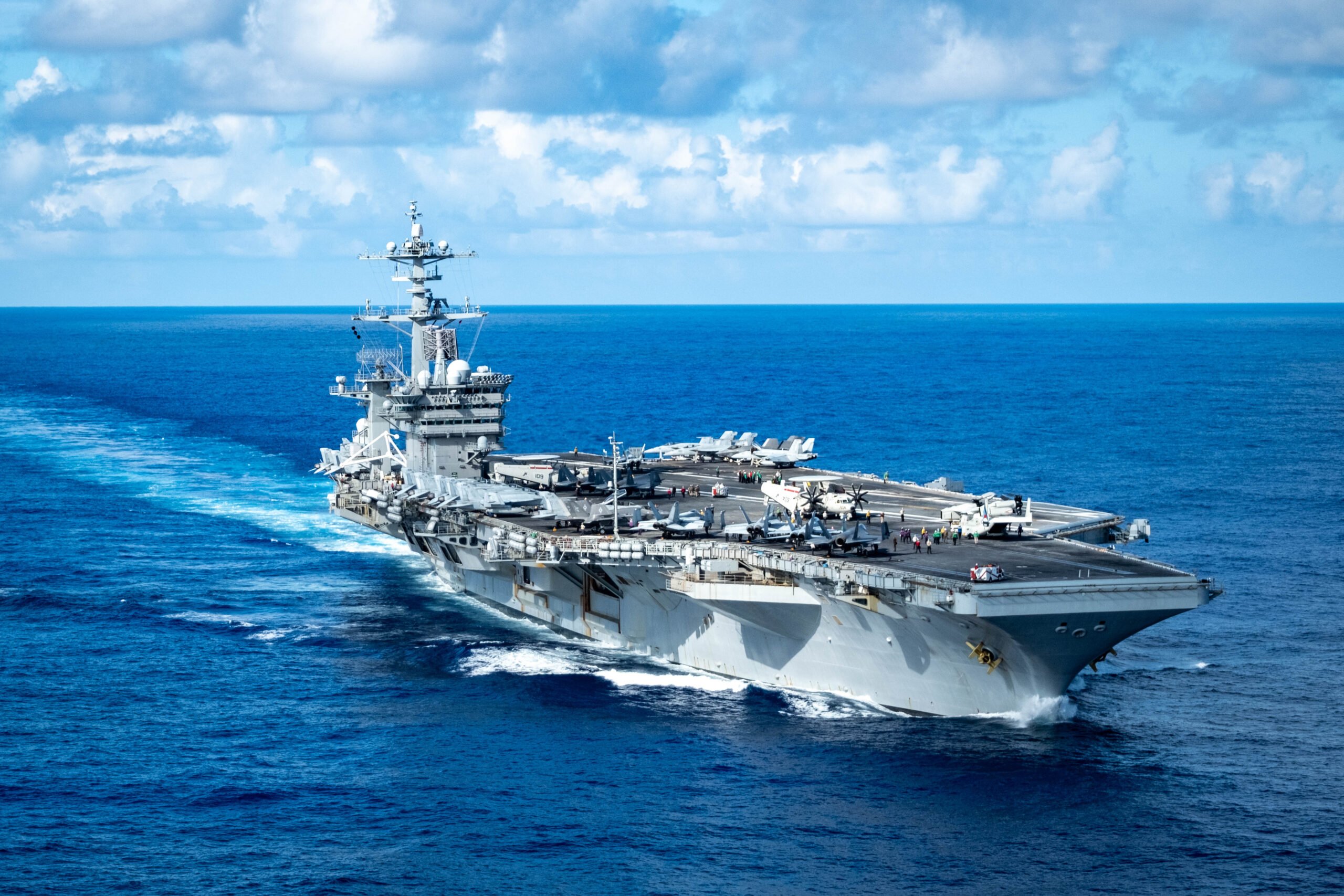
The USS George Washington has finally steamed into the Arabian Sea, but its arrival tells a story far more alarming than routine naval logistics. When a forward-deployed nuclear supercarrier gets yanked out of its permanent home port in Japan to plug a bleeding wound in the Middle East, Washington is robbing Peter to pay Paul.
For months, the US Navy has pushed its crews past reasonable breaking points. The USS Abraham Lincoln crossed a grim milestone, staying deployed for more than 250 consecutive days without a meaningful port call while supporting operations against Iran. Families back home panicked as text messages revealed the human cost of this grueling operational tempo: broken plumbing, contaminated water, plummeting morale, sparse rations, and reports of extreme psychological strain including sailors trying to jump overboard.
Lawmakers started shouting. Senators demanded emergency oversight, while military leadership awkwardly insisted everything was fine. It wasn't fine. It was unsustainable.
The Cost of Stretching the Fleet Too Thin
Placing the USS George Washington into the Fifth Fleet area of operations creates a massive strategic vacuum elsewhere. This is the only nuclear-powered aircraft carrier America keeps permanently forward-deployed in the Western Pacific. By pulling it out of Yokosuka and moving it across oceans, the Pentagon just left the Pacific without a dedicated carrier presence for the first time in years.
That is an open invitation for an assertive China to test regional boundaries while the US military burns through precious munitions and hardware in the Middle East. You cannot be everywhere at once. When you treat floating airbases like tactical band-aids, the entire global posture starts to fray.
What Life on a Record-Breaking Deployment Looks Like
Most people don't understand what happens to a warship after eight or nine months at sea. Steel hulls fatigue. Desalinators break down. Fresh food runs out, leaving crews eating meager portions just to hit minimum caloric intakes.
The families left behind bear the psychological brunt. When a sailor stops talking about the future and starts counting down hours in monotone texts, you realize that hardware isn't the only thing wearing out. The human element of the Navy is cracking under the weight of endless foreign interventions.
Defense Secretary Pete Hegseth claimed conditions aboard the Lincoln were completely misrepresented by the media, but tell that to the spouses receiving photos of sparse meals and hearing firsthand accounts of despair. Dismissing crew welfare as mere complaining ignores the structural rot inside a force ordered to maintain a 1990s-style global footprint with a 2020s-sized fleet.
Where the US Navy Goes From Here
The arrival of the George Washington means the exhausted crew of the Lincoln can finally look toward a long-overdue trip home, even if the relief process takes weeks to execute. But swapping one ship for another doesn't fix the underlying math.
The Pentagon faces a brutal reckoning. Either Congress funds a significantly larger fleet capable of sustaining simultaneous multi-theater crises, or civilian leaders must scale back the endless deployments that break ships and sailors alike. Until policy matches the physical limits of naval power, these crises will keep repeating on the open ocean.