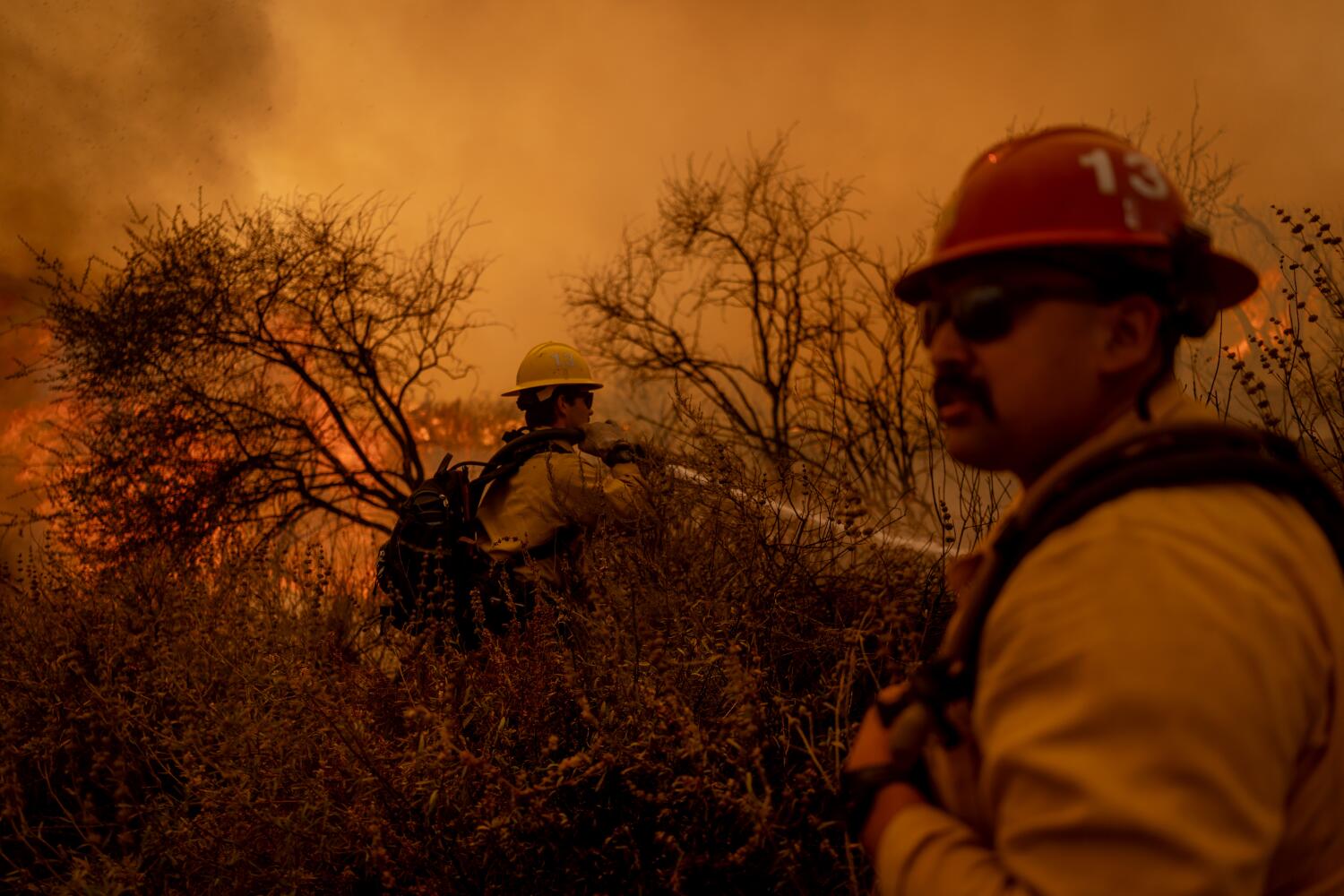
The smoke from a wildfire does not just smell like burning wood. It smells like synthetic carpet, melted plastic, old photographs, and the pressurized hiss of exploding aerosol cans. It is an acidic, heavy stench that clings to the back of your throat for weeks after the flames have moved on.
When a wildfire tears through a neighborhood, we tend to look at the macro-statistics. We read the news tickers detailing the containment percentages, the thousands of acres scorched, and the number of structures lost. But structures are just legal definitions. They are wood, drywall, and nails.
The real loss is measured in ounces.
In late 2019, the Easy Fire screamed through Simi Valley, California. Driven by the notorious Santa Ana winds, it chewed through the dry brush, threatening thousands of homes and forcing chaotic, panicked evacuations. Among the firefighters deployed to battle the blaze was a crew from Sandy, Utah—part of a mutual aid strike team sent to help their California neighbors. They did their job, fighting the wall of fire in grueling, sleepless shifts.
But the true test of their mission came after the main wall of fire had passed, leaving behind a gray, smoking wasteland where a family home used to stand.
The Anatomy of Absolute Loss
Imagine standing in front of everything you own, only everything you own is now six inches of uniform, gray powder.
When you lose a home to a fire of this intensity, the physics of the destruction are total. The heat of a wildfire easily surpasses 1,500 degrees Fahrenheit. At that temperature, aluminum wheels melt into silver puddles. Glass warps and bubbles. The structural memory of a lifetime is compressed into a footprint of toxic debris.
For the family who owned this particular home, the immediate shock of survival quickly gave way to a specific, piercing grief. Amid the panic of the evacuation, a wedding ring had been left behind.
A wedding ring is a tiny thing. It is a fraction of an ounce of precious metal. In the grand scheme of a natural disaster that threatens entire cities, obsessing over a ring might seem irrational. But human beings are not Excel spreadsheets. We do not quantify our lives solely by the replacement value of our insurance policies. We anchor our memories to physical objects. That ring represented decades of shared history, promises kept, and a foundation built. Without it, the erasure of their past felt absolute.
The family mentioned the missing ring to the visiting Sandy fire crew. They did not demand a search. They knew what the site looked like. Asking someone to find a ring in a collapsed, incinerated house is like asking someone to find a specific grain of sand on a beach while wearing heavy boots and thick gloves.
The firefighters went in anyway.
The Sift
Searching a burn site is a meticulous, miserable process. You cannot simply shovel through the debris; doing so risks burying the very thing you are trying to find, or crushing it deeper into the ash.
The crew from Sandy Fire Department approached the footprint of the house not as a cleanup site, but as an archaeological dig. They used shovels to carefully remove the top layers of collapsed roofing and charred timbers. Then, they dropped to their knees.
Using smaller tools, and sometimes just their gloved hands, they began to sift.
The environment of a recent burn is treacherous. Hidden pockets of heat can linger beneath the ash for days. Sharp jagged metal, shattered glass, and unstable masonry wait to tear through gear. The air is thick with particulate matter. Every movement kicks up a cloud of gray dust that coats your visor and fills your lungs.
Minutes turned into hours. The process is mind-numbing. You look at a gray fragment, pick it up, realize it is a piece of melted appliance trim, and discard it. You move to the next square foot. The temptation to give up is immense. The logical brain tells you that the ring is gone—either melted by the extreme heat or buried so deep under the collapsed chimney that it will never see the light of day.
But mutual aid is not just about throwing water on flames. It is about restoring dignity.
The Chemistry of Survival
There is a technical reason why the firefighters kept looking, a quiet calculation beneath the emotional drive. Gold melts at roughly 1,948 degrees Fahrenheit. Platinum melts at over 3,200 degrees. While a wildfire can easily destroy the structure of a house, the core temperature of a fire at ground level fluctuates wildly based on ventilation and available fuel.
There was a slim, mathematical chance that if the ring had been protected by a piece of heavy furniture or buried quickly by non-combustible drywall, it might have survived the inferno.
The crew focused their efforts on what used to be the bedroom area, using the surviving layout of the plumbing and foundation walls as a map. They mapped the space in their minds, estimating where the dresser or nightstand would have fallen as the floorjoists gave way.
Then, a glint.
It was not bright. It was covered in soot, dulled by smoke, and wedged between layers of compressed debris. One of the firefighters reached down, brushed away a layer of fine ash, and pulled a small, circular object from the dirt.
It was intact.
More Than Salvage
When the Sandy crew handed the ring back to the family, there were no cameras from major networks. There were no grand speeches. There was only a quiet, tearful exchange between exhausted men covered in soot and a family who had lost everything else.
In the wake of a disaster, we look for symbols. We need them to prove that the destruction was not absolute, that something can withstand the worst the world has to throw at it. The recovery of that wedding ring did not rebuild the house. It did not replace the clothes, the family photos, or the sense of security that vanishes when a wildfire knocks on your door.
But it provided a starting point. It was a tangible piece of their yesterday that they could carry into their tomorrow.
The Sandy fire crew eventually packed up their trucks and drove back across the state line to Utah. The Easy Fire was eventually contained, relegated to the archive of California’s seasonal battles with nature. The ash in Simi Valley was eventually cleared away by heavy machinery, leaving flat, empty dirt lots ready for reconstruction.
But for one family, the rebuilding did not start when the concrete mixers arrived. It started on the day a group of firefighters out of their jurisdiction decided that a few ounces of metal were worth hours on their knees in the dirt.


