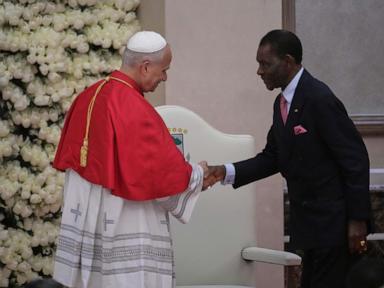
Equatorial Guinea is a tiny, oil-rich nation where the silence is bought with fear. When the Pope schedules a visit to a place like this, it isn't just a religious event. It's a political hand grenade. For the people who escaped the iron grip of Teodoro Obiang Nguema Mbasogo, the sight of a pontiff shaking hands with the world’s longest-serving president feels like a betrayal. They don't see a bridge-builder. They see a PR lifeline for a man who’s ruled since 1979 through a mix of ruthless repression and family-run corruption.
The Catholic Church holds massive sway in this former Spanish colony. Most citizens identify as Catholic. Because of that, any papal arrival carries the weight of a divine endorsement, whether the Vatican intends it or not. Exiles living in places like Madrid or Cotonou are sounding the alarm. They know how Obiang’s machinery works. He takes a photo-op with a global moral authority and plasters it across state media to tell his people that even God's representative on Earth is on his side. It's a classic authoritarian move.
Why the Papal Stamp of Approval Matters to Obiang
Obiang doesn't need the money. He's got plenty of that from the country’s massive oil reserves, even if the average citizen lives on less than a couple of dollars a day. He needs legitimacy. He’s been in power for over four decades. You don't hold onto a chair that long without knowing how to manage your image. When a high-profile figure like the Pope visits, it signals to the international community that Equatorial Guinea is a "normal" country with a "respected" leader.
The reality is far messier. Human rights groups like Amnesty International and Human Rights Watch have documented decades of arbitrary arrests, torture, and a total lack of press freedom. If you speak up, you disappear. Or you end up in the notorious Black Beach prison. The exiles who fled these conditions aren't just being cynical. They’re speaking from trauma. They've seen how the regime uses religious festivals and international summits to mask the sound of dissent being crushed.
When the Vatican engages in "quiet diplomacy," the "quiet" part is what worries the victims. They want loud, public condemnation. They want the Pope to stand in Malabo and demand the release of political prisoners. Instead, they often get vague calls for "social harmony" and "peaceful coexistence." To a dictator, those words are harmless. They’re actually helpful. They imply that the "instability" comes from the opposition, not the state’s violence.
The Vatican Dilemma and the Risk of Being a Prop
Rome usually argues that you can't influence a regime if you don't talk to it. It’s the standard diplomatic playbook. By visiting, the Pope gets a foot in the door. He might secure the release of a few prisoners behind the scenes. He might get the government to allow more humanitarian aid or religious schools. It's a game of incremental gains.
But at what cost?
The cost is the morale of the resistance. When activists see the Holy Father smiling next to a man accused of looting his nation’s wealth, the message to the youth of Equatorial Guinea is clear: the system is rigged, and even the highest moral authorities won't flip the table. We’ve seen this before in other regions. In some cases, papal visits have sparked hope and change, like John Paul II in Poland. In others, they’ve been criticized for being too soft on juntas and despots.
Equatorial Guinea isn't Poland in the 80s. There’s no massive organized labor movement for the Pope to get behind. The opposition is fractured, mostly in exile, or silenced within the country. This makes the optics of a visit even more dangerous. Without a strong local movement to leverage the Pope’s presence, the regime simply consumes the visit as a propaganda victory.
The Reality for Exiles Watching from Afar
Life in exile isn't easy. For those who fled Obiang’s security forces, the pain of being away from home is compounded by the feeling that the world has forgotten them. They track every news cycle. They see the reports of luxury mansions in France owned by the Obiang family while their own relatives struggle for basic medicine.
One former civil servant, now living in Europe, told me that a papal visit feels like "spitting on the graves" of those killed during the 1979 coup and the subsequent purges. These aren't just political talking points. These are deeply personal grievances. The Catholic Church in Equatorial Guinea has a complicated history. Some priests have been brave voices for the poor, while others have stayed close to the ruling elite to keep their doors open.
The fear is that the Pope will be steered through a sanitized version of the country. Malabo has shiny new buildings and paved roads near the government centers, funded by oil. It's easy to hide the poverty and the police state if you control the itinerary. The exiles are calling for the Pope to break the script. They want him to visit the slums, talk to the families of the disappeared, and name the sins of the state.
What a Meaningful Visit Would Actually Look Like
If the Vatican wants to avoid being a pawn, the visit needs teeth. It shouldn't just be about the Eucharist and diplomatic dinners. A truly impactful trip would include several non-negotiable actions that would shift the power dynamic.
- A public meeting with independent activists and families of political detainees.
- A speech that explicitly mentions the need for transparent elections and the end of dynastic rule.
- Refusing to allow state media to use the Pope’s image for campaign-style posters.
- Demanding a visit to detention centers where torture has been reported.
Obiang is a master of the "show." He knows how to host a party. If the Pope goes, he’s entering a lion's den of PR manipulation. The only way to win is to be disruptive. Anything less than a direct challenge to the status quo will be interpreted by the regime—and the people—as a nod of approval.
The international community often looks the other way because of the oil. That’s the hard truth. But the Church is supposed to be different. It’s supposed to be the "voice of the voiceless." For the dissidents who’ve lost everything, this visit is the ultimate test of that mission. They aren't asking for the Pope to lead a revolution. They’re just asking him not to help the dictator keep his crown.
If you want to support the people of Equatorial Guinea, start by looking past the official state narratives. Follow the work of organizations like EG Justice. They track the actual human rights situation on the ground. Pay attention to the reports coming out of the African Commission on Human and Peoples' Rights. Don't let the shiny photos of a papal mass distract from the reality of a nation where freedom is still a distant dream. Keep the pressure on international bodies to ensure that any engagement with Obiang comes with strict conditions for reform.