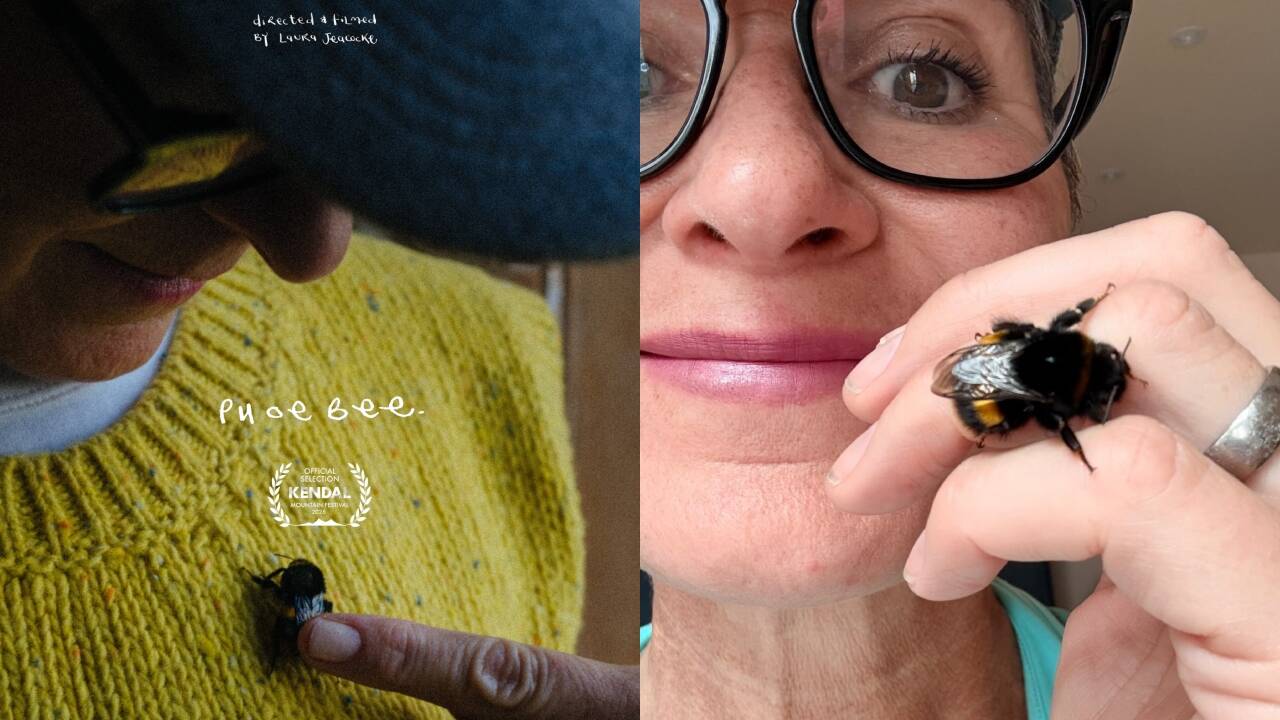
The elevation of a single injured queen bumblebee into a global digital phenomenon is not an anomaly of internet culture; it is the predictable output of specific biological vulnerabilities intersecting with algorithmic engagement mechanics. When a human intervenes to rehabilitate a flightless Bombus queen—typically found grounded due to deformed wings, Deformed Wing Virus (DWV), or severe late-season exhaustion—and documents that process through short-form vertical video, the resulting media asset triggers high-retention behavioral loops in human viewers. Understanding this dynamic requires stripping away sentimental framing to analyze the entomological realities of bumblebee life cycles, the psychological architecture of anthropomorphism, and the attention-economy variables that convert micro-scale caretaking into macro-scale digital distribution.
The Biological Reality of Grounded Bumblebee Queens
Standard media coverage of viral insect rescues relies heavily on emotional narrative while obscuring the biological mechanisms governing the subject's survival. Unlike honeybees (Apis mellifera), which maintain perennial colonies through thermoregulatory clustering, temperate bumblebee species operate on an annual, eusocial life cycle. A queen emerging in late summer or autumn must mate, consume sufficient nectar and pollen to build lipid reserves in her fat body, and enter diapause—a state of physiological dormancy—beneath insulated soil.
When a queen is discovered grounded and unable to fly, the root cause generally falls into one of three distinct physiological categories:
- Pathogen-Induced Morphological Failure: Deformed Wing Virus, often vectored by mites or transmitted through shared floral resources, disrupts pupal development. The resulting adult emerges with crumpled, non-functional wings. In a natural ecosystem, this represents an immediate evolutionary dead end; the queen cannot forage, evade predators, or locate an overwintering hibernaculum.
- Acute Energetic Depletion: Bumblebees possess an exceptionally high metabolic rate required to maintain thoracic temperatures near 30°C (86°F) for flight. If a queen encounters a sudden drop in ambient temperature or a localized floral dearth, her hemolymph sugar levels plummet. She enters a state of torpor that mimics severe injury but is functionally an acute caloric deficit.
- Mechanical Trauma and Senescence: Wing wear—fraying of the chitinous membrane caused by collisions with dense vegetation—accumulates over a queen's lifespan. Once wing surface area drops below the aerodynamic threshold required to generate lift for her body mass, flight becomes physically impossible.
The viral narrative typically centers on human intervention bridging these biological deficits. By providing a controlled microclimate, an artificial foraging apparatus (usually a shallow cap of sucrose solution and rehydrated pollen), and protection from predation, the human caretaker effectively replaces the queen's missing locomotor capabilities. However, this intervention creates a closed ecological loop. A wingless queen cannot establish a wild nest, meaning human caretaking transitions from temporary emergency triage to permanent captivity management.
The Attention Architecture of Micro-Caretaking
Why does a twenty-second video of a bee drinking sugar water from a cotton swab outperform high-budget wildlife documentaries in organic reach? The answer lies in the structural alignment between micro-rehabilitation content and the ranking algorithms of modern social platforms.
High-Contrast Scale Disruption
Human visual processing is calibrated to prioritize threats and anomalies within immediate spatial proximity. Macro-videography of an insect disrupts standard visual expectations by rendering a typically ignored, fast-moving organism into a detailed, stationary subject. When a bumblebee's compound eyes, mandibles, and setae (hair-like structures) are magnified to fill a smartphone screen, the viewer experiences a sudden shift in scale. This visual novelty halts the rapid scrolling behavior characteristic of feed consumption, driving up the single most critical metric for algorithmic distribution: initial three-second hook retention.
The Parasocial Caretaking Loop
Evolutionary psychology dictates that humans exhibit heightened attentional focus toward vulnerability and caregiving behaviors—a mechanism rooted in parental investment theory. While typically triggered by mammalian neoteny (large eyes, rounded features), this circuit can be hijacked by behavioral cues in non-mammalian species. When a grounded bumblebee extends its proboscis to feed from a human finger or grooms its antennae in a domestic setting, viewers project intentionality, gratitude, and emotional relief onto instinctive motor patterns.
This projection converts passive viewers into invested participants. Serialized updates—tracking the bee's daily feeding, enclosure upgrades, and behavioral changes—mirror the mechanics of episodic television. Viewers return to the creator's profile not merely for isolated entertainment, but to resolve an open narrative loop: Will the subject survive the night? This repeated profile visitation signals extreme user intent to platform algorithms, triggering exponential distribution across non-follower feeds.
Operational Mechanics of the Viral Caretaking Funnel
Creators who inadvertently or deliberately build massive audiences around injured wildlife follow a repeatable operational sequence. Each phase optimizes specific engagement signals:
- Phase 1: The Inciting Incident (Discovery). The narrative begins with a clear problem state—an organism in visible distress against a stark background (e.g., concrete pavement). This establishes immediate stakes and positions the creator as a decisive agent of rescue.
- Phase 2: The Triage Protocol (Competence Demonstration). The creator introduces specialized or improvised tools—pipettes, custom enclosures, specific sugar-to-water ratios. Demonstrating procedural competence builds authority and invites audience validation in the comment section, which serves as the primary driver of engagement velocity.
- Phase 3: Anthropomorphic Naming and Lore Construction. Assigning a human name to the insect transitions it from a biological specimen to a distinct character. Once named, every routine biological function—defecation, torpor, pollen consumption—is interpreted as a plot point within an ongoing character arc.
- Phase 4: Community Co-Management. High-performing creators actively solicit advice on enclosure design, nutritional supplementation, and environmental enrichment. By outsourcing minor operational decisions to the comment section, the creator manufactures a sense of collective ownership over the animal's survival.
Ethical Constraints and Ecological Trade-Offs
While the digital metrics of insect rehabilitation are overwhelmingly positive for the creator, the practice introduces significant biological and behavioral trade-offs that standard viral coverage ignores.
First, prolonged indoor maintenance of wild insects disrupts natural circadian rhythms and photoperiodic cues. A queen bumblebee kept under artificial indoor lighting at room temperature will not enter proper diapause. Instead, her metabolism remains artificially elevated, accelerating cellular senescence and depleting her physiological reserves faster than if she had entered natural dormancy. What appears to the audience as a thriving, active pet is frequently an organism experiencing premature metabolic burnout.
Second, the viral success of wildlife rescue content creates a perverse incentive structure across social media ecosystems. When audiences reward rescue narratives with millions of views, algorithmic pressure encourages replication. In lower-tier content farms, this dynamic has documented links to staged rescues—where animals are deliberately placed in hazardous or debilitating conditions to film their subsequent recovery. While a bumblebee with congenital wing deformities is clearly a natural occurrence, the broader genre suffers from verification deficits; viewers lack the entomological literacy to distinguish between genuine rescue and artificial distress.
Third, the concentration of public empathy on a single charismatic individual obscures the systemic drivers of pollinator decline. Wild bumblebee populations face existential threats from habitat fragmentation, neonicotinoid pesticide exposure, pathogen spillover from commercial greenhouses, and climate-induced phenological mismatches—where spring queen emergence no longer aligns with peak floral availability. Focusing collective attention on the palliative care of a single reproductively non-viable queen generates zero ecological impact on local population dynamics. It satisfies the human desire for immediate, visible efficacy while distracting from the complex, unglamorous land-management policies required to sustain wild ecosystems.
Strategic Framework for Science Communicators and Platforms
To extract tangible ecological value from the viral mechanics of micro-wildlife content without succumbing to anthropomorphism or perverse incentives, digital publishers and science communicators must alter how they frame these narratives.
- Pivot from Individual Sentiment to Systemic Context: Whenever an individual animal rescue trends, coverage must immediately bridge the narrative gap between the single specimen and its broader ecological cohort. Use the viewer's emotional investment in the individual bee as a Trojan horse to explain diapause mechanics, native plant requirements, and the actual field protocols for assisting exhausted pollinators (such as providing temporary shelter and immediate release rather than permanent captivity).
- Enforce Verification Standards in Wildlife Coverage: Media outlets amplifying viral animal stories must apply basic biological scrutiny before publication. Consulting an entomologist or wildlife rehabilitator to verify whether the depicted caretaking practices align with established veterinary standards prevents the spread of harmful husbandry myths—such as feeding honey to wild bees, which risks introducing devastating pathogens like American foulbrood (Paenibacillus larvae) into local ecosystems.
- Deploy Algorithmic Hooks for Habitat Action: Conservation organizations should reverse-engineer the visual and narrative structures of viral rescue videos. Instead of leading with abstract data on biodiversity loss, campaigns must utilize high-magnification, high-retention macro footage of individual native pollinators interacting with specific native flora, pairing the episodic storytelling of a "backyard ecosystem" with concrete, measurable actions—such as leaving leaf litter undisturbed through spring to protect overwintering queens.
The virality of an injured bumblebee proves that human attention is not inherently hostile to the natural world; it is simply constrained by scale and narrative structure. Organizations that master the translation of complex ecological realities into intimate, high-contrast micro-narratives will capture the attention economy currently dominated by accidental digital caretakers.